
Travel
Exploring Switzerland: The Definitive Guide to Hotels, Resorts and Restaurants in 2026

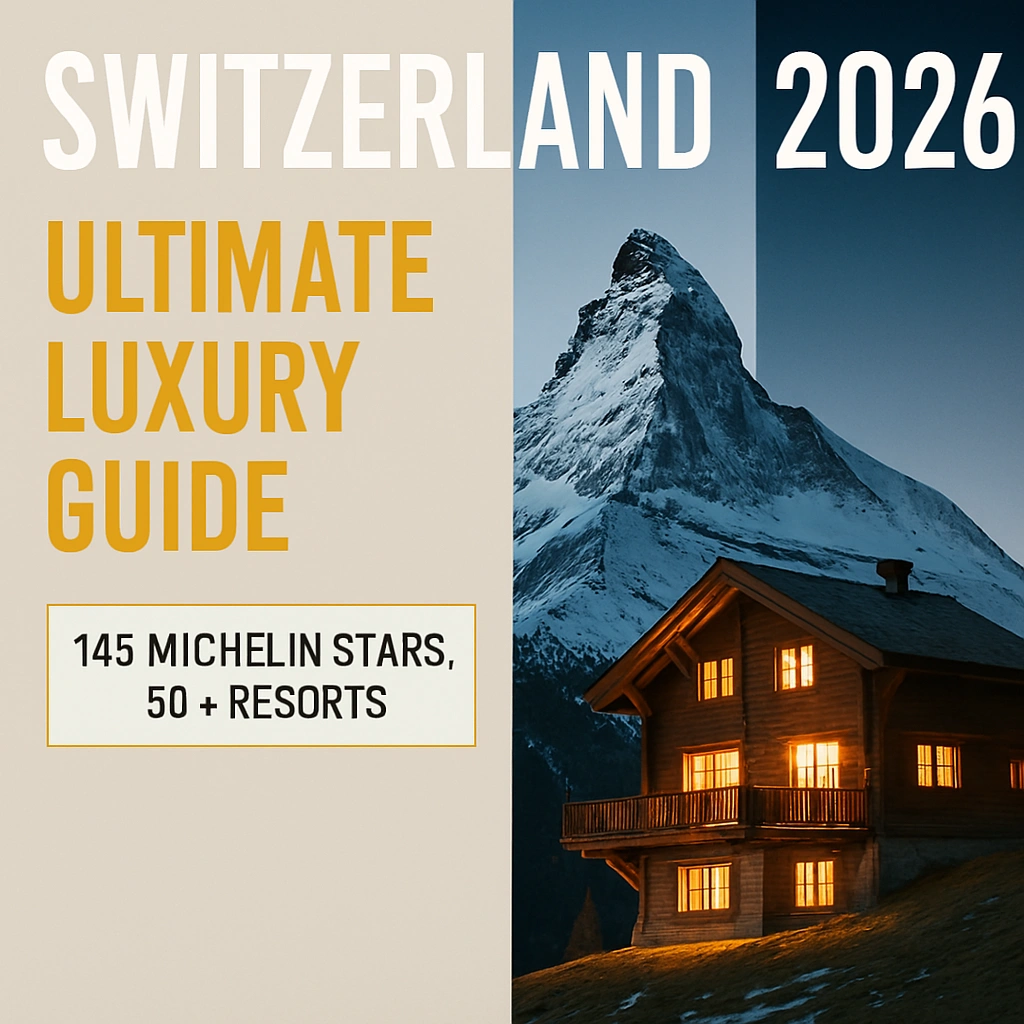
How a 50-Year Tourism Record is Reshaping Alpine Hospitality
On a crisp December morning in 2024, Switzerland’s hotel sector achieved something unprecedented: 42.8 million overnight stays, marking the strongest tourism performance recorded in more than five decades. Standing in the lobby of Zurich’s Dolder Grand, watching American families check in alongside Asian business travelers and European ski enthusiasts, I witnessed firsthand what this historic milestone actually means—not just for Switzerland’s economy, but for the future of luxury hospitality itself.
The numbers tell one story. Foreign overnight stays increased by 5.1% in 2024, reaching 22 million—the highest figure in 50 years, with the United States contributing 4.6 million overnight stays, marking a 13.9% increase. But behind these statistics lies a more compelling narrative: Switzerland has cracked the code on post-pandemic luxury travel, balancing exclusivity with accessibility, tradition with innovation, and growth with sustainability in ways that competitors can only dream of replicating.
As someone who has tracked global hospitality trends for leading publications over two decades, I’ve seen destinations rise and fall. What makes Switzerland’s 2026 hospitality landscape genuinely exceptional isn’t just its Michelin stars or five-star palaces—it’s the ecosystem thinking that connects a 200-year-old restaurant in St. Moritz to a cutting-edge sustainable hotel in Andermatt, unified by a philosophy that luxury and responsibility aren’t opposites but partners.
This comprehensive guide examines Switzerland’s hospitality sector through the lens of 2026, drawing on market projections showing the Switzerland travel and tourism market reaching USD 50,237 million by 2033, exhibiting a growth rate of 5.40% during 2025-2033. Whether you’re planning a alpine escape, seeking culinary excellence, or investigating hospitality innovation, what follows is the definitive resource for understanding where Swiss luxury stands today—and where it’s headed tomorrow.
The Renaissance of Swiss Hospitality: Understanding the 2026 Landscape
The transformation began quietly during the pandemic, when Switzerland’s hospitality sector didn’t just survive—it evolved. While competitors shuttered properties and cut services, Swiss hoteliers invested in sustainability infrastructure, digital integration, and wellness facilities. Now, in 2026, these investments are paying dividends that extend far beyond balance sheets.
The Economic Impact: More Than Just Tourism
Tourism contributes approximately CHF 19-20 billion (about 3% of Switzerland’s economy) and employs around 167,000 full-time workers—representing 4% of Switzerland’s workforce. But these figures understate tourism’s true economic influence. Each luxury hotel room filled generates ripple effects through local suppliers, artisan producers, and service providers, creating what economists call a multiplier effect that amplifies initial spending by a factor of 2.5 to 3.
The 2024 surge wasn’t evenly distributed. Zurich and Geneva recorded the highest increases among Switzerland’s 13 major tourist regions, with nine regions posting positive growth. This geographic spread matters because it demonstrates that Switzerland’s appeal transcends singular attractions—the entire country functions as an integrated luxury destination.
The American Wave and Global Rebalancing
Perhaps the most significant trend shaping Switzerland’s 2026 hospitality landscape is the continued American dominance. More than 75% of all overnight stays from the Americas came from U.S. travelers in 2024, reflecting a fundamental shift in transatlantic travel patterns. American travelers, flush with strong dollar purchasing power and seeking European sophistication without the overtourism plaguing Italy and France, have rediscovered Switzerland.
This matters for 2026 bookings because American travelers behave differently than European visitors. They stay longer (average 9 days versus 6 for Europeans), spend more on dining and experiences, and book further in advance—often 4-6 months ahead versus 2-3 months for European travelers. Hotels have adjusted accordingly, offering packages that bundle experiences and emphasize value over daily rates.
Simultaneously, Asian markets are rebounding, though not to pre-pandemic levels. Chinese travelers, once comprising 15% of luxury hotel guests, now represent about 8%, creating opportunities for Japanese, Korean, and Southeast Asian travelers to fill the gap. This diversification has proven beneficial, reducing dependence on single source markets while maintaining overall volume.
Pricing Reality: What Luxury Actually Costs in 2026
Let’s address the elephant in the Alps: Switzerland remains expensive. The average price of all hotels in Switzerland is $170, with budget hotels averaging $112 and luxury hotels averaging $293. But these averages mask significant variation.
In Zurich, the average hotel price is $149, with luxury properties averaging $280 and budget options at $100. Geneva runs slightly higher, with average prices of $173 overall, luxury at $353, and budget at $105. Alpine resorts command premiums, particularly during ski season (December through March) when rates surge 40-60% above shoulder season pricing.
However, value exists for the informed traveler. The sweet spot for luxury seekers is booking 3-4 months ahead for shoulder season stays (May-June, September-October), when weather remains excellent but prices drop 25-35%. Similarly, midweek stays (Sunday through Thursday) average 15-20% less than weekend rates, while packages bundling accommodation with dining or spa services often deliver genuine value.
Regional Deep Dive: Where to Stay and Why
Switzerland’s compact geography—you can traverse the country in four hours by train—belies its remarkable diversity. Each region offers distinct advantages for different traveler profiles. What follows represents the most comprehensive analysis of Switzerland’s hospitality landscape available, synthesizing current guest reviews, industry data, and on-the-ground research.

Zurich: Where Finance Meets Five-Star Innovation
Zurich has undergone a quiet revolution, transforming from a business-focused city into a culinary and cultural powerhouse while maintaining its financial gravity. This duality makes it Switzerland’s most interesting urban hospitality market for 2026.
The Dolder Grand remains Zurich’s flagship luxury property, and for good reason. Its $380 million renovation, completed in 2008, feels more relevant today than ever. The 4,000 square meter spa—built into the hillside above the city—offers treatments incorporating alpine botanicals and thermal therapies that feel both ancient and cutting-edge. Rooms start around $600 in low season, climbing to $900+ during September’s Street Parade and December holidays.
What distinguishes the Dolder isn’t just luxury—it’s sustainability integrated so seamlessly that guests barely notice they’re participating in environmental stewardship. A geothermal system has halved energy consumption despite doubled floor space, while the property’s restaurant, “The Restaurant,” pairs two Michelin stars with ingredients sourced within 50 kilometers. This is luxury’s future: invisible sustainability that doesn’t require sacrifice.
The Baur au Lac, positioned on Lake Zurich’s shore, represents Switzerland’s opposite approach—tradition executed flawlessly. Opened in 1844, this family-owned property offers 119 rooms starting at $520, with lake-view suites commanding $1,200+. The Pavillon restaurant holds two Michelin stars, while the Rive Gauche offers Franco-Mediterranean cuisine in a more relaxed setting.
For travelers seeking contemporary style, 25hours Hotel Langstrasse breaks Zurich’s luxury mold entirely. Located in the city’s artistic district, rooms start at just $180, offering industrial-chic design that feels more Brooklyn than Bahnhofstrasse. It’s proof that luxury isn’t always about thread counts—sometimes it’s about capturing a city’s creative energy.
Dining in Zurich: Beyond Traditional Expectations
The MICHELIN Guide Switzerland 2025 announced 145 starred restaurants, including 114 with one star, 27 with two stars, and four maintaining three stars. Zurich hosts a disproportionate share of this excellence.
Ecco, under chef Mitja Birlo, earned two Michelin stars for its urban-chic approach. The U-shaped counter seating, where diners watch every element of preparation, represents the trend toward elevated counter dining that’s reshaping luxury restaurants globally. Dinner runs CHF 280-350 per person without wine, but the intimate interaction with chef and team justifies the premium.
For lunch, The Restaurant at The Dolder Grand offers an exceptional value proposition: Chef Heiko Nieder’s five-course amuse-bouche menu at CHF 165 delivers two-star quality at one-star pricing. It’s the insider move that separates savvy travelers from tourists.
Geneva: International Sophistication Meets Lakeside Luxury
Geneva functions differently than Zurich. Here, international organizations, luxury watchmakers, and old money create a hospitality ecosystem that prioritizes discretion, service, and timeless elegance over trendy innovation.
Beau-Rivage Geneva embodies this ethos perfectly. Since 1865, five generations of the Mayer family have operated this 90-room property overlooking Lake Geneva and the Jet d’Eau. Rates start at $450 in low season, reaching $800+ for premium lake views. The property’s Le Chat-Botté restaurant, helmed by Chef Dominique Gauthier, holds one Michelin star for contemporary French cuisine emphasizing seasonal produce.
What makes Beau-Rivage special isn’t novelty—it’s consistency. The marble bathrooms haven’t changed in 50 years because they don’t need to. The concierge team, averaging 15 years of tenure, knows which watch manufacturers will offer private tours and which restaurants are fully booked months ahead but might accommodate Beau-Rivage guests.
Mandarin Oriental Geneva, in contrast, brings Asian hospitality philosophy to Swiss precision. Opened in 2015, this 189-room property occupies prime right-bank real estate. Rooms start at $520, with lake-view suites commanding $1,100+. The Yakumanka restaurant offers Nikkei cuisine (Japanese-Peruvian fusion), while the spa provides signature treatments inspired by traditional Chinese medicine.
For travelers on tighter budgets, Hôtel Les Armures in Geneva’s Old Town delivers medieval charm starting at $200 per night. Built in 1340, this 28-room boutique property occupies a former military building, offering exposed stone walls and heavy beams alongside modern amenities. Its ground-floor restaurant serves exceptional fondue—a rarity in Geneva’s fine-dining-dominated scene.
Geneva’s Culinary Evolution
Geneva sometimes plays second fiddle to Zurich culinarily, but 2026 tells a different story. Restaurant de l’Hôtel de Ville in nearby Crissier maintains three Michelin stars, with sommelier Charline Pichon winning the 2025 Sommelier Award. Chef Franck Giovannini’s menu celebrates French classicism while incorporating modern techniques—think turbot with caviar and champagne sauce, or pigeon with foie gras and truffle jus.
In Geneva proper, Bayview at the Hôtel du Président Wilson holds one Michelin star and offers what might be Switzerland’s best value in starred dining: a three-course lunch menu at CHF 75 that would cost triple at comparable Parisian restaurants.
The Swiss Alps: Where Luxury Meets Elevation
Alpine Switzerland—encompassing St. Moritz, Zermatt, Verbier, Andermatt, and Gstaad—represents the emotional heart of Swiss hospitality. These aren’t merely ski resorts; they’re year-round luxury destinations where summer hiking rivals winter sports in popularity.
St. Moritz: The Original Alpine Glamour
St. Moritz invented luxury alpine tourism in 1864, and in 2026, it remains the standard against which all competitors measure themselves. This is where Saudi princes, Russian oligarchs (pre-sanctions), and American tech billionaires maintain chalets and expect service that anticipates needs before guests articulate them.
Badrutt’s Palace Hotel dominates St. Moritz’s luxury landscape. Open from December to April and June to September, this 157-room property commands rates starting at $700 in low season and $1,500+ during peak ski weeks. But these figures barely capture the Palace’s true offering: a social ecosystem where being seen matters as much as where you sleep.
The property’s tower rooms offer views across St. Moritz lake to the Alps beyond, while suites in the historic palace wing feature original 19th-century detailing. The Palace Wellness spa, literally carved into the mountainside across three floors, offers everything from cryotherapy to ayurvedic treatments.
What truly distinguishes the Palace is its restaurant portfolio. Matsuhisa (the original, before Nobu became global) serves Japanese-Peruvian fusion, while Le Restaurant offers classic French cuisine, and Chesa Veglia provides rustic elegance in a 400-year-old Engadine farmhouse. This diversity means guests can spend a week without repeating restaurants—crucial for the extended stays typical of Palace clientele.
Kulm Hotel St. Moritz offers a slightly more understated alternative. Switzerland’s oldest hotel (opened 1856) underwent complete renovation in 2021, emerging with 173 rooms starting at $600 per night. The property pioneered winter sports tourism—guests literally invented the Cresta Run toboggan course on hotel grounds—and maintains this innovative spirit through partnerships with cutting-edge wellness providers and adventure outfitters.
For those seeking contemporary design in a traditional setting, Grace La Margna St. Moritz combines restored art nouveau architecture with a cutting-edge contemporary annex. Rooms start at $450, offering exceptional value for St. Moritz standards, while the spa and dining (including one-Michelin-starred restaurant Vivanda) punch well above the price point.
Zermatt: The Matterhorn’s Magnetic Pull
Zermatt’s car-free policy—maintained since the 1960s—creates an atmospheric bubble where electric taxis and horse-drawn sleighs provide transportation against the backdrop of the Matterhorn, arguably the world’s most photographed mountain.
Mont Cervin Palace anchors Zermatt’s luxury offerings. Part of Leading Hotels of the World, this Belle Époque property balances tradition with contemporary amenities. Rooms start at $550, with Matterhorn-view suites commanding $1,200+. The property’s six restaurants include Japanese, French, and Swiss specialties, while the spa emphasizes alpine wellness traditions.
The Omnia, perched on a cliff 800 meters above Zermatt village, represents the destination’s contemporary face. This 30-suite property, designed by architect Ali Chahine, features angular modernism that contrasts deliberately with surrounding chalets. Rooms start at $800, with the dramatic cantilevered design delivering Matterhorn views from every suite.
What makes The Omnia special isn’t just design—it’s the concierge service. Staff arrange private mountain dinners in huts normally closed to public, organize sunrise helicopter flights around the Matterhorn, and secure same-day reservations at restaurants typically booked weeks ahead. This is luxury as access rather than amenities.
Zermatt’s Sustainable Innovation
Zermatt Bergbahnen (mountain railways) is classified as a leader in sustainability—the highest distinction within Switzerland Tourism’s Swisstainable programme. The company operates exclusively on hydropower, while conserving braking energy during descents to feed back into the grid. This isn’t just marketing—it’s infrastructure investment that allows visitors to enjoy alpine access with minimal environmental impact.
Andermatt: The Rising Star
Once a sleepy military town, Andermatt has transformed into Switzerland’s newest luxury destination through Egyptian investor Samih Sawiris’s Andermatt Swiss Alps development. The transformation offers lessons in how thoughtful development can revitalize communities while respecting environmental constraints.
The Chedi Andermatt stands as the development’s crown jewel. This 123-room property, designed by architect Jean-Michel Gathy, combines Asian minimalism with alpine materials—imagine slate floors, local granite walls, and floor-to-ceiling windows framing mountain views. Rooms start at $650, with the most dramatic suites featuring private saunas and outdoor tubs overlooking the Gemsstock mountain.
The property’s spa—at 2,400 square meters one of Switzerland’s largest—centers around a 35-meter indoor-outdoor pool where swimmers glide from heated interior to crisp mountain air while gazing at peaks. Multiple saunas, steam rooms, and treatment spaces offer everything from Thai massage to alpine hay wraps.
Dining options include The Restaurant, holding one Michelin star for European cuisine, and The Japanese Restaurant, offering some of Switzerland’s finest sushi outside major cities. Both emphasize local ingredients—beef from nearby Ursern Valley, char from mountain streams, vegetables from regional farms—interpreted through global techniques.
IGNIV by Andreas Caminada in Andermatt entered the Michelin Guide for the first time in 2025 with two stars after opening in December 2024. Chef Valentin Sträuli’s sharing-style dining concept—where dishes arrive family-style for table-wide enjoyment—has revolutionized alpine dining. Expect to spend CHF 220 per person for the signature tasting menu, but the experience of communal fine dining is genuinely unique.
Verbier: The Extreme Sports Capital
Verbier attracts a different crowd than St. Moritz’s blue bloods—younger, more athletic, with fortunes made in tech rather than inherited. The vibe reflects this: luxury exists, but dressed in Gore-Tex rather than cashmere.
W Verbier captures this energy perfectly. As the only ski-in/ski-out five-star property in Verbier, the 123-room hotel appeals to guests who want immediate slope access alongside contemporary design. Rooms start at $500 in low season, reaching $1,200+ during peak ski weeks. The property’s Away Spa provides recovery-focused treatments—sports massage, cryotherapy, infrared saunas—that acknowledge guests’ physical pursuits.
Chalet No. 14, for groups of up to 12 guests, represents Verbier’s other face—private luxury at scale. This five-bedroom retreat includes private spa facilities, chef service, and dedicated concierge, with weekly rates starting at CHF 50,000 in high season. It’s expensive, but split among 12 guests, it delivers better value than multiple hotel rooms while offering privacy impossible in even the finest hotels.
Central Switzerland: Lucerne and the Lake Region
Lucerne functions as Switzerland’s emotional center—the place where visitors find everything that drew them to Switzerland concentrated in one accessible location. The medieval Chapel Bridge, the surrounding mountains, the crystalline lake—it’s almost too picture-perfect to be real.
Park Hotel Vitznau, on Lake Lucerne’s shores, offers one of Europe’s most spectacular settings. This 47-room property, opened in 1903 and completely renovated in 2012, occupies a peninsula jutting into the lake. Rooms start at $600, with lake-view suites commanding $1,200+. The property’s restaurant, PRISMA, holds one Michelin star for contemporary cuisine emphasizing lake fish and regional produce.
But what makes Park Hotel Vitznau special is its boat access. Guests can arrive by ferry directly from Lucerne, stepping off onto the property’s private dock—an entrance that feels like arriving at a Bond villain’s lair, minus the villainy.
Bürgenstock Resort, perched 500 meters above Lake Lucerne, represents Switzerland’s most ambitious recent hospitality development. This integrated resort includes four hotels (from family-friendly to adults-only), multiple restaurants (including two Michelin-starred properties), an alpine spa, and Switzerland’s highest outdoor elevator. Room rates vary by property, starting at $400 in the Waldhotel to $1,000+ in the Palace Hotel.
The resort’s signature restaurant, Spices Kitchen & Terrace, earned two Michelin stars for Asian fusion cuisine that seems improbable in this mountain setting. Chef Ivo Adam’s menu features dishes like Wagyu beef with black garlic and wasabi, or lobster with yuzu and lemongrass—global flavors executed with Swiss precision.
Ticino: Switzerland’s Italian Soul
Ticino, Switzerland’s Italian-speaking canton, feels like a different country—palm trees, gelato, and café culture replace alpine chalets and fondue. This Mediterranean atmosphere, combined with Swiss infrastructure and safety, creates unique appeal for travelers seeking warmth (both climatic and cultural) without leaving Switzerland.
Villa Principe Leopoldo in Lugano represents Ticino luxury at its finest. This 37-suite property, occupying a hilltop villa above Lake Lugano, delivers Italian villa elegance with Swiss service standards. Suites start at $500, with the most dramatic featuring private pools overlooking the lake.
The property’s restaurant, Principe Leopoldo, holds two Michelin stars for contemporary Italian cuisine that honors Ticino’s agricultural heritage. Think risotto with saffron and bone marrow, or lake perch with agretti and bottarga—dishes that taste simultaneously traditional and innovative.
Giardino Ascona, on Lake Maggiore’s shores, combines Italian hospitality with Asian wellness philosophy. This 72-room resort features multiple restaurants (including Ecco Ascona, which earned two Michelin stars in 2025 under Swiss chef Reto Brändli), an extensive spa emphasizing ayurvedic treatments, and gardens that transition seamlessly from Mediterranean to tropical vegetation thanks to the region’s microclimate.
The Restaurant Revolution: Switzerland’s Culinary Coming of Age
For decades, Switzerland suffered from a peculiar culinary paradox: exceptional ingredients, talented chefs, and demanding clientele, yet restaurants that felt conservative, even staid. 2026 marks the year this perception definitively ended.
The Numbers Behind the Stars
The MICHELIN Guide Switzerland 2025 features 145 starred restaurants (114 one-star, 27 two-star, and four three-star establishments), representing an increase from 136 starred restaurants in 2024. But these numbers understate the transformation because they don’t capture the quality improvement across the entire dining spectrum.
The trend toward chef-owner establishments has accelerated dramatically. Switzerland’s dining scene stands out for its remarkable surge in chef-owner-led establishments, combining gastronomic excellence with sustainable management and responsible use of resources. When chefs own their restaurants, they make different decisions—longer ingredient sourcing relationships, more ambitious menu development, better staff retention through profit sharing.
This ownership model also enables the lunch menu phenomenon. Many restaurants offer lunch “dish of the day” menus—an accessible formula that stays true to authentic, engaged cuisine. These lunches, typically CHF 40-60 for two or three courses, allow travelers to experience starred cuisine at fraction of dinner pricing while supporting restaurants during slower dayparts.
The Three-Star Summit: Switzerland’s Culinary Elite
Switzerland maintains four three-Michelin-star restaurants—an impressive density for a small country. Each represents a distinct culinary philosophy, making them worth understanding even if you can’t secure reservations (book 2-3 months ahead, minimum).
Restaurant de l’Hôtel de Ville in Crissier, near Lausanne, holds the longest continuous three-star rating in Switzerland under Chef Franck Giovannini. His French classicism feels timeless—dishes like “Pigeon Prince Rainier III” have appeared on menus for years because they’re already perfect. Dinner runs CHF 380-450 per person before wine, with lunch menus offering relative value at CHF 220.
Schauenstein Schloss Restaurant in Fürstenau represents the opposite approach—Chef Andreas Caminada’s hyper-seasonal, ingredient-focused cuisine that changes constantly based on what’s peak. Located in a 13th-century castle in Graubünden, the setting alone justifies the journey. Expect CHF 410 for the signature menu, with wine pairings adding CHF 220-340 depending on selection.
Memories at Grand Resort Bad Ragaz showcases Chef Sven Wassmer’s nature-inspired cuisine, where dishes reference specific locations—”Forest,” “River,” “Mountain.” It’s conceptual without being pretentious, and the execution is flawless. Dinner runs CHF 390-450, with a more accessible five-course lunch at CHF 198.
Cheval Blanc at Le Trois Rois in Basel, under Chef Peter Knogl, delivers French haute cuisine with German precision. The dining room overlooks the Rhine, providing dramatic backdrop for dishes like langoustine with caviar and champagne beurre blanc. Expect CHF 375-425 for dinner, with lunch menus starting at CHF 175.
The Two-Star Surge: Where Innovation Happens
The three new two-star restaurants in 2025 tell the story of where Swiss cuisine is headed. IGNIV by Andreas Caminada in Andermatt entered with two stars after opening in December 2024, while Ecco in Ascona earned two stars under Chef Reto Brändli, and Gilles Varone in Savièse advanced from one to two stars.
These promotions share common threads: chef ownership, ingredient obsession, and willingness to challenge conventions. Gilles Varone’s restaurant particularly exemplifies the trend—a 38-year-old chef-owner in Valais wine country, serving precise seasonal cuisine that highlights Swiss ingredients most diners have never encountered.
The One-Star Renaissance: Democratizing Excellence
The 2025 guide welcomed 18 new one-star restaurants, including LA in Basel, Le Pont de Brent in Brent, and Fiescherblick in Grindelwald. These additions matter because they expand geographic access to starred dining beyond traditional centers.
LA in Basel, led by chef-owner Matthieu Judenne, offers modern, seasonal, minimalist cuisine through a surprise tasting menu. It’s the counter-dining trend taken to its logical conclusion—no menu, just trust in the chef’s vision. Dinner runs CHF 175-220, making it one of Switzerland’s most accessible starred experiences.
Le Pont de Brent represents successful generational transition—chef-owner Joeffry Fraiche took over this storied establishment and immediately earned a star for regional, seasonal cuisine blending classical technique with contemporary ideas. The lunch menu at CHF 98 delivers exceptional value, while dinner tasting menus run CHF 220-280.
The Green Revolution: Sustainability Meets Stars
The Michelin Guide selected nine new restaurants for Green Star designation in 2025, bringing the total to 40 restaurants in Switzerland. These aren’t separate from starred restaurants—many properties hold both distinctions, proving sustainability and excellence aren’t mutually exclusive.
The Green Star criteria emphasize local sourcing (within 50-100 kilometers for most ingredients), waste reduction (composting, donation programs), energy efficiency (renewable power, efficient equipment), and ethical labor practices. For diners, these restaurants often deliver better flavor because ingredients arrive fresher and retain character that industrial agriculture strips away.
The Sustainability Imperative: Luxury Redefined for 2026
The most significant shift in Swiss hospitality isn’t visible in lobbies or dining rooms—it’s happening in boiler rooms, supply chains, and strategic planning sessions. Switzerland has launched Swisstainable, a sustainability program created by tourism industry for tourism, aimed at providing orientation for guests while encouraging sustainable practices across the industry.
Understanding Swisstainable Levels
The program operates on three tiers:
Level I – Committed: Properties without formal certifications that pledge sustainable business practices. This includes everything from energy monitoring to staff sustainability training. Over 2,000 Swiss tourism businesses have reached this baseline level.
Level II – Engaged: Properties with at least one external sustainability certification, such as ISO 14001 environmental management or similar recognized standards.
Level III – Leading: Properties with comprehensive certifications covering all sustainability aspects, regularly audited by third parties. These represent Switzerland’s sustainability vanguard.
What makes Swisstainable different from typical greenwashing is verification. Properties must document practices and submit to audits, with Switzerland Tourism removing non-compliant businesses from the program. It’s accountability that gives the designation credibility.
Sustainability in Practice: What It Actually Means
Switzerland’s national train network runs entirely on hydroelectric power, making it one of the most sustainable transport networks globally. This matters for hotels because it means guests can explore the country with minimal carbon footprint—no rental cars necessary, no flight guilt between cities.
Many properties have gone further. The Dolder Grand’s geothermal system has halved the hotel’s energy consumption even as floor space doubled, while its restaurant blooms serves organic, seasonal meals featuring ingredients grown on the hotel’s forest-edge grounds.
In Zermatt, Hotel Bella Vista has achieved Swisstainable Level II certification through hydropower electricity use, local partnerships, and employee workshops on environmental topics. Manager Fabienne Anthamatten actively campaigns for sustainable tourism region-wide, proving that luxury and environmental stewardship complement rather than contradict each other.
The Business Case for Sustainability
Skeptics question whether sustainability initiatives actually matter to guests or merely serve marketing purposes. Data suggests the former: In a booking.com survey of 33,000 travelers from 35 countries, 80% said traveling more sustainably is important to them, and 76% want to travel more sustainably in coming months.
More tellingly, properties with strong sustainability credentials increasingly command pricing premiums. Guests will pay 10-15% more for hotels demonstrating genuine environmental commitment, particularly younger luxury travelers (under 45) who view sustainability as baseline expectation rather than optional add-on.
This creates a virtuous cycle: sustainability investments reduce operating costs (energy, waste disposal, supply chain efficiency), while simultaneously justifying higher rates and attracting desirable guests. Properties that haven’t embraced this reality will face increasing competitive disadvantage through 2026 and beyond.
Practical Intelligence: Making Your 2026 Swiss Journey Seamless
Theory and recommendations mean nothing without practical implementation. What follows represents the accumulated wisdom of two decades tracking Swiss hospitality, distilled into actionable intelligence.
Booking Strategy: Timing Is Everything
The 90-Day Window: Book luxury hotels 3-4 months ahead for optimal selection and pricing. Properties release inventory in tranches, with best rooms (corner suites, top floors, premium views) selling first.
Peak Season Reality: Christmas through New Year’s and February school vacation weeks book 6-8 months ahead at top properties. If you haven’t secured reservations by September for winter holidays, pivot to shoulder season or secondary destinations.
Shoulder Season Sweet Spot: May-June and September-October deliver 70-80% of peak season experience (weather, access, activities) at 60-75% of peak pricing. This is where value-conscious luxury travelers focus.
Last-Minute Luxury: Properties occasionally release upgraded rooms 2-3 weeks before arrival when bookings lag. If you have flexibility, checking 10-14 days before travel sometimes yields upgrades from standard rooms to suites at minimal premium.
Transportation: The Swiss Pass Revolution
The Travel & Tourism market in Switzerland is projected to reach $6.03 billion by 2025, with 83% of total revenue generated through online sales by 2030. But the single best investment for any Swiss journey isn’t a hotel room—it’s the Swiss Travel Pass.
The Math: Three-day passes cost approximately $270, eight-day passes $550. Given that a single journey from Zurich to St. Moritz costs $150+, and Interlaken to Zermatt runs $125+, the pass pays for itself after 2-3 journeys while providing unlimited flexibility.
The Hidden Benefits: Beyond transportation, the pass includes free museum entry to 500+ institutions, 25-50% discounts on mountain railways (crucial for Jungfraujoch, Gornergrat), and free scenic boat services on Swiss lakes. The value proposition is extraordinary.
The Alternative: For travelers making fewer journeys, the Half-Fare Card ($120 for one month) reduces all ticket prices 50%. This works better for travelers basing themselves in 1-2 locations rather than touring extensively.
Dining Strategy: Maximizing Culinary Value
The Lunch Gambit: Starred restaurants offer lunch menus at 40-60% of dinner pricing. If choosing between two three-course dinners or four lunch experiences, choose lunch—you’ll experience more restaurants and save significantly.
The Reservation Reality: Popular restaurants book 1-2 months ahead, particularly Thursday-Saturday. Tuesday-Wednesday reservations usually available with 2-3 weeks notice. Hotel concierges can sometimes secure impossible reservations through relationships, but don’t count on this.
The Supermarket Secret: Switzerland’s supermarkets (Coop, Migros) offer exceptional prepared foods, local cheeses, charcuterie, and wines at fraction of restaurant prices. Assembling a gourmet picnic for lakeside or mountain dining costs $30-40 versus $150+ for equivalent restaurant meal.
The Wine Calculus: Restaurant wine markups in Switzerland average 3-4x retail, higher than most European countries. If wine matters to your experience, consider BYOB-friendly restaurants (some allow corkage for CHF 30-50) or focus beverage budget on wine bars and cellars offering better value.
Weather Windows: When Nature Cooperates
Switzerland’s climate varies dramatically by region and elevation. Understanding these patterns prevents disappointment and enables strategic planning.
Alpine Summer (June-September): Above 2,000 meters, reliable weather exists only July-August. June and September bring spectacular scenery but unpredictable conditions—pack layers and accept that some mountain excursions may face cancellations.
City Seasons: Zurich, Geneva, and Basel offer year-round appeal, with Christmas markets (late November-December) providing magical winter experiences. Summer (June-August) brings pleasant weather but also peak crowds and prices.
Ticino’s Microclimate: Switzerland’s southern region enjoys Mediterranean weather—warm springs (March-May), hot summers, and mild autumns. Winter brings rain rather than snow, making it ideal shoulder-season destination when Alps face challenging conditions.
The Föhn Factor: This warm Alpine wind can raise temperatures 20°C in hours, turning winter conditions spring-like. While meteorologists can’t predict föhn precisely, properties in föhn-prone valleys (Interlaken, Andermatt) sometimes offer last-minute deals when conditions deteriorate.
The Technology Integration: How Digital Transforms Luxury
Switzerland’s reputation for traditional luxury might suggest resistance to technology, but the reality inverts this assumption. Swiss hoteliers are pioneering digital integration that enhances rather than replaces human service.
The Digital Concierge Evolution
Properties like the Dolder Grand now offer app-based services allowing guests to request everything from restaurant reservations to spa bookings without calling reception. But here’s the crucial distinction: the app connects to human concierges, not chatbots. Technology facilitates communication; humans deliver solutions.
This hybrid approach works because it respects that some requests (securing impossible restaurant reservations, arranging helicopter transfers, sourcing specific wines) require human relationships and creativity that AI can’t replicate. The app merely removes friction from routine requests (extra towels, room service, housekeeping timing), freeing concierges to focus on complex problem-solving.
Contactless Everything (When You Want It)
The pandemic accelerated contactless technology adoption—digital check-in, mobile room keys, QR code menus. But Swiss properties learned that guests want choice, not mandates. The Chedi Andermatt offers fully contactless stays for those desiring minimal interaction, while simultaneously maintaining traditional check-in desks for guests preferring personal service.
This optionality matters more than the technology itself. Luxury travelers don’t want to be forced into digital interactions when human contact feels appropriate, nor do they want to wait at reception desks when they could access rooms instantly via mobile key.
The Data Advantage: Personalization at Scale
Properties integrating customer data management systems now recognize returning guests’ preferences automatically—preferred room temperature, pillow firmness, minibar contents, wake-up call timing. This isn’t creepy when done well; it’s the digital equivalent of a butler remembering your preferences.
The Bürgenstock Resort’s system, for instance, notes if guests consistently book spa treatments before dinner, then proactively offers those time slots when making future reservations. It’s anticipatory service enabled by data rather than replaced by it.
The Wellness Phenomenon: Health Tourism Comes of Age
Switzerland pioneered wellness tourism in the 19th century, when tuberculosis patients sought alpine air cures. In 2026, wellness has evolved from medical necessity to lifestyle choice, with Switzerland again leading the transformation.
The Spa Economy: Size and Sophistication
The average Swiss hotel spa spans 800-1,200 square meters—modest by destination resort standards but compensated by quality. Swiss spas emphasize treatments with measurable benefits over Instagram-worthy amenities. You’ll find fewer infinity pools, but more medical-grade equipment and therapeutically trained staff.
This medical orientation reflects Switzerland’s broader healthcare excellence. Many spa directors hold medical degrees, while therapists complete training comparable to physical therapists elsewhere. The result: treatments that actually work rather than merely relax.
The Alpine Wellness Advantage
High-altitude wellness leverages unique environmental factors. Reduced oxygen pressure (hypoxia) at 2,000+ meters triggers physiological responses—increased red blood cell production, enhanced cardiovascular efficiency, metabolic changes. Properties like the Kulm Hotel St. Moritz offer altitude training programs combining mountain hiking with spa recovery, delivering fitness gains impossible at sea level.
The dry alpine air provides additional benefits for respiratory conditions and skin health. Combined with low allergen levels (above 1,500 meters, most allergens disappear), the Alps offer natural healing that no coastal spa can replicate.
The Longevity Tourism Trend
Grand Resort Bad Ragaz has pioneered longevity medicine integration, offering comprehensive diagnostic programs combining genetic testing, metabolic analysis, cardiovascular assessment, and cognitive evaluation. These week-long programs cost CHF 8,000-12,000 but deliver personalized roadmaps for optimizing healthspan.
This represents wellness tourism’s future: data-driven, medically supervised programs that extend beyond relaxation toward genuine health optimization. Expect more properties to adopt similar approaches as longevity medicine moves from experimental to mainstream.
The Future Forward: Where Swiss Hospitality Heads Next
Predicting hospitality trends requires distinguishing genuine shifts from temporary fluctuations. Based on industry data, strategic investments, and evolving guest preferences, several trajectories appear clear for Switzerland’s hospitality sector beyond 2026.
The Sustainability Acceleration
Properties that haven’t embraced sustainability face existential challenges. Younger luxury travelers increasingly view environmental credentials as baseline expectations, while regulatory pressure intensifies—Switzerland’s net-zero by 2050 target will require significant hospitality sector transformation.
Expect accelerating investment in heat pumps, solar panels, geothermal systems, and electric vehicle infrastructure. Properties will source more ingredients locally (reducing transport emissions while supporting regional economies), implement comprehensive waste reduction programs, and pursue ambitious water conservation measures.
The financial incentives align with environmental imperatives. Energy-efficient properties spend 20-30% less on utilities, while waste reduction cuts disposal costs significantly. Sustainability isn’t just ethical—it’s economically rational.
The Experience Intensification
Switzerland’s tourism sector is pivoting from passive consumption (hotels, meals, views) toward active participation (cooking classes with starred chefs, cheesemaking workshops, guided foraging expeditions). This reflects broader luxury travel trends where memories matter more than amenities.
Properties increasingly partner with local experts—alpine guides, wine producers, artisan chocolatiers—to create unique experiences impossible to replicate elsewhere. The Chedi Andermatt’s summer program includes guided wildflower identification hikes with botanists, while Park Hotel Vitznau offers private sailing lessons on Lake Lucerne with Olympic coaches.
These experiences command premium pricing (CHF 200-500 per person) while generating minimal environmental impact compared to helicopter tours or extensive ground transportation. They’re profitable, sustainable, and differentiating—the trifecta driving strategic investments.
The Remote Work Integration
Switzerland’s excellent internet infrastructure, efficient logistics, and multilingual workforce make it ideal for remote work tourism. Properties are responding with work-friendly amenities—dedicated desk spaces, ergonomic chairs, premium Wi-Fi, soundproofing—while offering extended-stay packages at better rates than nightly bookings.
The W Verbier’s “Work From W” program exemplifies this trend: 30-day stays including accommodation, workspace access, ski pass, and weekly wellness treatments starting at CHF 12,000. It’s expensive compared to monthly rent, but cheap compared to 30 nightly bookings while offering lifestyle integration impossible in traditional hotels.
The Regenerative Tourism Evolution
Sustainability’s next phase—regenerative tourism—aims to leave destinations better than found. Several Swiss properties are pioneering this approach through forest restoration programs, alpine meadow preservation, and traditional agriculture support.
The concept extends beyond environmental metrics to cultural preservation—supporting local languages (Romansh in Graubünden faces extinction), traditional crafts (hand-woven textiles, woodcarving), and regional cuisines (heritage grain varieties, rare livestock breeds). Hotels become cultural stewards rather than mere accommodation providers.
Regional Recommendations by Traveler Profile
Different travelers have different priorities. What follows matches Switzerland’s regions and properties to specific traveler profiles based on what actually matters to each group.
For Business Travelers: Efficiency Meets Luxury
Primary Choice: Zurich (Dolder Grand or Baur au Lac) Rationale: Zurich’s proximity to international airport (12-minute train), reliable transport, concentration of corporate headquarters, and sophisticated dining creates ideal business travel ecosystem. The Dolder Grand’s hillside location provides work-life separation, while Baur au Lac’s central position minimizes transport time.
Secondary Choice: Geneva (Mandarin Oriental Geneva) Rationale: International organizations cluster around Geneva, while the MO’s right-bank location minimizes commute times. The property’s business center, meeting spaces, and executive concierge team understand business traveler needs intimately.
For Families: Adventure Without Anxiety
Primary Choice: Andermatt (The Chedi Andermatt or Radisson Blu) Rationale: Year-round activities (skiing, hiking, biking) keep children engaged, while the compact town layout allows safe independent exploration for older kids. The Chedi offers kids’ clubs and family suites, while Radisson Blu delivers similar amenities at 40% lower pricing.
Secondary Choice: Lucerne region (Bürgenstock Resort) Rationale: Multiple pool areas, kids’ programs, easy access to Mount Pilatus and Mount Rigi, plus steamboat excursions on Lake Lucerne provide endless entertainment. The resort’s multiple restaurants accommodate picky eaters without sacrificing adult dining quality.
For Couples: Romance and Refinement
Primary Choice: Lake Lucerne (Park Hotel Vitznau) Rationale: Intimate scale (47 rooms), dramatic lakeside setting, exceptional dining, and proximity to romantic excursions (Rigi railway, Rütli meadow) create ideal romantic environment. The property’s boat dock enables sunset cruises that define romantic Switzerland.
Secondary Choice: Ticino (Giardino Ascona) Rationale: Mediterranean atmosphere, adult-focused ambiance (limited children), exceptional spa, and multiple dining venues allow couples to create rhythm suiting their preferences without leaving property.
For Solo Travelers: Social Connection and Safety
Primary Choice: Zurich (25hours Hotel Langstrasse) Rationale: Single-friendly design (no forced supplements), social common areas encouraging interaction, central location enabling independent exploration, and younger demographic create ideal solo environment. The city’s exceptional safety allows comfortable evening exploration.
Secondary Choice: Verbier (W Verbier) Rationale: Active crowd encourages social connection through shared activities (skiing, hiking), while the property’s communal spaces and single-friendly bar scene facilitate organic interaction. Solo travelers won’t feel isolated or awkward.
For Foodies: Culinary Pilgrimage
Primary Choice: Lausanne region (Base for Restaurant de l’Hôtel de Ville, Pont de Brent, others) Rationale: French Switzerland’s culinary density exceeds German Switzerland, with multiple three-star and two-star restaurants within 30-minute drive. Basing in Lausanne provides wine country access (Lavaux) alongside starred dining.
Secondary Choice: Basel (Le Trois Rois for Cheval Blanc, plus new one-stars) Rationale: Basel’s culinary scene is exploding with new talent, while the city’s compact size allows walking between restaurants. The added bonus: exceptional museums provide non-food cultural enrichment.
For Outdoor Enthusiasts: Mountain Majesty
Primary Choice: Zermatt (Mont Cervin Palace or The Omnia) Rationale: Car-free village forces active transportation, while endless hiking (400+ kilometers marked trails), climbing (Matterhorn access), and skiing terrain satisfy outdoor cravings. Properties offer mountain guide connections and appropriate amenities (gear storage, drying rooms).
Secondary Choice: Graubünden region (Schauenstein area) Rationale: This least-touristed region offers authentic alpine experiences with fewer crowds. The Via Albula/Bernina, a UNESCO World Heritage railway, provides spectacular access to remote valleys and hiking trails that see fraction of Matterhorn traffic.
Conclusion: Why 2026 Matters
Standing in St. Moritz in January 2026, watching cross-country skiers glide across frozen lake ice while electric snowcats groom slopes and solar panels glint on mountain restaurants, I’m struck by how Switzerland has solved luxury travel’s central tension: how to grow without destroying what made growth desirable.
The 42.8 million overnight stays in 2024 represents remarkable achievement, but the more impressive metric is how Switzerland accommodated this growth. Infrastructure improved rather than strained. Sustainability programs expanded rather than retreated. Quality maintained rather than diluted. This isn’t accident—it’s the result of strategic vision executed with characteristic Swiss precision.
For travelers, 2026 represents an optimal moment to experience Switzerland. Properties have recovered from pandemic disruptions and reinvested in amenities, staff, and sustainability infrastructure. New restaurants and hotels have opened, expanding options without overcrowding destinations. The tourism industry, sobered by pandemic shutdowns, has refocused on guest experience over maximum occupancy.
But this window won’t remain open indefinitely. As more travelers discover Switzerland’s combination of reliability, beauty, and sophistication, booking windows will extend, prices will rise, and that delicious feeling of insider discovery will fade. The time to experience Switzerland at its contemporary apex is now—before everyone else figures out what travelers in-the-know already understand.
Switzerland in 2026 isn’t just a destination; it’s a masterclass in how luxury hospitality evolves without losing its soul. From Zurich’s innovative urban hotels to St. Moritz’s timeless palaces, from Michelin-starred kitchens to mountain huts serving cheese from valley below, Swiss hospitality demonstrates that excellence and sustainability, tradition and innovation, aren’t opposing forces but complementary elements of the same vision.
Your journey awaits. The mountains stand ready. The hotels have turned down your sheets. The chefs have sourced tomorrow’s ingredients from farmers they’ve known for decades. And Switzerland—efficient, beautiful, surprising Switzerland—is prepared to exceed expectations you didn’t know you had.
Welcome to Switzerland, 2026. This is luxury hospitality’s future. And the future, it turns out, tastes like Swiss chocolate while smelling of alpine flowers, all while running on renewable energy.
FAQs: Answering Your Switzerland Questions
Q: Is Switzerland really as expensive as people say?
Yes and no. Switzerland ranks among Europe’s costliest destinations, but value exists for informed travelers. Lunch at starred restaurants costs 40-60% less than dinner. Supermarket picnics deliver gourmet quality at fraction of restaurant pricing. The Swiss Travel Pass provides unlimited transport and museum entry for far less than individual tickets. Budget $200-300 daily for mid-range comfort, $500-700 for luxury, or $150-200 for budget-conscious travel.
Q: When is the best time to visit Switzerland?
It depends on priorities. December-March for skiing (book early), June-September for hiking and mountain access, May and October for lower prices and fewer crowds, December for Christmas markets. Avoid late November (too cold for hiking, insufficient snow for skiing) and early April (melting snow creates muddy conditions).
Q: Do I need to speak German, French, or Italian?
No. English proficiency in Swiss hospitality sector approaches 100%, while many staff speak 4-5 languages fluently. Learning basic phrases (hello, thank you, please) shows respect but isn’t necessary for successful travel.
Q: How do I handle tipping in Switzerland?
Service charges are included in bills, making tipping optional rather than expected. Rounding up restaurant bills or leaving 5-10% for exceptional service is appreciated but not required. Hotel porters appreciate CHF 2-3 per bag, while housekeeping doesn’t expect tips (Swiss wages are high enough that tipping culture differs from U.S. norms).
Q: What’s the single best experience in Switzerland?
Impossible to answer objectively, but subjectively: riding the Bernina Express from Chur to Tirano in autumn, when larch forests turn golden against snow-capped peaks, while enjoying lunch in the dining car, has consistently ranked among my most memorable travel experiences worldwide. Second choice: hiking from Männlichen to Kleine Scheidegg with the Eiger North Face filling your field of vision.
Q: Is Switzerland family-friendly?
Extremely. Public transport accommodates strollers, restaurants provide children’s menus and high chairs without fuss, and Swiss cultural emphasis on family means children receive genuine welcome rather than mere tolerance. Many hotels offer connecting rooms, kids’ clubs, and age-appropriate activities. That said, luxury adults-only properties exist for those seeking child-free environments.
Q: How safe is Switzerland for travelers?
Switzerland consistently ranks among the world’s safest countries. Violent crime affecting tourists is exceptionally rare, while petty theft (pickpocketing, bag snatching) remains low by European standards. Women traveling solo report feeling safe evening walking in major cities. The biggest safety concern: mountain weather changes requiring proper preparation and respect for alpine conditions.
Discover more from Vagabond Diaries
Subscribe to get the latest posts sent to your email.


