
Booking
Top 10 Destinations in Asia to Explore in 2026 as a Digital Nomad and Vagabond

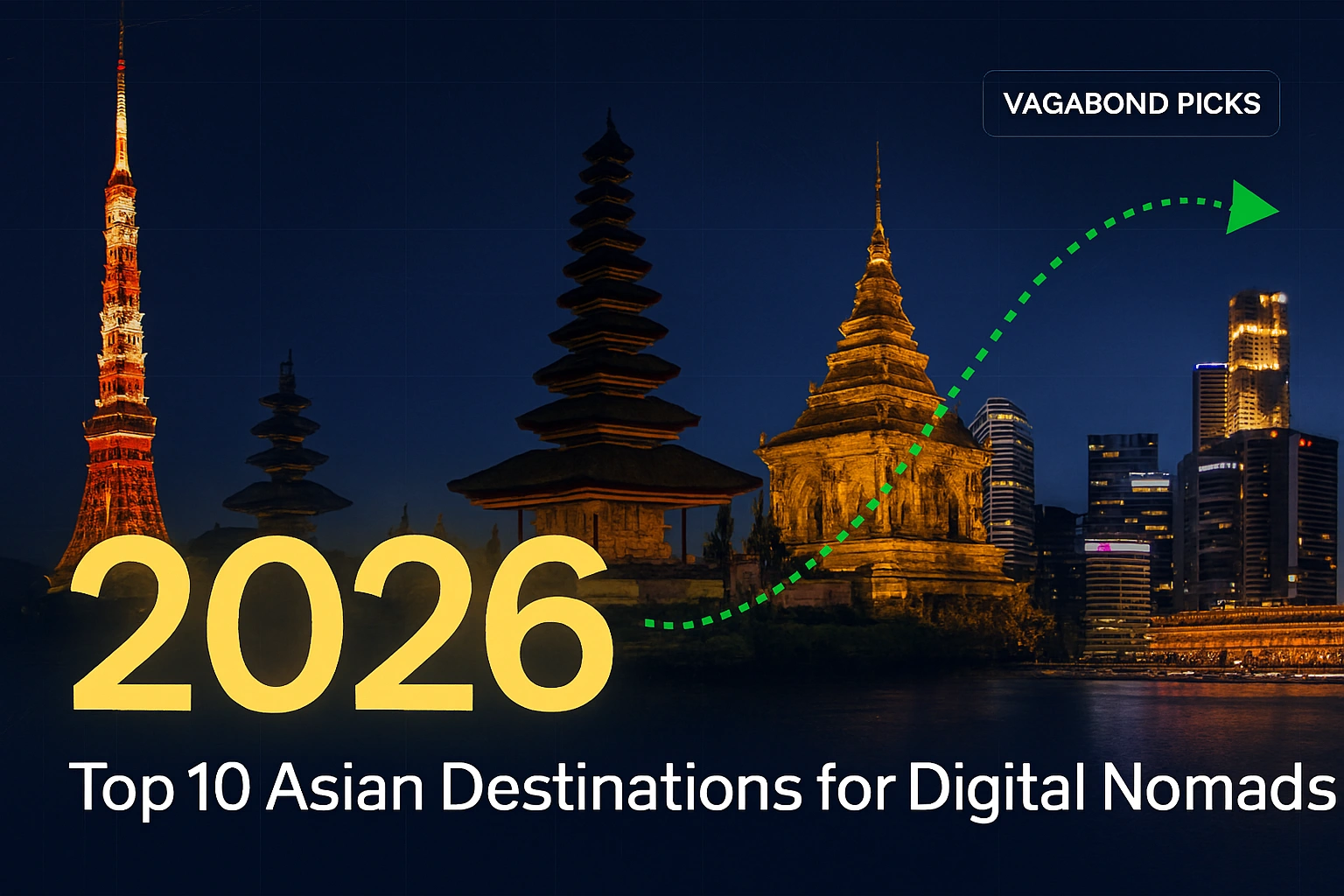
The Great Asian Remote Work Migration is Just Beginning
Here’s something that’ll make you rethink your overpriced San Francisco studio: there are currently 47 million digital nomads worldwide, and 38% of them are heading to Asia in 2026. That’s not a typo. While Western cities grapple with inflation and housing crises, Asia’s emerged as the undisputed champion for remote workers who refuse to sacrifice quality of life for affordability.
I’ve spent the better part of 2024 and early 2025 hopping between Asian cities, interviewing hundreds of remote workers, and analyzing economic data that’d make a World Bank economist jealous. What I’ve discovered isn’t just about cheap rent and fast wifi—though both are gloriously abundant. It’s about an entire ecosystem that’s evolved to support the workation lifestyle, from government-backed digital nomad visas to coworking spaces that’d put Silicon Valley to shame.
Asia in 2026 isn’t your backpacker trail from 2015. Countries like Thailand, Indonesia, and Malaysia have rolled out red carpets for remote workers with dedicated visa programs. Vietnam’s tech infrastructure has leapfrogged expectations. Japan’s finally cracked open its famously closed doors. And emerging destinations are offering incentives that sound too good to be true—until you realize they’re desperately competing for your laptop-powered GDP contribution.
This guide cuts through the Instagram filters and gets real about where you should actually plant your remote work setup for weeks, months, or longer. I’ve ranked these destinations using hard data: cost of living versus quality of life ratios, digital infrastructure benchmarks, visa accessibility, community strength, lifestyle factors, and healthcare quality. Each destination includes granular cost breakdowns, visa processes, coworking intel, and the kind of insider knowledge you’d normally need six months on the ground to gather.
Whether you’re bootstrapping a startup on ramen-and-ambition budgets or pulling in comfortable tech salaries, there’s an Asian city on this list calling your name.
How These Destinations Were Selected
I didn’t pick these cities because they photograph well (though they do). The methodology here combines quantitative metrics with qualitative ground truth:
Core Criteria: Monthly cost of living under $2,000 for comfortable living, internet speeds exceeding 50 Mbps average, accessible visa options for 60+ days, established digital nomad communities of 500+ active members, English proficiency sufficient for daily operations, and healthcare quality ranking in the top 50 globally.
Data Sources: Costs verified through Numbeo’s December 2024 indices, internet speeds from Ookla’s Speedtest Global Index Q4 2024, visa information current as of January 2025, and coworking data aggregated from Coworker.com and on-the-ground verification during my 2024 Asian tour.
The Top 10 Digital Nomad Destinations in Asia for 2026
1. Chiang Mai, Thailand – The Undisputed Digital Nomad Capital
If digital nomads had a hometown, Chiang Mai would be it. This northern Thai city didn’t just stumble into its reputation—it built it methodically over a decade, and 2026 finds it more refined than ever.
The Numbers That Matter:
- Monthly Cost: $800-$1,400 (studio apartment $300-500, meals $200-300, coworking $50-150, transport $30-50)
- Internet Speed: 287 Mbps average (fiber widely available at $15-25/month)
- Digital Nomad Visa: Thailand’s new Long-Term Resident (LTR) visa allows up to 10 years for qualified remote workers; Destination Thailand Visa (DTV) offers 180 days for $280
- Coworking Scene: 60+ spaces ranging from $45/month (Punspace) to $180/month (CAMP)
- Expat Population: Approximately 40,000, with 8,000+ digital nomads year-round
- English Proficiency: Moderate (EF EPI score: 52.46)
- Safety Index: 76.6/100 (Numbeo)
- Healthcare Quality: Excellent private hospitals like Chiang Mai Ram, costs 70% less than Western equivalents
- Temperature: 73-95°F year-round, cool season (Nov-Feb) ideal at 64-82°F
Economic Context: Thailand’s GDP grew 3.7% in 2024, and the government’s aggressive digital nomad courting isn’t subtle. The Bank of Thailand estimates remote workers contribute $2.8 billion annually to the economy. Currency stability remains strong with the baht trading predictably against major currencies. Chiang Mai specifically has attracted $340 million in tech startup funding since 2022, creating a genuine ecosystem beyond just laptop cafes.
The Practical Reality: You’ll base yourself in Nimman for proximity to everything, Old City for cultural immersion, or Santitham for local vibes at local prices. Punspace pioneered coworking here and remains excellent at $45-75/month. CAMP caters to the higher-end crowd at $180/month with rooftop pools and networking events that actually lead to business partnerships. Alt_ChiangMai offers the middle ground at $95/month.
For cafe working, Ristr8to serves world-championship-winning coffee with rock-solid wifi. Graph Table and Makerspace combine workspace with community. Expect to spend $2-3 on excellent local coffee, $4-5 at specialty shops.
The DTV visa process is straightforward: apply online, show proof of $14,000 in the bank and remote work, wait 15 days, receive 180 days with 180-day extension option. No joke—I processed mine in 12 days. Banking works through Bangkok Bank’s foreigner-friendly accounts. Grab a DTAC or AIS SIM for $10-15/month with unlimited data.
Cultural Integration: Chiang Mai’s work-life balance culture is infectious. Nobody’s impressed by your 80-hour weeks. The digital nomad community is massive but segmented—you’ve got the crypto crowd, the dropshippers, the agency owners, the writers, and everyone convenes at Sunday Walking Street or Loi Kroh boxing matches. Thai language basics dramatically improve your experience; locals appreciate effort more than accuracy.
Monthly networking events at CAMP and weekly mastermind groups at Punspace mean you’re never isolated unless you choose to be. The community skews entrepreneurial rather than corporate remote. Average age hovers around 28-34.
Insider Intelligence: Visit November through February—you’ll thank me when you’re not melting through March-May’s 100°F+ days. Burning season (Feb-April) brings hazardous air quality; many nomads temporarily relocate to islands. Negotiate annual apartment leases for 20-30% discounts. Avoid tourist-trap restaurants on Nimman’s main drag; parallel sois (alleys) offer authentic food at one-third the price. Join “Chiang Mai Digital Nomads” Facebook group (32,000+ members) before arriving—sublease gold mine and community intel.
The Bottom Line: Chiang Mai remains unbeatable for community, affordability, and infrastructure. It’s the training wheels destination that happens to be so good that veterans keep returning.
2. Bali (Canggu/Ubud), Indonesia – Where Wellness Meets WiFi
Bali transformed from backpacker paradise to digital nomad mecca so thoroughly that it’s now dealing with success-induced growing pains. But in 2026, if you can navigate the chaos, nowhere else offers this combination of tropical beauty, spiritual energy, and legitimate business networking.
The Numbers:
- Monthly Cost: $1,000-$1,800 (villa $400-800, food $250-400, coworking $80-180, scooter rental $50)
- Internet Speed: 87 Mbps average (Starlink becoming common at $120/month; local fiber $30-50)
- Visa: Indonesia’s Digital Nomad Visa (B211A) offers 60 days, extendable to 180 days total; costs approximately $120
- Coworking: 50+ spaces; Dojo Canggu ($120/month), Outpost Ubud ($150/month), BWork ($100/month)
- Expat Population: 30,000+ with 12,000+ digital nomads concentrated in Canggu and Ubud
- English Proficiency: High in nomad areas (EF EPI: 52.15 nationally)
- Safety Index: 64.2/100 (traffic chaos drops this score)
- Healthcare: BIMC Hospital and Siloam provide excellent care; medical evacuation insurance recommended
- Temperature: 75-88°F year-round, wet season Nov-March
Economic Analysis: Indonesia’s digital economy grew 22% in 2024, with Bali capturing disproportionate attention. The provincial government targets $500 million in annual digital nomad spending. Rupiah stability improved significantly, trading 15,400-15,800 to USD throughout 2024. Venture funding in Indonesian startups hit $2.1 billion in 2024, with Bali-based companies securing $180 million—tiny slice, but growing fast.
Ground Truth: Canggu is digital nomad central—surfable waves, endless cafes, networking events nightly. Ubud offers jungle tranquility, yoga culture, and fewer Kombi vans blasting house music at 2am. Choose based on your vibe preference; you’ll visit both anyway.
Dojo Canggu pioneered the coworking-accommodation hybrid model. Outpost Ubud surrounds you with rice paddies and provides legitimate productivity—worth the $150 premium. BWork in Seminyak attracts more established entrepreneurs. All offer killer networking; Bali’s community is unusually collaborative rather than competitive.
For visas, use trusted agents like Kitas or The Law Office for hassle-free processing. DIY works but prepare for bureaucratic adventures. Banking is trickier—Bank Mandiri and BCA require KITAS (limited stay permit); most nomads run foreign accounts with Wise transfers. Telkomsel and XL Axiata SIMs cost $5-10/month with generous data.
Scooter rental runs $40-60/month; essential for mobility. Traffic is genuinely dangerous—comprehensive travel insurance including medical evacuation is non-negotiable. Grab and Gojek work everywhere.
Cultural Context: Bali’s spiritual foundation runs deep. Respect temple ceremonies, dress codes, and Nyepi (silent day when entire island shuts down). The nomad community organizes around weekly Sunday Singha soccer matches, Thursday Dojo dinners, and Friday networking at various venues. Community skews lifestyle business owners, coaches, and creators rather than traditional tech.
Work-life balance tips heavily toward life. Expect surf sessions before noon meetings, yoga at sunset, beach clubs on Sundays. This rhythm isn’t for everyone—if you need external accountability, choose Chiang Mai. If you’ve got self-discipline, Bali’s autonomy is liberating.
Insider Moves: Arrive during shoulder season (April-May, Sept-Oct) for 30% lower accommodation costs and smaller crowds. Avoid Canggu if you hate traffic and influencers—seriously, it’s overwhelming. Ubud offers better focus; Sanur attracts older, quieter demographics. Negotiate villa rentals directly with owners through “Bali Long Term Rentals” Facebook group. Install Gojek before arrival for transportation and food delivery. Learn basic Bahasa Indonesia—”Terima kasih” and “Tidak apa apa” open doors.
Most overlooked insight: Bali burns through people quickly. Six months is the sweet spot; beyond that, many report burnout from infrastructure frustrations and transient community dynamics.
3. Ho Chi Minh City, Vietnam – Asia’s Best-Kept Digital Nomad Secret
While everyone flocked to Thailand and Bali, Vietnam quietly built world-class infrastructure and kept costs laughably low. Ho Chi Minh City (still called Saigon locally) in 2026 represents Asia’s best value proposition for remote workers who want urban energy without urban prices.
Key Statistics:
- Monthly Cost: $700-$1,200 (apartment $300-550, food $150-250, coworking $50-100, transport $20-40)
- Internet Speed: 186 Mbps average (fiber standard at $8-12/month—yes, seriously)
- Visa: E-visa offers 90 days single entry for $25, extendable; new digital nomad visa under development
- Coworking Spaces: 40+ options; Dreamplex ($90/month), Start Coworking ($65/month), Toong ($75/month)
- Expat Community: 100,000+ foreigners; 3,000+ digital nomads
- English Proficiency: Growing rapidly (EF EPI: 51.57)
- Safety Index: 73.4/100
- Healthcare: FV Hospital and Columbia Asia meet international standards, dirt cheap by Western metrics
- Temperature: 77-93°F year-round, rainy season May-Nov
Economic Landscape: Vietnam’s GDP surged 6.8% in 2024, one of Asia’s fastest growing economies. The government’s aggressive tech sector investment shows results—the country now produces 35,000 IT graduates annually. Ho Chi Minh City captured $1.2 billion in startup funding in 2024, with fintech and e-commerce dominating. The dong remains stable against USD, trading predictably at 24,000-24,500.
China’s manufacturing exodus benefits Vietnam enormously. Major tech companies including Samsung, LG, and Intel expanded Vietnamese operations in 2024, creating sophisticated business ecosystem beyond just budget manufacturing.
Practical Operations: Districts 1 and 2 house most digital nomads. District 1 offers walkability and urban convenience; District 2 (Thao Dien specifically) provides expat comfort at slightly higher costs. District 3 and 7 attract locals and budget-conscious nomads.
Dreamplex operates multiple premium locations with excellent networking, though $90/month feels expensive locally. Start Coworking in District 3 provides solid fundamentals at $65. Toong’s multiple locations offer flexibility. Cafe culture thrives—The Workshop, L’Usine, and Saigon Outcast combine workspace with community. Expect $1-2 local coffee, $3-4 specialty.
E-visa application takes 3 days online, requires passport scan and photo. Extensions happen through visa agents citywide for $60-80. Banking impossible without work permits; foreign accounts with Wise work perfectly. Grab SIM from Viettel or Mobifone for $5-10/month with abundant data.
Grab dominates transportation—motorbike rides cost $0.50-2 across city. Rent motorbikes monthly for $30-50, but traffic is genuinely terrifying if you’re inexperienced. Grab bikes and buses suffice.
Cultural Integration: Vietnamese work ethic is intense—locals think Westerners are lazy. The digital nomad community is smaller than Thailand or Bali but quality over quantity applies. Monthly events at coworking spaces, weekly meetups organized through “Saigon Digital Nomads” Facebook group (8,000 members). Community skews developers, designers, and marketers rather than lifestyle entrepreneurs.
Vietnamese language basics help enormously for anything beyond tourist zones. Locals appreciate effort, and you’ll access better food, prices, and experiences. The pace is frenetic—Ho Chi Minh never stops moving.
Insider Knowledge: Visit October through April for tolerable weather; May-September brings oppressive humidity and daily downpours. District 1’s Ben Thanh Market area is overpriced tourist trap—eat where you see local families. Get tailor-made clothes at fabric markets for a fraction of back-home costs. Coffee culture here rivals Italy; embrace it. Join “Saigon Expats” and “Vietnam Digital Nomads” groups before arrival.
Hidden gem: Nguyen Hue Walking Street weekend evenings offer free outdoor yoga, street performances, and spontaneous networking with locals and expats alike.
The catch? Visa runs every 90 days grow tedious, though cheap flights to Cambodia or Thailand make it manageable. Vietnam’s working toward long-term digital nomad visa—worth checking latest updates.
4. Penang, Malaysia – The Underrated Southeast Asian Gem
While Kuala Lumpur gets attention, Penang offers Malaysia’s best digital nomad experience in 2026. This island state combines UNESCO heritage, legendary food, Chinese-Malay-Indian cultural fusion, and costs that make Thailand look expensive.
The Data:
- Monthly Cost: $800-$1,300 (apartment $350-600, food $200-300, coworking $70-120, transport $25-40)
- Internet Speed: 164 Mbps average (fiber common at $25-35/month)
- Visa: Malaysia’s new Digital Nomad (DE Rantau) Pass offers 12 months for $1,020, requires $28,000 annual income
- Coworking Options: 25+ spaces; Common Ground ($110/month), KODE ($85/month), Hin Bus Depot ($75/month)
- Expat Population: 18,000+ in Penang; 1,500+ digital nomads
- English Proficiency: Very high (EF EPI: 62.01—Malaysia ranks highest in Asia)
- Safety Index: 79.2/100
- Healthcare: Adventist Hospital and Island Hospital provide excellent care, medical tourism destination
- Temperature: 77-90°F year-round, wettest Aug-Nov
Economic Picture: Malaysia’s GDP grew 4.3% in 2024 with government prioritizing digital economy transformation. Penang specifically secured $4.2 billion in manufacturing investment during 2024, primarily semiconductors and electronics. The ringgit stabilized around 4.6-4.8 to USD. Penang’s tech workforce grew 18% annually since 2022—mature ecosystem supporting digital infrastructure.
The DE Rantau digital nomad visa launched in 2024 demonstrates Malaysia’s serious remote worker courtship. Unlike neighboring countries’ visa runs, this provides genuine long-term stability.
Boots on Ground: Georgetown (Penang’s capital) houses most nomads in neighborhoods like Armenian Street, Chulia Street, and Tanjung Tokong. Georgetown’s UNESCO heritage zone offers character; Tanjung Bungah provides beach access. Batu Ferringhi is resort territory—too isolated for working nomads.
Common Ground in Gurney Plaza combines coworking with upscale mall access. KODE in Georgetown’s heritage zone offers character and community. Hin Bus Depot uniquely combines coworking, arts space, and weekend market. Cafe scene thrives—Narrow Marrow, Ome by Spacebar, and China House provide reliable wifi and excellent coffee at $2-4.
DE Rantau visa requires online application, proof of remote work, $28,000 annual income evidence, and $1,020 fee. Processing takes 4-6 weeks. Alternatively, social visit passes offer 90 days visa-free for many nationalities. Banking relatively easy—HSBC and Maybank offer expat accounts. Grab Celcom or Maxis SIM for $10-15/month.
Penang’s bus system (Rapid Penang) is cheap ($0.30-1 per ride) but limited. Grab works perfectly. Monthly car rentals run $250-350—worthwhile for exploring island. Scooters rent for $60-80/month.
Cultural Dynamics: Penang’s multicultural identity creates unique atmosphere—Chinese New Year, Deepavali, and Hari Raya all celebrated prominently. English proficiency is genuinely excellent; you’ll navigate everything easily. The digital nomad community is intimate rather than overwhelming—you’ll recognize faces quickly.
Work culture here is serious—Penang’s substantial manufacturing and tech presence means business-minded atmosphere versus Bali’s lifestyle vibe. Networking events at Common Ground and KODE connect you with local entrepreneurs and remote workers alike. Community skews software developers, consultants, and location-independent professionals.
Food is Penang’s superpower. Street hawker stalls serve world-class cuisine at $1-3 per meal. Char kway teow, laksa, nasi kandar—you’ll gain weight happily. Georgetown’s food scene justifies the visit alone.
Insider Tactics: Visit November through April for best weather and avoid monsoon season. Georgetown’s heritage zone floods during heavy rains—choose elevated apartments. Penang’s relatively small island means you’ll explore everything within weeks; plan side trips to Cameron Highlands or Langkawi for variety. Join “Penang Expats” and “Digital Nomads Malaysia” Facebook groups.
Best-kept secret: The state library offers free, excellent wifi and air conditioning—locals study there for hours, and it’s perfectly acceptable for remote work.
The challenge? Penang feels sleepier than Bangkok or Ho Chi Minh—fantastic if you want focus and calm, potentially boring if you need constant stimulation. The smaller nomad community means limited networking compared to Thailand or Bali, though quality relationships develop more naturally.
5. Taipei, Taiwan – Asia’s Most Livable Tech Hub
Taiwan flew under digital nomad radar for years, but 2026 finds Taipei delivering the rare combination of advanced infrastructure, reasonable costs, impeccable safety, and genuine cultural richness. If you want Asia’s best quality of life and don’t mind paying moderate premiums over Southeast Asia, Taipei wins.
Core Metrics:
- Monthly Cost: $1,200-$2,000 (apartment $500-900, food $300-450, coworking $100-200, transport $40-60)
- Internet Speed: 297 Mbps average (world-class fiber at $25-40/month)
- Visa: Visa-exempt entry for 90 days for many nationalities; Gold Card offers 1-3 years for qualified professionals at $320
- Coworking Scene: 35+ spaces; CIT Taipei ($180/month), Kafnu Taipei ($200/month), Changee Taipei ($150/month)
- Expat Population: 20,000+ long-term; 800+ digital nomads
- English Proficiency: Moderate (EF EPI: 55.67)
- Safety Index: 88.4/100 (among world’s safest cities)
- Healthcare: Taiwan’s national healthcare system ranks top 10 globally; foreigners access at $60-80/month
- Temperature: 62-89°F year-round, best March-May and Sept-Nov
Economic Foundation: Taiwan’s economy grew 3.9% in 2024, driven by semiconductor dominance—TSMC alone represents 30% of GDP. The tech ecosystem is mature beyond manufacturing; Taipei houses 4,000+ startups with $890 million funding secured in 2024. New Taiwan Dollar maintains stability around 31-32 to USD. Government actively courts international talent through Gold Card program with streamlined residency paths.
Operational Reality: Da’an and Xinyi districts concentrate nomads—accessible, central, packed with cafes. Zhongshan offers slightly lower costs with excellent food scene. Tianmu attracts families and longer-term expats. Taipei’s MRT (subway) reaches everywhere—nobody needs cars.
CIT Taipei provides premium experience at $180/month with multiple locations. Kafnu delivers upscale coworking-accommodation hybrid. Changee offers solid fundamentals at $150. Honestly though, Taipei’s cafe culture is so developed that many nomads skip coworking entirely. Louisa Coffee chain has 400+ locations with decent wifi. Independent cafes like Fika Fika, Kafnu Cafe, and Cama Cafe provide excellent work environments at $3-5 per coffee.
Visa-exempt entry covers most Western countries for 90 days—no paperwork. Gold Card program suits qualified tech professionals, requiring $65,000+ annual income or specialized skills. Application takes 30-60 days online. Banking requires ARC (Alien Resident Certificate) for long-term residents; short-term visitors manage with foreign accounts. Grab Chunghwa or Taiwan Mobile SIM for $15-25/month with excellent coverage.
MRT monthly passes cost $48 for unlimited rides—incredibly efficient system shame other Asian cities. Youbikes (bike-share) integrated everywhere at minimal cost. Walking covers most neighborhoods—Taipei is genuinely pedestrian-friendly.
Cultural Experience: Taiwanese people are legendarily friendly and helpful, though English proficiency varies. Young professionals often speak functional English; older generations typically don’t. Google Translate bridges gaps easily. The digital nomad community is tiny compared to Southeast Asia—you’ll connect through Taiwan Gold Card Facebook group (7,000 members) and occasional meetups.
Work-life balance here leans heavily toward work for locals—expect businesses open until midnight, night markets bustling at 11pm. Foreigners adopt whatever rhythm suits them. The startup scene is serious and tech-focused rather than lifestyle-entrepreneur oriented.
Night markets define Taipei’s soul. Shilin, Raohe, Tonghua—they’re not tourist traps, they’re genuine local culture offering world-class street food at $1-4 per item. Hot springs in Beitou offer weekend relaxation. Mountains surrounding city provide hiking escapes accessible via MRT.
Insider Details: Visit March-May or September-November for ideal weather. July-August is brutally humid; typhoon season peaks August-October. Taipei’s rainy, but unlike tropical downpours, it’s persistent drizzle—pack quality rain gear. International health insurance recommended for first 6 months before accessing national healthcare. Join “Taiwan Gold Card” and “Taipei Digital Nomads” Facebook groups.
Overlooked advantage: Taipei’s location enables cheap flights throughout Asia—Taiwan often serves as regional hub for digital nomads doing extended Asian tours.
The catch? Higher costs than Southeast Asia (though reasonable by Western standards) and smaller, less established nomad community mean less spontaneous networking. Taipei rewards depth over breadth—stay months rather than weeks to appreciate fully.
6. Tokyo/Fukuoka, Japan – Finally Accessible for Remote Workers
Japan’s legendary closed-door policy cracked open in 2024-2025 with new visa options targeting remote workers. Tokyo remains expensive, but Fukuoka offers Japan’s culture at manageable costs. If you’ve dreamed of working from Japan but assumed impossible, 2026 is your year.
The Numbers:
- Monthly Cost Tokyo: $2,000-$3,200 (apartment $800-1,400, food $500-700, coworking $200-300, transport $80-120)
- Monthly Cost Fukuoka: $1,400-$2,200 (apartment $500-900, food $350-500, coworking $150-250, transport $50-80)
- Internet Speed: 227 Mbps average (fiber standard at $35-50/month)
- Visa: Japan’s new Digital Nomad Visa allows 6 months for citizens of 49 countries; requires $28,000 annual income
- Coworking: 100+ Tokyo spaces (WeWork $350/month, The Terminal $280/month); 20+ Fukuoka spaces (Fukuoka Growth Next $180/month)
- Expat Population: 300,000+ Tokyo; 15,000+ Fukuoka
- English Proficiency: Low (EF EPI: 47.37 nationally)
- Safety Index: 91.8/100 (world’s safest)
- Healthcare: World-class, expensive for non-residents
- Temperature Tokyo: 37-86°F; Fukuoka: 43-90°F
Economic Context: Japan’s economy grew 1.8% in 2024—modest but stable. The yen weakened to 148-158 per USD throughout 2024, making Japan more affordable than previous decade. Startup funding hit $4.3 billion in 2024 with Tokyo capturing 80%. Fukuoka specifically positions itself as startup city, offering incentives and streamlined business registration.
The Digital Nomad Visa represents Japan’s recognition that its population decline requires international talent attraction. This is historically unprecedented openness from notoriously closed country.
Ground Operations: Tokyo’s Shibuya and Shinjuku house most nomads—expensive, central, endless options. Nakameguro and Daikanyama offer quieter sophistication. Fukuoka’s Tenjin and Daimyo districts provide urban convenience; Momochihama offers beach access.
Tokyo’s coworking is premium-priced—WeWork at $350/month remains cheaper than comparable space back home. The Terminal in Roppongi targets international professionals. Honestly, Tokyo’s cafe culture works beautifully for laptop work—chains like Doutor and Tully’s welcome extended stays. Fukuoka’s Fukuoka Growth Next is startup-focused government initiative at reasonable $180/month.
Digital Nomad Visa requires online application, passport, $28,000 annual income proof, and health insurance. Processing takes 4-8 weeks. Banking extremely difficult—Japan’s notoriously xenophobic banking system requires resident status. Wise and Revolut essential. Grab SIM from NTT Docomo or SoftBank for $40-60/month.
Tokyo’s subway is world-famous for efficiency; monthly passes run $100-150 depending on lines. Fukuoka is more compact—subway pass $65/month covers most needs. Both cities are highly walkable.
Cultural Integration: English proficiency is genuinely low—Google Translate is essential tool, not occasional convenience. Japanese people are incredibly polite and helpful despite language barriers. The digital nomad community is nascent—you’re pioneering rather than joining established scene. Networking happens through Tokyo Startup Meetup and similar events rather than nomad-specific groups.
Japanese work culture is intense—locals work long hours with limited vacation. As foreigner, you’re exempt from these expectations but should respect them. Punctuality is sacred; being late is genuinely disrespectful.
Japan’s cultural richness is incomparable—temples, tradition, seasonal celebrations, and modern innovation coexist seamlessly. Food is world-class at every price point from $5 ramen to $300 omakase.
Insider Intelligence: Visit March-May (cherry blossom season, though crowded) or October-November (fall foliage, ideal weather). Summer is oppressively humid; January-February can be surprisingly cold. Learning basic Japanese is essential—locals appreciate effort enormously, and navigating anything beyond tourist zones requires it.
Best-kept secret: Fukuoka offers 80% of Tokyo’s culture and energy at 60% of the cost. It’s also geographically closer to Seoul, Shanghai, and Bangkok—better regional hub for nomads doing extended Asia tours.
The challenge? Higher costs than Southeast Asia, lower English proficiency than Singapore or Hong Kong, and smaller nomad community mean Japan suits more experienced nomads rather than first-timers. Worth it if you value safety, infrastructure, and culture above affordability and easy integration.
7. Da Nang, Vietnam – The Rising Star Beach City
While Ho Chi Minh City offers urban intensity, Da Nang provides Vietnam’s best lifestyle balance—legitimate city infrastructure with beach access, developed enough for reliability but relaxed enough for sanity. This central coast city is 2026’s breakout destination.
Statistics:
- Monthly Cost: $650-$1,100 (apartment $250-450, food $150-250, coworking $50-90, transport $20-35)
- Internet Speed: 168 Mbps average (fiber standard at $8-12/month)
- Visa: Same as HCMC—E-visa 90 days for $25
- Coworking: 15+ spaces; Enouvo Space ($60/month), The Hive ($75/month), Indochina Coworking ($55/month)
- Expat Community: 5,000+ foreigners; 1,200+ digital nomads (growing 40% annually)
- English Proficiency: Moderate and improving (EF EPI: 51.57)
- Safety Index: 77.8/100
- Healthcare: Da Nang Hospital and Family Medical Practice, solid but less advanced than HCMC
- Temperature: 71-95°F, dry season Feb-July ideal
Economic Snapshot: Da Nang is Vietnam’s third-largest economy with 7.2% GDP growth in 2024—outpacing even HCMC. The government designates Da Nang as special innovation city with tech incentives. Beach resort development accelerated with $2.1 billion investment in 2024. The city specifically targets digital nomads through marketing campaigns positioning itself as alternative to oversaturated Thailand destinations.
Practical Details: My Khe Beach area houses most nomads—30-minute beach access combined with urban convenience. An Thuong offers expat-friendly restaurants and bars. Phuoc My (near Non Nuoc Beach) suits those prioritizing beach over city center. Son Tra Peninsula provides nature escape.
Coworking is affordable even by Vietnamese standards. Enouvo Space at $60/month offers professional environment. The Hive provides social community atmosphere. Indochina Coworking at $55/month delivers solid fundamentals. Cafe culture rivals HCMC—43 Factory Coffee, Cong Caphe, and Bread of Life provide excellent work environments at $1-3 per coffee.
Visa process identical to Ho Chi Minh City—90-day e-visa online, extensions through local agents. Banking same challenges; foreign accounts work fine. Grab Viettel or Mobifone SIM for $5-10/month.
Transportation dominated by Grab—motorbike rides $0.40-1.50 across city. Rent scooters for $30-45/month, though Da Nang’s traffic is considerably calmer than HCMC. The city is bike-friendly with coastal roads perfect for cycling.
Cultural Scene: Da Nang’s digital nomad community is intimate and collaborative—everyone knows everyone within months. Monthly beach meetups, weekly coworking events, and Friday evening gatherings at An Thuong bars create genuine connections. The vibe is substantially less transient than Bali—people stay 6+ months rather than weeks.
Vietnamese culture dominates more than HCMC’s international zones. You’ll integrate deeper into local life, which enriches experience but requires more adaptation effort. Basic Vietnamese helps enormously. The pace is relaxed—locals embrace work-life balance more than Saigon’s intensity.
Dragon Bridge’s weekend fire and water shows, Marble Mountains’ cave temples, Ba Na Hills’ Golden Bridge, and Hoi An (30 minutes south) provide weekend adventures. Son Tra Peninsula offers hiking and beaches without crowds.
Insider Wisdom: Visit February through July for dry season perfection—warm without oppressive heat, minimal rain. August-January brings typhoons and heavy rain. My Khe Beach is gorgeous but can have strong currents—respect warning flags. Join “Da Nang Expats” Facebook group (11,000 members) before arrival—essential for housing, community, and intel.
Hidden advantage: Da Nang International Airport connects directly to Seoul, Tokyo, Singapore, Bangkok, and major Chinese cities—excellent hub for regional travel at bargain prices.
The reality? Da Nang won’t overwhelm you with nightlife or endless coworking spaces. It rewards people who prioritize lifestyle quality, lower costs, and genuine community over constantly stimulating urban chaos. If Chiang Mai feels too crowded and Bali too expensive, Da Nang is your answer.
8. Kuala Lumpur, Malaysia – The Undervalued Urban Powerhouse
While everyone obsesses over beach destinations, Kuala Lumpur quietly delivers Asia’s best urban digital nomad experience. Genuine city infrastructure at developing-world prices, excellent English, unmatched diversity, and a tech scene that’s actually producing unicorns.
Core Data:
- Monthly Cost: $900-$1,500 (apartment $400-700, food $220-350, coworking $80-150, transport $30-50)
- Internet Speed: 177 Mbps average (fiber widely available at $30-45/month)
- Visa: DE Rantau Pass 12 months for $1,020; or Social Visit Pass 90 days visa-free
- Coworking: 60+ spaces; Common Ground ($130/month), WORQ ($110/month), Colony ($140/month)
- Expat Population: 180,000+ with 4,500+ digital nomads
- English Proficiency: Very high (EF EPI: 62.01)
- Safety Index: 76.9/100
- Healthcare: Prince Court Medical Centre and Gleneagles top-tier at bargain prices
- Temperature: 77-92°F year-round, afternoon thunderstorms common
Economic Landscape: Malaysia’s economy grew 4.3% in 2024 with Kuala Lumpur driving growth. The city’s startup ecosystem matured significantly—$1.8 billion venture funding in 2024 produced Southeast Asia’s newest unicorn (BPAY). Government’s MyDigital initiative invested $18 billion in digital infrastructure through 2025. KL positions itself as Southeast Asia’s fintech hub with regulatory frameworks attracting international companies.
Ringgit stabilized around 4.6-4.8 per USD. Unlike neighboring countries requiring visa runs, Malaysia’s year-long DE Rantau pass provides genuine stability for remote workers.
On-the-Ground Reality: KLCC (Petronas Towers area) offers premium living—expensive but undeniably convenient. Bangsar attracts expats with diverse dining and shopping. Mont Kiara is essentially “Little Korea/Japan”—international but lacks local character. Bukit Bintang provides urban energy and shopping. Sri Hartamas balances affordability with expat amenities.
Common Ground operates multiple locations with excellent facilities at $130/month. WORQ provides solid middle-ground at $110. Colony specializes in startup community. Cafe culture is extensive—VCR, Pulp, and Feeka serve excellent coffee with reliable wifi at $3-5. Shopping mall coworking is uniquely Malaysian—Nu Sentral, Publika, and The Gardens offer excellent free wifi making mall cafes viable workspaces.
DE Rantau visa requires online application, $28,000 annual income proof, and $1,020 fee—processing takes 4-6 weeks. Banking relatively easy for visa holders—Maybank and CIMB offer expat accounts. Grab Maxis or Celcom SIM for $10-18/month with generous data.
KL’s public transport improved dramatically—MRT, LRT, and monorail cover most areas at $0.50-1.50 per ride. Grab is incredibly cheap—cross-city rides rarely exceed $5. Monthly car rentals run $300-400—worthwhile for exploring Malaysia’s excellent highways connecting to Penang, Cameron Highlands, and Johor Bahru.
Cultural Integration: KL’s multicultural identity creates unique atmosphere—Malay, Chinese, Indian communities coexist, celebrating Hari Raya, Chinese New Year, and Deepavali equally. English proficiency is genuinely excellent; you’ll navigate everything easily. The digital nomad community is established but not overwhelming—monthly networking events at coworking spaces, weekly meetups organized through “KL Digital Nomads” group (6,500 members).
Work culture here is business-serious—KL’s substantial corporate presence means professional atmosphere. Food scene is world-class—Jalan Alor night market, Brickfields for Indian cuisine, Petaling Street for Chinese food, all offering incredible meals at $2-5.
Shopping is genuinely excellent—KL’s malls rival any global city. This matters more than you’d think when you need quality electronics, clothing, or household items. Pavilion KL, Suria KLCC, and Mid Valley Megamall are climate-controlled playgrounds.
Insider Tactics: KL doesn’t have “seasons”—it’s consistently hot and humid with afternoon thunderstorms. Best practice: work mornings, explore air-conditioned malls during peak heat, outdoor activities evening. Traffic is notorious—avoid driving during rush hours (7-9am, 5-8pm). Join “KL Expats” and “Malaysia Digital Nomads” groups before arrival.
Overlooked gem: Bukit Nanas Forest Reserve offers jungle hiking in city center—surreal experience. TREC and Changkat Bukit Bintang provide nightlife when needed.
The challenge? KL lacks beach access and some find the constant urban environment exhausting. The city rewards those who appreciate modern infrastructure, cultural diversity, and serious business networking over tropical beach vibes. It’s Southeast Asia’s most “Western” major city, which is advantage or disadvantage depending on what you seek.
9. Colombo, Sri Lanka – The Frontier Opportunity
Sri Lanka emerged from economic crisis in 2023-2024 and Colombo in 2026 represents frontier opportunity—dramatically underpriced, improving infrastructure, and government desperate to attract digital nomad dollars. If you’re willing to tolerate some rough edges, rewards are substantial.
Key Metrics:
- Monthly Cost: $600-$1,000 (apartment $200-400, food $150-250, coworking $60-100, transport $25-40)
- Internet Speed: 94 Mbps average (fiber expanding rapidly at $12-20/month)
- Visa: Tourist visa offers 30 days free on arrival, extendable to 6 months; Digital Nomad Visa under development
- Coworking: 12+ spaces; Hatch ($90/month), Coloft ($75/month), Cinnamon Life ($110/month)
- Expat Population: 8,000+ with 500+ digital nomads (rapidly growing)
- English Proficiency: High (legacy of British colonialism)
- Safety Index: 68.4/100
- Healthcare: Nawaloka Hospital and Durdans Hospital provide good care, extremely affordable
- Temperature: 75-88°F year-round, monsoons May-Sept and Oct-Jan
Economic Situation: Sri Lanka’s 2022 economic collapse devastated the country, but recovery accelerated through 2024. GDP growth reached 4.2% in 2024 after two years of contraction. IMF bailout terms include economic reforms attracting international business. Rupee stabilized around 320-340 per USD after 2022’s collapse.
The government views digital nomads as economic lifeline—low-infrastructure tourists who bring hard currency. Plans for dedicated digital nomad visa and tax incentives are advancing through parliament. Colombo specifically invested $400 million in infrastructure improvements during 2024.
Practical Reality: Colombo 3 (Kollupitiya) and Colombo 7 (Cinnamon Gardens) house most expats—safe, central, relatively developed. Colombo 2 (Fort/Slave Island) offers urban grittiness. Mount Lavinia provides beach access 30 minutes south. Dehiwala suits budget-conscious nomads.
Hatch is Colombo’s premier startup-focused space at $90/month. Coloft provides solid fundamentals at $75. Cinnamon Life is newest, upscale option. Cafe culture is developing—Cafe Kumbuk, Commons, and Gallery Cafe offer workspace-friendly environments at $2-4 per coffee.
Tourist visa is free on arrival for 30 days, extendable to 180 days total through immigration department for approximately $100. Process requires patience and paperwork. Banking difficult—Wise essential. Dialog and Mobitel SIMs cost $5-10/month with decent data allowances.
Tuk-tuks and PickMe (local Uber equivalent) handle transportation—cross-city rides $2-5. Uber operates but PickMe has better coverage. Monthly vehicle rentals run $200-300 for cars, $80-120 for scooters. Traffic is chaotic but manageable.
Cultural Experience: Sri Lankan hospitality is genuinely warm—locals eager to help despite recent hardships. English proficiency is high, though accents require adjustment initially. The digital nomad community is pioneering phase—you’ll connect through “Sri Lanka Digital Nomads” Facebook group (3,200 members) and occasional meetups.
Work culture is relaxed by Asian standards—locals appreciate work-life balance. Food is incredible fusion of Indian, Dutch, Portuguese, and British influences—rice and curry plates at $1-3, fresh seafood ridiculously cheap. Buddhism dominates culture; temples and practices visible everywhere.
Colombo offers beach city advantages without typical beach city prices. Weekend trips to Ella, Sigiriya, or Galle cost minimal amounts—Sri Lanka is compact with incredible sightseeing.
Insider Knowledge: Visit November through April for dry season perfection. May-September brings southwestern monsoon; October-January brings northeastern monsoon. Infrastructure challenges are real—periodic power cuts during crisis years taught everyone to keep backup batteries charged. Situation improved dramatically in 2024-2025 but remain prepared.
Best-kept secret: Sri Lanka’s nine UNESCO World Heritage sites are accessible weekend trips from Colombo—ancient cities, mountain railways, fortress rocks all within 3-6 hours.
The reality? Colombo is frontier territory requiring adaptability and patience. Infrastructure lags Thailand or Malaysia. Bureaucracy can frustrate. But for early adopters willing to tolerate rough edges, you’re accessing incredible value, positioning yourself in emerging market, and experiencing authentic South Asian culture without India’s overwhelming intensity. As Sri Lanka stabilizes, Colombo will become significantly more expensive—2026 is the window.
10. Manila (BGC/Makati), Philippines – The English-Speaking Urban Wild Card
The Philippines rarely appears on polished digital nomad lists, but Manila’s Bonifacio Global City (BGC) delivers something unique: American-level English fluency, Western-style infrastructure, Southeast Asian prices, and chaotic energy that’s either exhilarating or exhausting depending on your temperament.
The Numbers:
- Monthly Cost: $900-$1,500 (apartment BGC $500-900, food $250-400, coworking $90-180, transport $30-50)
- Internet Speed: 96 Mbps average (fiber common at $25-35/month)
- Visa: Visa-free 30 days on arrival for most nationalities, extendable
- Coworking: 35+ spaces; KMC Solutions ($150/month), The Loft ($120/month), Acceler8 ($140/month)
- Expat Population: 220,000+ with 3,000+ digital nomads
- English Proficiency: Very high (92% proficiency—highest in Asia)
- Safety Index: 63.2/100 (lower due to specific areas; BGC is safe at 78+)
- Healthcare: St. Luke’s Medical Center and Makati Medical Center excellent, affordable
- Temperature: 77-93°F year-round, dry season Nov-May
Economic Overview: Philippines’ GDP grew 5.6% in 2024 with BPO (business process outsourcing) sector driving economy. Manila captures most tech investment—$1.1 billion startup funding in 2024. The peso trades 55-58 per USD with reasonable stability. BGC specifically represents Philippines’ attempt at creating Singapore-like business district—modern, planned, completely different from chaotic greater Manila.
The government launched digital nomad-friendly policies in 2024 recognizing country’s natural advantages: English proficiency eliminates biggest barrier facing most Asian destinations.
Boots on Ground: BGC is Manila’s digital nomad bubble—modern, safe, walkable, entirely different from rest of metro Manila. Makati offers similar quality slightly older. Poblacion (Makati) provides nightlife and restaurants. Mandaluyong and Pasig house more locals and lower prices. Avoid most of metro Manila—traffic is genuinely world’s worst.
KMC Solutions operates multiple premium locations at $150/month. The Loft in BGC provides excellent community at $120. Acceler8 caters to startups. Cafe culture thrives—Early Bird Breakfast Club, The Curator, and Draft Gastropub provide workspace-friendly environments. Filipino coffee shops (Bo’s Coffee, Coffee Project) offer local alternatives at $2-3.
Visa-free entry provides 30 days, extendable to 59 days for $65 at immigration offices. Further extensions possible but require patience with bureaucracy. Banking difficult without work authorization—Wise essential. Grab Globe or Smart SIM for $8-15/month with generous data.
Transportation dominated by Grab—essential tool surviving Manila. BGC is walkable internally, but traveling between areas requires vehicles. Traffic is apocalyptic—plan accordingly. Budget 60-90 minutes for trips that should take 20. Monthly car services run $300-500; most nomads stick to Grab despite costs adding up.
Cultural Dynamics: Filipino hospitality is legendary—locals extraordinarily friendly and helpful. English fluency is legitimately excellent; you’ll navigate everything easily. The digital nomad community is established—monthly networking events, weekly meetups organized through “BGC Digital Nomads” group (8,000 members), and substantial coworking communities.
Work culture is unique—Filipinos are hardworking but also value family and relationships. Business operates on personal connections; networking here yields results. The BPO sector means thousands of young professionals working remote-friendly schedules, creating relatable peer group.
Food scene combines Spanish, Chinese, American, and indigenous influences. Manila’s restaurant quality rivals any Asian city, with incredible value—Michelin-quality meals at $15-25. BGC specifically offers international cuisine matching any global city.
Typhoon season (June-November) brings heavy rains and occasional severe storms. December-May offers better weather though still hot and humid throughout.
Insider Intelligence: BGC is Manila’s only walkable, safe, modern district—base yourself there despite higher costs. Exploring greater Manila requires local guidance; safety varies dramatically by area. Join “BGC Expats” and “Manila Digital Nomads” groups before arrival.
Best-kept secret: Philippines’ 7,000+ islands offer endless weekend adventures—El Nido, Siargao, Cebu, Bohol all accessible via cheap domestic flights. Many nomads use Manila as base while exploring islands monthly.
The challenge? Manila’s infrastructure outside BGC bubble is genuinely challenging—traffic, pollution, and poverty are confronting. The city rewards those who value English fluency and Western amenities over orderly infrastructure and pristine environments. It’s also increasingly expensive relative to other Southeast Asian options—BGC rivals Bangkok’s nicest neighborhoods for costs without matching overall city quality.
However, if you’re American or native English speaker finding language barriers frustrating elsewhere, Manila eliminates that challenge entirely. The Filipino diaspora worldwide also means global networking opportunities—you’ll meet people with connections everywhere.
Destination Comparison Table
| Destination | Monthly Cost | Internet Mbps | Visa Duration | Coworking Cost | English Level | Safety Score |
|---|---|---|---|---|---|---|
| Chiang Mai | $800-1,400 | 287 | 180 days | $45-180 | Moderate | 76.6 |
| Bali | $1,000-1,800 | 87 | 180 days | $80-180 | High (zones) | 64.2 |
| Ho Chi Minh | $700-1,200 | 186 | 90 days | $50-100 | Growing | 73.4 |
| Penang | $800-1,300 | 164 | 365 days | $70-120 | Very High | 79.2 |
| Taipei | $1,200-2,000 | 297 | 90 days | $100-200 | Moderate | 88.4 |
| Tokyo/Fukuoka | $1,400-3,200 | 227 | 180 days | $150-350 | Low | 91.8 |
| Da Nang | $650-1,100 | 168 | 90 days | $50-90 | Moderate | 77.8 |
| Kuala Lumpur | $900-1,500 | 177 | 365 days | $80-150 | Very High | 76.9 |
| Colombo | $600-1,000 | 94 | 180 days | $60-110 | High | 68.4 |
| Manila BGC | $900-1,500 | 96 | 59 days | $90-180 | Very High | 63.2/78 |
Emerging Trends Shaping Asia’s Digital Nomad Landscape in 2026
The remote work revolution in Asia isn’t just continuing—it’s accelerating and evolving in unexpected ways. Here’s what’s actually happening beyond the travel blog platitudes.
Government Policy Competition: Countries are now actively competing for digital nomad dollars through visa programs. Thailand, Malaysia, Indonesia, and Japan all launched or enhanced digital nomad visas in 2024-2025. This isn’t altruism—governments recognize remote workers bring foreign currency, support local businesses, and require minimal infrastructure. Expect Vietnam, Philippines, and Cambodia to announce similar programs in 2026. The trend benefits nomads through longer visa durations, simplified processes, and sometimes tax benefits.
Infrastructure Investment: Asia’s betting big on digital infrastructure. Starlink’s expansion across Southeast Asia is eliminating the last connectivity barriers. Vietnam invested $2.8 billion in 5G rollout during 2024. Indonesia’s targeting 90% national fiber coverage by 2027. For digital nomads, this means reliable 100+ Mbps speeds are becoming baseline expectation rather than premium feature.
Sustainability Backlash: Bali and Chiang Mai are experiencing overcrowding consequences—traffic, pollution, housing prices squeezing locals out. Expect increased tourism taxes and environmental fees across popular destinations in 2026-2027. Some cities may implement caps on short-term rentals. The smart move? Diversify to emerging destinations before everyone else discovers them.
Blockchain and Crypto Adoption: Asia leads global crypto adoption, with Philippines, Vietnam, and Thailand ranking top 10 globally. More coworking spaces accept crypto payments. Local businesses in nomad hubs increasingly take USDT. This matters if you’re earning in crypto or managing multi-currency finances—Asia offers infrastructure using it practically.
Community Maturation: The digital nomad community is professionalizing. Gone are days of laptop-on-beach Instagram fantasies. Today’s nomads run serious businesses, employ teams, and seek substantive networking. Coworking spaces increasingly offer startup incubators, investment connections, and industry-specific communities. This maturation benefits everyone through higher-quality networking and collaboration opportunities.
Climate Migration Patterns: Digital nomads are developing sophisticated seasonal migration patterns—Chiang Mai November-February, escaping to Da Nang or Bali March-May, returning north for monsoon season. Expect this to formalize into recognized “circuits” with visa systems accommodating seasonal movement.
Your Practical Planning Guide: From Decision to Departure
Choosing Your First Destination:
If you’ve never been digital nomad before, start with Chiang Mai or Penang—established infrastructure, large communities providing safety net, English widely spoken, and costs low enough that mistakes won’t bankrupt you. Give yourself three months minimum—one month to settle, one month to hit stride, one month to evaluate if you want to stay or move.
If you’re experienced remote worker seeking upgrade, consider Taipei or Tokyo/Fukuoka—better infrastructure, fascinating culture, but requiring more self-sufficiency. If you prioritize beach lifestyle, Bali or Da Nang deliver without tourist-trap downsides.
Budget travelers should investigate Ho Chi Minh City, Da Nang, or Colombo—all offer incredible value without sacrificing too much quality. Those with comfortable budgets will appreciate Taipei, Kuala Lumpur, or Tokyo’s superior infrastructure and quality of life.
Packing Essentials for Asian Digital Nomads:
Electronics matter most: quality laptop, backup hard drive, universal adapter (Type A, C, and G plugs cover most Asia), portable router for emergency connections, unlocked smartphone. Don’t skimp on laptop—your livelihood depends on it.
Clothing-wise, pack light—Asia has excellent, cheap laundry services everywhere. Bring versatile pieces covering 75-90°F weather. One nice outfit for client calls. Comfortable walking shoes and sandals. Modest clothing for temples—shoulders and knees covered.
Health essentials: comprehensive first-aid kit including common antibiotics (consult doctor), prescription medications with copies of prescriptions, high-SPF sunscreen (expensive in Asia), insect repellent, water purification tablets for adventures.
Insurance Recommendations:
Don’t cheap out here. Get comprehensive international health insurance including medical evacuation—SafetyWing ($42/month) is popular among nomads, World Nomads offers more comprehensive coverage at higher cost ($150-300/month depending on age and coverage). Ensure policy covers countries you’ll visit.
Equipment insurance through World Nomads or dedicated laptop insurance protects your income-generating tools. Travel delay and cancellation coverage saves money when Asia’s typhoons or unexpected situations disrupt plans.
Tax Considerations:
This gets complicated fast—consult tax professional familiar with international remote work. Generally, if you’re American, you owe US taxes regardless of location but can exclude first $120,000 of foreign earned income under FEIE (Foreign Earned Income Exclusion). Other nationalities have varying rules based on residency status.
Key principle: keep meticulous records of your locations, income sources, and days spent in each country. Some countries tax based on physical presence; others on residency status. You may owe nothing, or you may owe taxes in multiple jurisdictions. Professional guidance prevents expensive mistakes.
Banking Across Borders:
Maintain home country bank account for stability. Add Wise (formerly TransferWise) for cheap multi-currency transfers and holding funds in multiple currencies—essential tool. Consider Revolut or N26 if available in your country. These digital banks understand location-independent lifestyles better than traditional banks.
Notify your banks before traveling to prevent fraud blocks on cards. Carry at least two different credit cards from different networks (Visa and Mastercard) in case one gets declined or compromised. Keep backup cards in separate locations.
ATM withdrawals often incur fees—minimize by withdrawing larger amounts less frequently, or find fee-free ATMs (many coworking spaces provide lists). Always decline dynamic currency conversion at ATMs—it’s expensive scam.
Community Resources and Networks:
Join Facebook groups before arriving—every destination has multiple groups for expats, digital nomads, and location-specific communities. “Digital Nomads Around the World” (180,000 members) offers global perspective. Location-specific groups provide practical intel on housing, visas, and meetups.
Nomad List ($99/year) provides data on costs, internet speeds, and community insights for hundreds of cities. Worth subscription if you’re planning extended travel. Reddit’s r/digitalnomad community offers candid discussions and troubleshooting.
Attend meetups and coworking events religiously first month—this builds your network fast. Don’t be shy about reaching out to other nomads; the community is generally welcoming. Networking here isn’t forced—shared lifestyle creates natural bonds.
Conclusion: Your Asia Awaits
Asia in 2026 represents digital nomadism’s golden age—infrastructure meets affordability, governments welcome rather than resist remote workers, and communities have matured beyond weekend-warrior tourists playing laptop lifestyle.
The ten destinations detailed here offer something for everyone: Chiang Mai’s unbeatable community and costs, Bali’s spiritual energy and tropical beauty, Vietnam’s incredible value and rapid development, Malaysia’s underrated sophistication, Taiwan’s quality of life and safety, Japan’s cultural richness finally accessible, Sri Lanka’s frontier opportunities, and Philippines’ English fluency eliminating language barriers.
You don’t need to pick one and commit forever. The beauty of digital nomad life in Asia is flexibility—spend three months in Chiang Mai, two months in Da Nang, return to Penang for six months, explore Tokyo for summer. Visa systems increasingly accommodate this lifestyle rather than fighting it.
The hardest part is starting. Book a one-way flight to your chosen destination, secure short-term accommodation through Airbnb for first month, and figure the rest out on the ground. The infrastructure exists to support you. The communities welcome you. The experiences await you.
Asia changed my life—not through Instagram-perfect moments (though those happen), but through daily rhythms of waking up in cities where your dollar stretches further, your work matters more, and your life feels more intentional. That’s available to you in 2026.
The question isn’t whether you should go—it’s where you’ll go first and when you’ll start.
Frequently Asked Questions
Q: How much money should I save before becoming a digital nomad in Asia?
Minimum $5,000 provides cushion for three months in budget destinations like Chiang Mai or Ho Chi Minh City, covering accommodation, living expenses, flights, and emergency fund. Comfortable recommendation is $10,000+ giving you six months runway and handling unexpected costs without stress. If you’re earning while traveling, lower amounts work—but never arrive broke. Emergency funds are essential for medical issues, equipment failure, or if remote work temporarily dries up.
Q: Do I need travel insurance, and what kind?
Yes, absolutely—this is non-negotiable. Get comprehensive international health insurance covering medical evacuation (can cost $100,000+ from Asia to Western hospitals). SafetyWing starts at $42/month for basic coverage. World Nomads offers more comprehensive plans at $150-300/month. Ensure coverage in all countries you’ll visit. Equipment insurance through World Nomads protects laptops and gear essential for income. Travel delay/cancellation coverage prevents financial loss from disrupted plans. Cheap insurance seems expensive until you need it—then it’s priceless.
Q: How do I handle taxes as a digital nomad?
This varies dramatically by nationality. US citizens pay US taxes regardless of location but can exclude up to $120,000 foreign earned income under FEIE (Foreign Earned Income Exclusion). Other nationalities may establish tax residency based on physical presence or maintain home country obligations. Key steps: (1) Consult tax professional familiar with international remote work BEFORE leaving, (2) Keep meticulous records of locations and days spent in each country, (3) Understand your home country’s tax residency rules, (4) Research whether destination countries tax foreign remote workers (most don’t for short stays). Professional guidance prevents expensive mistakes—this isn’t area for DIY guessing.
Q: Is it safe to travel solo as a digital nomad in Asia?
Generally yes—Asia ranks among world’s safest regions for solo travelers. Cities like Taipei, Singapore, Tokyo, and Penang score 85-90+/100 on safety indices. Even “less safe” destinations like Manila (when staying in BGC) or Jakarta are manageable with common sense. Standard precautions apply: don’t flash expensive electronics in questionable areas, use registered taxis/Grab rather than random vehicles, keep backup copies of important documents, trust your instincts about people and situations. Women-specific: Asia is generally respectful toward solo female travelers, though cultural norms vary. Join women-specific digital nomad groups for destination-specific advice—”Digital Nomad Girls” Facebook group has 85,000+ members sharing experiences.
Q: What if internet goes down and I have important deadline?
This is why you plan redundancy. Primary: quality accommodation with proven internet (read reviews mentioning internet specifically). Secondary: coworking space membership providing backup workspace. Tertiary: quality cafe with reliable wifi (test before deadline day). Quaternary: mobile hotspot from local SIM with generous data plan. Ultimate backup: most coworking spaces offer day passes ($10-20) providing immediate alternative if primary fails. Additionally, many nomads carry portable 4G/5G routers as emergency backup. With four-layer redundancy, simultaneous failure is extremely unlikely. Also communicate transparently with clients/employers about your situation—most understand remote work realities if you’re professional about managing it.
Q: How do I make friends and avoid loneliness?
Digital nomad loneliness is real—transient communities and constant movement can isolate. Combat this through: (1) Join coworking spaces immediately upon arrival—even if you prefer cafe working, coworking builds community, (2) Attend weekly meetups and networking events religiously first month, (3) Say yes to social invitations even when tired, (4) Use apps like Meetup, Bumble BFF, or Facebook groups to find activity partners, (5) Take classes (language, cooking, martial arts, yoga) providing regular social interaction with consistent faces, (6) Consider longer stays (3+ months) in destinations allowing deeper relationships to develop. Quality over quantity applies—one genuine friendship matters more than fifty superficial connections. Also recognize that some loneliness is normal; video calls with home-country friends and family help maintain important relationships.
Q: Can I actually sustain this lifestyle long-term?
Honest answer: some people do, many don’t. Sustainable factors include: stable remote income (not dependent on constant hustling), genuine enjoyment of location-independence rather than just escaping something, ability to handle uncertainty and logistics, strong self-discipline for work without external structure, and relationships/family situations that accommodate mobility. Many digital nomads eventually “settle” in favorite destination for years or return home after 1-3 years of traveling—both outcomes are completely valid. Some maintain hybrid lifestyles traveling 4-6 months annually while basing elsewhere. The lifestyle isn’t inherently better or worse than traditional living—it’s different, offering unique advantages and disadvantages. Try it for 6-12 months before making permanent decisions. You’ll know whether it suits you.
Q: What about visa runs—are they actually necessary?
Depends on destination. Thailand’s new visas allow 180+ days legally; Malaysia’s DE Rantau provides full year; Taiwan’s digital nomad visa covers six months. In these cases, no visa runs needed. Vietnam’s 90-day e-visa requires exits and re-entries if staying longer—visa runs to Cambodia or Thailand cost $100-200 including cheap flights and brief stay. Indonesia’s visa situation requires extensions or exits after 180 days. Generally, governments are moving toward longer-duration visas specifically for digital nomads, reducing visa run necessity. Research current requirements for your nationality and target destination—rules change frequently, often improving for remote workers. Some nomads build visa runs into travel plans, visiting nearby countries rather than treating as annoying obligation.
Discover more from Vagabond Diaries
Subscribe to get the latest posts sent to your email.


Pingback: Solo Travel Tips: Navigate Asia-Pacific with Confidence - Vagabond Diaries