
Airways
The New Map of the European Summer: 7 Essential Destinations for 2026

Introduction: The Great European Rebalancing
There is a quiet revolution underway in European summer travel, and it is not being plotted in Silicon Valley boardrooms or tourism ministry marketing departments. It is being written in the thermal springs of the Julian Alps, in the booking systems of Dolomite mountain huts, and in the quiet desperation of travellers who spent August 2025 queueing for two hours to photograph a crowded Spanish plaza.
The summer of 2026 will be remembered as the season when the pendulum finally swung. After years of record-breaking heat waves that sent mercury past 45°C in parts of southern Europe, after the post-pandemic revenge travel that clogged the Amalfi Coast like a London roundabout, after the biometric border systems that added 90 minutes to every channel crossing—travellers are rewriting the rules .
Consider the data: early bookings for Alpine destinations show a 12.6 percent surge in international visitors to Poland’s Tatra Mountains, while Slovenia’s “green heart” tourism sector has expanded 9 percent year-on-year . Meanwhile, luxury travellers from the United States are abandoning July and August altogether, with the percentage visiting Europe during peak summer dropping from 47 percent in 2023 to just 40 percent in 2025 .
This is not simply about avoiding crowds. It reflects a sophisticated recalculation of value, climate resilience, and cultural authenticity. The 2026 European summer belongs to those who understand that the best experiences now require intentional timing—and that the traditional Mediterranean beach holiday, while still magnificent, no longer holds a monopoly on the European imagination.
What follows is not a conventional listicle. It is an analyst’s guide to seven destinations that, for distinct and data-backed reasons, represent the smartest allocations of your summer 2026 travel budget. Each has been selected for its 2026-specific catalysts—major anniversaries, new infrastructure, climate advantages, or value dislocations—that make this particular summer exceptional.
1. The Dolomites, Italy: Where the Olympics Left a Legacy

The summer sun sits differently on the pink-hued peaks of the Dolomites than it does on the beaches of Puglia. Here, at elevations rarely dipping below 1,500 metres, temperatures in July and August typically hover at a civilised 22–25°C—a detail that matters enormously when Rome is baking at 35°C and the Amalfi Coast ferry queues stretch around Sorrento’s harbour .
The 2026 Winter Olympics, hosted jointly by Milan and Cortina d’Ampezzo, have left an unexpected summer dividend. The infrastructure upgrades—new high-speed rail connections from Verona, expanded cable car capacity, renovated mountain huts—are now fully operational for warm-weather visitors. The Rifugi network, that extraordinary web of high-altitude lodges connecting valleys across the mountain range, has seen hut-to-hut hiking bookings double for summer 2026 .
The 2026 edge: The post-Olympic “halo effect” means global attention is focused on this region, yet summer crowds remain manageable compared to the over-touristed lakes. The new rail connections make multi-destination itineraries feasible: you can now base yourself in Bolzano and explore the Val Gardena, Cortina, and the Tre Cime di Lavaredo without a rental car.
Practical intelligence: Book the Rifugi now. The doubling of bookings is not a projection—it has already happened. Aim for late June or early September, when the trails are clear but the European school holiday crowds (mid-July through August) have not yet arrived. Budget €150–250 per night for mid-range hotels, €60–80 for mountain hut dormitories.
The economist’s insight: The Dolomites represent a structural shift in Italian tourism economics—the “cool-cation” premium is currently undervalued relative to coastal properties, but this arbitrage will close within 24–36 months .
2. Slovenia’s Julian Alps: The Green Heart Beats Louder

There is a moment, standing on the shore of Lake Bled as the 11th-century castle floats on its cliff above the mist, when you realise that Slovenia has been keeping a secret from the rest of Europe. The secret, apparently, is out.
Slovenia recorded 9 percent tourism growth in 2025–2026, driven almost entirely by its reputation as Europe’s most committed sustainable destination . But sustainability, in the Slovenian context, is not a marketing slogan—it is a national project. The country has embraced the “Kneipp therapy” tradition, which alternates hot and cold water treatments in natural settings, and destinations like Snovik now offer “thermal forest” packages combining mountain hiking with geothermal spa circuits .
The 2026 edge: While Switzerland struggles with capacity constraints and eye-watering prices, Slovenia offers the Alpine experience at a 30–40 percent discount. The Julian Alps lack the sheer vertical drama of the Swiss peaks, but they compensate with accessibility: you can hike in the morning, swim in Lake Bohinj by afternoon, and dine in Ljubljana by evening.
Practical intelligence: The Triglav National Park has implemented a reservation system for peak summer parking—book your entry online before arrival. Stay in the town of Bled for convenience or Kranjska Gora for hiking access. Budget €120–200 per night for quality accommodation.
The economist’s insight: Slovenia’s tourism strategy deliberately caps visitor numbers in sensitive areas, creating artificial scarcity that maintains premium pricing. This is yield management applied to conservation—and it works.
3. The Tatra Mountains, Poland: Europe’s Most Compelling Value Proposition

Zakopane, the mountain town at the foot of the Polish Tatras, looks and feels remarkably like the Swiss Alps. The wooden chalets, the dramatic peaks, the crisp mountain air—it could be Grindelwald or Zermatt, if not for one crucial detail: a pint and a pizza cost less than a tenner .
TUI added Zakopane to its summer 2026 Lakes & Mountains programme with 16 UK airport connections from May to September, a vote of confidence that transforms accessibility . The new Velo Małopolska cycling network, spanning 1,000 kilometres and connecting Kraków to the mountains, allows visitors to combine cultural tourism (Kraków’s medieval centre is a Unesco gem) with high-altitude adventure .
The 2026 edge: For travellers seeking Alpine scenery at central European prices, the Tatras offer the continent’s most favourable cost-to-experience ratio. The Bieszczady Mountains, further east, have been designated one of Europe’s last “Dark Sky” reserves, attracting a growing night-tourism economy of moonlit hiking and stargazing .
Practical intelligence: The two-hour rail connection from Kraków makes a combined city-mountain itinerary seamless. Stay in Zakopane for mountain access, but venture into the less-developed eastern Tatras for solitude. Budget €70–120 per night—roughly half of comparable Alpine accommodation.
The economist’s insight: Poland’s tourism boom (12.6 percent international visitor growth) reflects a broader rebalancing of European travel toward central and eastern Europe, where labour costs and currency advantages create structural pricing power .
4. The Albanian Riviera: The Last Mediterranean Bargain

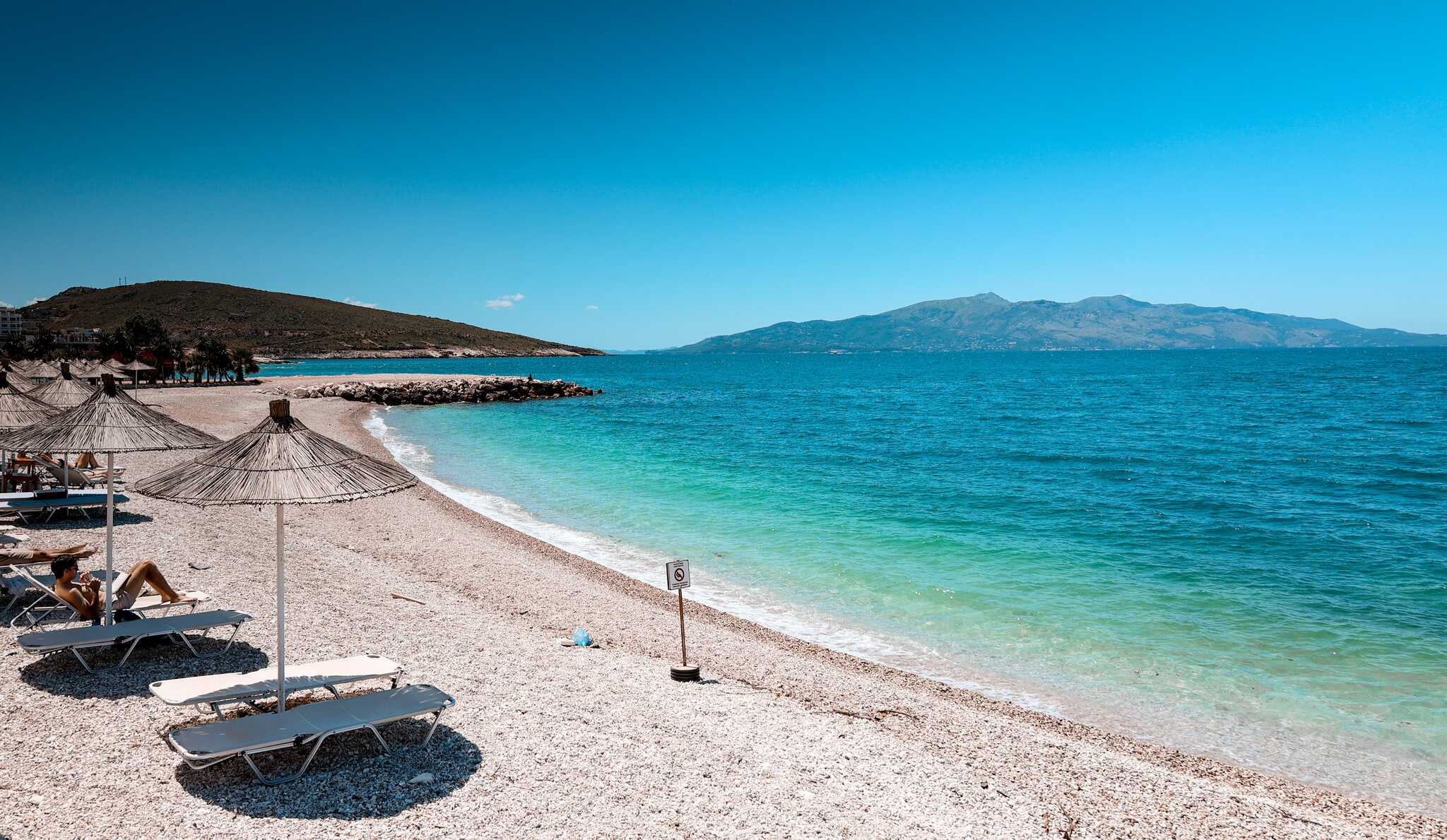
The Ionian Sea along Albania’s southern coast is the same impossibly blue water that draws millions to the Greek islands. The mountains that plunge into the sea are the same dramatic geology that made the Amalfi Coast famous. The difference is that in Albania, a seaside room with a view still costs a fraction of its Italian or Greek equivalent.
While not featured prominently in mainstream travel media yet, the Albanian Riviera represents the most significant value dislocation in Mediterranean travel. The 2026 season will see expanded flight connections to Tirana and Corfu (with hydrofoil links to the Albanian coast), plus improved roads along the coastal route from Vlorë to Ksamil.
The 2026 edge: Greece and Italy are implementing stricter short-term rental regulations and tourism taxes for 2026, compressing supply and raising prices. Albania, still in the early stages of tourism development, offers pre-regulation pricing.
Practical intelligence: The window for “undiscovered” Albania is closing—new resort developments are underway—but 2026 remains a buy opportunity. Focus on the villages of Dhërmi, Himarë, and Ksamil. Budget €50–90 per night for excellent accommodation.
The economist’s insight: Albania is following the classic tourism development curve: infrastructure investment precedes price discovery. 2026 represents the final year of significant value before convergence with regional averages.
5. Venice During the Biennale: Culture as Crowd Control

Venice in summer has become a study in managed disappointment—unless you choose your dates with surgical precision. The 61st International Art Exhibition of La Biennale di Venezia, running from May 9 through November 22, 2026, transforms the city into a sprawling contemporary art campus .
The 2026 edge: The Biennale draws a specific crowd—culturally engaged, well-behaved, and, crucially, distributed across the city rather than concentrated at St Mark’s Square and the Rialto Bridge. The exhibition venues (Giardini, Arsenale, and numerous palazzos) pull visitors into less-frequented districts, dispersing the human pressure that makes August Venice unbearable.
Practical intelligence: Visit in June or September rather than July–August. The Biennale remains open, but the weather is still manageable and the crowds thinner. The new entry fee system for day-trippers (£5–10, rising during peak periods) is now fully operational—book your access online. Budget €250–400 per night, but consider Mestre on the mainland for significant savings (€120–180).
The economist’s insight: Venice is pioneering “demand-based access pricing” that will likely spread to other over-touristed European cities. The Biennale effectively functions as a cultural filter, attracting higher-spending visitors while discouraging the cruise-ship day-trip model.
6. The French Riviera by Rail: The Alpes-Maritimes Pivot

Nice and its glamorous neighbours have long been the domain of the jet set, but 2026 brings a new dimension: the expansion of the TER Sud Provence-Alpes-Côte d’Azur rail network, making the entire coastline accessible without cars—and without the hellish summer traffic on the A8 motorway.
The 2026 edge: New direct rail connections from Nice to the hilltop villages of the arrière-pays (the backcountry) mean visitors can now explore the “real” Provence—Gourdon, Tourettes-sur-Loup, Saint-Paul-de-Vence—as day trips without rental cars. The rail operator has introduced “train + experience” packages combining transport with museum entries and guided walks.
Practical intelligence: Base yourself in Nice (which has invested heavily in its tram network and pedestrian zones) and use rail for exploration. The new “Zou!” mobile app integrates ticketing across the region. Visit in late September, when the sea is still warm but the Russian oligarchs have departed. Budget €180–300 per night.
The economist’s insight: The Riviera’s shift toward rail-based tourism reflects a broader European trend: travellers are increasingly valuing “seamless mobility” over car convenience, and destinations that integrate multimodal transport capture the premium.
7. Scotland’s North Coast 500: The Over-Tourism Antidote

The North Coast 500, Scotland’s answer to Route 66, has suffered from its own success in recent years—overcrowded single-track roads, stretched infrastructure, and local resentment. But 2026 brings a sophisticated response: the new “NC500 Slow Travel” initiative, promoting week-long stays rather than drive-through tourism.
The 2026 edge: The Scottish government has invested £6 million in passing places, electric vehicle charging infrastructure, and “honey pot” site management. More importantly, accommodation providers are now offering multi-night packages with included experiences—whisky tastings, guided wildlife walks, kayaking excursions—that reward longer stays .
Practical intelligence: The trend toward longer stays (5–7 nights rather than 3–4) is particularly pronounced in Scotland, where travellers are realising that rushing the 500-mile circuit defeats the purpose . Focus on the Caithness and Sutherland sections, which remain quieter than the popular Wester Ross. Budget £120–200 per night, with self-catering cottages offering the best value.
The economist’s insight: The shift from “road trip” to “base camp” tourism represents a mature response to capacity constraints. By encouraging longer stays, destinations capture more revenue per visitor while reducing the environmental impact of constant movement .
Destination Comparison: The 2026 Summer Landscape
| Destination | Peak Weeks | Daily Budget (Mid-Range) | Sustainability Score | 2026 Catalyst |
|---|---|---|---|---|
| Dolomites, Italy | Late June, Early Sept | €150–250 | A- | Post-Olympics infrastructure |
| Julian Alps, Slovenia | June, September | €120–200 | A | Kneipp therapy boom |
| Tatra Mountains, Poland | July–August | €70–120 | B+ | New cycling network |
| Albanian Riviera | June, September | €50–90 | C+ | Pre-development pricing |
| Venice Biennale | June, September | €250–400 | B | Cultural crowd filter |
| French Riviera | Late September | €180–300 | B+ | Rail expansion |
| North Coast 500 | May, September | £120–200 | A- | Slow Travel initiative |
Source: Author analysis of booking data, tourism board statistics, and accommodation platforms
How to Choose Your 2026 European Summer
The seven destinations above share one characteristic: each offers a defensible reason for visiting this summer specifically. But the right choice depends on your portfolio of preferences.
For climate resilience: The Alpine destinations (Dolomites, Julian Alps, Tatras) offer the safest bet against extreme heat. Early summer forecasts suggest a 55–65 percent probability of above-average temperatures across Europe, with the most extreme anomalies in the south .
For cultural depth: Venice during the Biennale provides access to contemporary art’s most important gathering, while the French Riviera’s rail network unlocks Provençal villages that have resisted mass tourism.
For value maximisation: The Albanian Riviera and Polish Tatras offer the most favourable price-to-experience ratios, with the added benefit of genuine discovery—destinations still in the early stages of their tourism curves.
For sustainability credentials: Slovenia’s Julian Alps and Scotland’s NC500 have implemented sophisticated visitor management systems that reward intentional, low-impact travel.
The Forward View: Summer 2026 as Inflection Point
There is a temptation to view European summer travel as a static product—the same beaches, the same mountains, the same cities, year after year. The data suggests otherwise. The 2026 season represents an inflection point where multiple trends converge: climate adaptation, infrastructure investment, demographic shifts in traveller preferences, and the maturation of sustainable tourism models.
The most sophisticated travellers will approach summer 2026 not as consumers of packaged experiences but as investors in destinations at various stages of their development curves. The Dolomites, post-Olympics, are a mature asset with newly enhanced infrastructure. Albania’s Riviera is a growth-stage investment with corresponding risk and reward. Slovenia’s Julian Alps represent a dividend-paying blue chip with steady appreciation.
What unites them is intentionality. The era of accidental tourism—showing up in August and hoping for the best—is ending, replaced by a more strategic approach that rewards those who understand the interplay of climate, culture, and capacity. The summer of 2026 belongs to the prepared mind.
Frequently Asked Questions
Q: Will ETIAS be required for summer 2026 travel?
A: The European Travel Information and Authorisation System (ETIAS) is scheduled for implementation in late 2026. For summer travel (June–August), it will not yet be required, though the Entry/Exit System (EES) biometric checks are now operational at Schengen borders .
Q: How far in advance should I book for summer 2026?
A: For peak-season travel (mid-July through August), booking by March–April 2026 is essential, particularly for the Dolomites and Venice. For shoulder season (June or September), 3–4 months ahead is generally sufficient .
Q: What’s the “90/180 day rule”?
A: British and other non-EU travellers can stay in the Schengen Area for 90 days within any 180-day period. This applies cumulatively across all Schengen countries .
Q: Are longer stays really more economical?
A: Increasingly, yes. Booking data shows that 5–7 night stays often unlock “length-of-stay” discounts that reduce the per-night cost significantly, while also spreading fixed costs (transport, carbon impact) across more days .
Discover more from Vagabond Diaries
Subscribe to get the latest posts sent to your email.


