
Hotels
The Slow Train to Kelantan: 12 Hours on Malaysia’s Jungle Railway for RM30

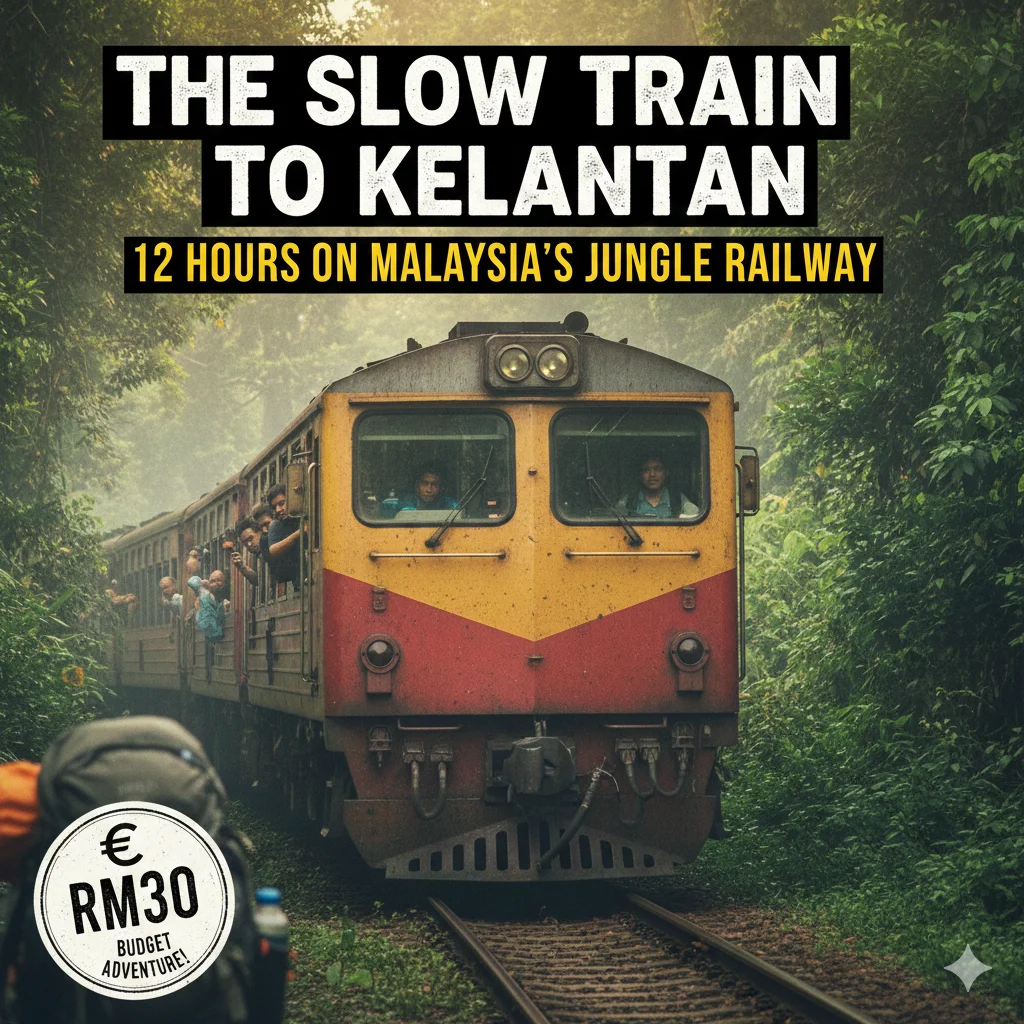
The rhythmic clatter of steel wheels pulled me from sleep at 4:47 AM. Through the fogged window, the Malaysian jungle pressed impossibly close—so close I could count dewdrops clinging to giant fern fronds in the dawn light. For the next 12 hours and just RM30, this slow train would carry me 526 kilometers from Gemas to Tumpat, deep into the heart of Kelantan. This is the Jungle Railway—and it’s Southeast Asia’s most cinematic journey that almost nobody knows about.
While Malaysia’s high-speed ETS trains whisk passengers between cities at 160 km/h, this colonial-era line chugs northward at a leisurely 80 km/h, threading through limestone mountains, tea-colored rivers, and villages where time moves differently. In 2025, as slow travel surges 25% globally and travelers increasingly prioritize authentic experiences over rushed itineraries, this forgotten railway offers something rare: a journey that matters more than the destination.
Why the Jungle Railway is Southeast Asia’s Best-Kept Secret
Most travelers racing between Singapore and Thailand never discover this 526-kilometer alternative route through Peninsular Malaysia’s spine. Built between 1910 and 1931 during British colonial rule, the East Coast Line—affectionately nicknamed the “Golden Blowpipe” after the hunting tools of indigenous Orang Asli people—was engineered to transport tin and rubber across impossible terrain.
The construction itself was an engineering marvel of its era. Workers carved through the Titiwangsa mountain range, bridging muddy rivers the color of strong English tea and blasting tunnels through solid limestone. At Kemubu, they erected the Guillemard Bridge in 1925—at 420 meters, Malaysia’s longest railway bridge. Japanese forces destroyed it in 1942 to slow the Allied advance; it was painstakingly rebuilt in 1948 and still carries trains today.
Today, this diesel-powered line remains Malaysia’s last traditional railway service. Unlike the modernized west coast corridor, the jungle railway stops at wooden platforms in the middle of nowhere—tiny kampungs where the train is still the primary connection to the outside world. You won’t find large cities along this route. What you’ll find instead are rice farmers waving from emerald paddies, limestone cliffs erupting from the jungle floor, and the kind of authentic rural Malaysia that’s vanishing elsewhere.
When station staff at Gemas triple-checked my ticket northbound, their concern was genuine. “Are you sure?” one asked incredulously. “Foreigners don’t usually take this train.” I was the only non-Malaysian in my carriage—and that’s precisely what makes this journey extraordinary.
The RM30 Journey: What Your Ticket Actually Gets You
Let’s talk money. In an era where experiential travel often means expensive, a full-length economy ticket on the daytime shuttle train from Gemas to Tumpat costs around RM30 to RM34—roughly $7 USD. That’s approximately 50 cents per hour of travel. For comparison, a bus covering the same route costs slightly more and offers none of the scenery.
The overnight sleeper train (Ekspres Rakyat Timuran) runs higher: RM44 for second-class seating, RM50 for a lower berth, and RM56 for an upper berth from Johor Bahru to Tumpat. But here’s the catch—night trains traverse the most spectacular sections in darkness. For the full cinematic experience, daytime travel is non-negotiable.
Your RM30 ticket buys you:
- A reserved seat in an air-conditioned carriage (modern diesel multiple units on shuttle services)
- 12 hours of constantly changing landscapes
- Multiple station stops (15-20 minutes each) where you can hop off, stretch, and buy fresh local food
- Access to onboard vendors selling sliced guava, jambu air fruit, and even quail eggs
- A window seat to one of the world’s great train journeys
What it doesn’t include: restaurant car service on daytime shuttles (sleeper trains have dining cars), first-class luxury, or high-speed efficiency. This is slow travel in its purest form—and that’s the entire point.
Station by Station: The Complete Route Through Malaysia’s Heartland
Gemas: The Southern Gateway (Kilometer 0)
Your journey begins at Gemas, a junction town in Negeri Sembilan where the east and west coast lines diverge. The station itself is monolithic—built in 2012, it towers over the surrounding shophouses like an architectural statement of intent. The old station sits nearby, a reminder of colonial-era railway architecture now overshadowed by Chinese-funded modernization.
Arriving early is wise. The station has proper waiting rooms, clean facilities, and vendors selling pyramid-shaped packets of nasi lemak wrapped in newspaper for RM1.20. Don’t forget to request a plastic spoon unless you’re skilled at eating with your fingers. This cheap breakfast will be your first taste of the journey’s casual rhythms.
Bahau to Jerantut: Palm Oil Country (KM 0-150)
The first hours traverse relatively flat terrain dominated by endless oil palm and rubber plantations. This is the reality of modern Malaysia—the old-growth jungle has retreated, replaced by monoculture cash crops that stretch to the horizon. It’s monotonous but honest, showing you the economic forces reshaping the peninsula.
Jerantut, roughly 150 kilometers north, serves as the gateway to Taman Negara, Malaysia’s oldest national park. The station sees a steady flow of backpackers and nature enthusiasts heading to the 130-million-year-old rainforest. If your journey allows, this is worth a multi-day detour—the park offers canopy walkways, indigenous village visits, and wildlife that includes Asian elephants, sun bears, and Malayan tigers.
Kuala Lipis: Colonial Capital (KM 210)
Around hour four, the train pulls into Kuala Lipis, and suddenly everything changes. Once the capital of Pahang from 1898 to 1955, this riverside town radiates faded colonial charm. Black-and-white buildings (matching Pahang’s flag colors) line the main street, and the air smells of sandalwood from shophouse shrines.
The station platform offers 15 minutes to explore—enough time to grab a coffee at the surprisingly good cafe or watch the single-track railway ballet. Trains must coordinate carefully here, with northbound and southbound services passing each other at designated stations. You might watch your train get shunted to a siding while an express service thunders past.
Gua Musang: Where the Jungle Returns (KM 310)
If there’s a single station that justifies the entire journey, it’s Gua Musang. The town’s name translates to “Cave of Foxes,” and local legend speaks of magical foxes living in the towering limestone karst formations that surround this frontier town like stone sentinels.
As the train approaches around hour seven, the landscape transforms dramatically. Thick jungle closes in on the tracks. Massive limestone cliffs—some rising 200 meters—erupt from the forest floor, their surfaces covered in vegetation and riddled with caves. The light changes here too, filtered green through the dense canopy, occasionally broken by shafts of sunlight that make the rivers glow amber.
The new station sits at the base of these cliffs, offering one of Malaysia’s most photogenic railway settings. During the 20-minute stop, you have time to grab kopi-o (thick, sugary local coffee) from the station cafe and admire the geological drama. Rock climbers come specifically to Gua Musang—there are 30 bolted routes from 5b to 7a difficulty on the surrounding karst.
Dabong to Kuala Krai: The Heart of the Jungle (KM 340-400)
Between Gua Musang and Kuala Krai lies what experienced travelers call the best jungle stretch. The train winds along massive rivers—the Nenggiri, the Galas—that flow thick and brown, the color of strong tea. When British colonials crossed these waters a century ago, they knew they’d entered truly remote territory.
Dabong serves as a gateway to Gunung Stong State Park and the 305-meter Jelawang waterfall—one of Peninsular Malaysia’s tallest. The Ikan and Keris limestone caves nearby feature the famous “God Light,” where sunlight filters through a gap in the cave ceiling in a shaft so perfect it seems designed. River rafting operators work the Nenggiri here, and you’ll occasionally spot their bright kayaks from the train.
This section also includes eight tunnels in just 15 miles, each one cutting through solid limestone. As the train plunges into darkness and emerges back into green light, you understand why early engineers called this route impossible. Historic steel viaducts span gorges where rivers churn below, their surfaces rust-red from a century of monsoon rains.
Kuala Krai to Wakaf Bharu: Kelantan’s Rice Bowl (KM 400-520)
North of Kuala Krai, the landscape opens into Kelantan’s agricultural heartland. Dense jungle gives way to endless rice paddies—emerald green or dried brown depending on the season—stretching toward distant mountains. Traditional kampung houses on stilts dot the fields, with washing hanging to dry and motorcycles parked underneath.
This is where the journey’s character shifts from adventure to anthropology. Local life unfolds outside your window: farmers tending paddies, children in school uniforms catching the train to larger towns, women in colorful tudung gossiping at station platforms. You’re not just passing through—you’re riding Malaysia’s rural lifeline.
At Kusial, the train crosses the wide Kelantan River via the Guillemard Bridge. From the window, you can see the entire span—420 meters of steel truss construction gleaming silver in the afternoon light. Built in 1925, destroyed in 1942, rebuilt in 1948, it remains fully operational—a testament to colonial engineering and post-war determination.
Tumpat: Journey’s End (KM 526)
After 11 to 12 hours (delays are inevitable on a single-track railway), the train finally rolls into Tumpat, just 15 kilometers from the Thai border. The station marks the official end of Malaysia’s east coast line, though tracks continue another 37 kilometers to the border at Rantau Panjang. That section hasn’t seen passenger service since 1978 due to security concerns, but the rails remain—a rusting reminder of when this route connected directly to Thailand’s network.
Tumpat itself blends Malay Muslim culture with strong Thai Buddhist influences. Wat Photivihan, housing Malaysia’s largest reclining Buddha, sits just outside town. From here, most travelers continue 20 kilometers south to Kota Bharu, Kelantan’s vibrant capital and gateway to the Perhentian Islands, or take a bus north to cross into Thailand at Sungai Kolok.
Through the Canopy: Seven Moments That Define the Journey
1. Dawn Mist Over Limestone Giants
Around hour six, if you time it right, the train passes through Gua Musang just as dawn breaks. Thick mist clings to the karst formations, making the limestone cliffs appear to float above the jungle. The light is soft and golden. Everything smells of wet earth and diesel. This is the moment travel photographers dream about.
2. The Tea-Colored Rivers
Malaysian rivers in the interior run the color of strong English tea—tannin-rich water stained by decomposing vegetation. When you cross the Nenggiri or Galas rivers, the water seems to glow amber in sunlight, flowing thick and slow between jungle banks. It’s otherworldly and beautiful in a way that’s distinctly tropical.
3. Station Life
Every 45 minutes to an hour, the train stops at a station—some large, most tiny. The ritual is always the same: a blast of hot humid air as doors open, vendors materializing with food and drinks, locals boarding with massive bags of rice or produce, smokers stepping onto platforms for a quick cigarette. These 15-minute interludes break the journey into digestible chapters and offer glimpses of rural commerce.
4. Children Waving From Kampung Houses
Between Kuala Krai and Wakaf Bharu, traditional kampung houses line the tracks. Without fail, children playing outside will spot the train and wave enthusiastically. Passengers wave back. It’s a simple exchange that happens dozens of times, yet it never loses its charm—a reminder that this train is still woven into community life.
5. The Single-Track Ballet
Watch carefully when the train pulls into a siding. Another train—maybe a freight hauler, maybe the southbound passenger service—will pass at speed. The coordination is precise: signals change, whistles blow, trains pass within meters. It’s industrial choreography from the 1930s, still performed daily with split-second timing.
6. Jungle Tunnels
The eight tunnels between Dabong and Kuala Krai vary in length from a few seconds to over a minute. Inside, it’s absolutely black except for the occasional overhead light. The sound changes—wheels on rails echoing against stone walls. Then suddenly you burst back into green light, and the jungle feels even more vivid by contrast.
7. Rice Field Sunlight
Late afternoon, when the sun hangs low over Kelantan’s paddies, the light turns liquid gold. If the rice is growing, the paddies glow electric green. If it’s harvest season, the dried stalks create patterns like brushstrokes across the landscape. Either way, the light transforms ordinary agricultural scenery into something painterly and profound.
Practical Guide: Booking, Timing, and What to Pack
Booking Your Ticket
The easiest way to book is through the KTMB app or website (ktmb.com.my). The interface is straightforward—enter your origin station (Gemas), destination (Tumpat), and travel date. The system shows available trains with departure times and seat availability.
Current schedule (as of 2025):
- Shuttle trains run 2-3 times daily in each direction
- Daytime shuttles typically depart Gemas mid-afternoon (around 15:35), arriving Tumpat late evening
- The overnight Ekspres Rakyat Timuran (Train 26/27) passes through around 1:00 AM from Gemas
Pro tip: For maximum daylight jungle views, take the northbound train from Gemas or start from Kuala Lipis (accessible via early morning train from KL). The southbound daytime service from Tumpat covers scenic sections in good light too.
Book 3-7 days in advance, especially for weekend travel. The app generates a QR code—your boarding pass. No paper ticket needed.
Best Time to Travel
Optimal Season: March through October offers the best weather. The northeast monsoon (November through February) brings heavy rain to Kelantan, making views less impressive and sometimes causing delays or cancellations.
Day of Week: Weekdays see more local passengers—a more authentic experience. Weekends attract some domestic tourists but remain quiet compared to west coast routes.
Time of Day: Morning to mid-afternoon light is ideal for photography. The golden hour arrives during the Kelantan rice paddy section if you time it right.
What to Pack
Essential:
- Water (2+ liters per person)—vendors sell drinks but they’re pricey
- Snacks or packed lunch—no dining car on shuttles
- Phone power bank—charging ports are hit-or-miss
- Camera with fast lens for jungle interiors
- Small cushion or travel pillow—seats are upright and firm
- Hand sanitizer and tissues—toilets are basic
- Light jacket—air conditioning can be aggressive
Optional but Recommended:
- Malaysian ringgit in small bills for station food vendors
- Offline maps downloaded—cell signal is spotty
- Book or journal—embracing slow time
- Earplugs—train noise can be loud
- Binoculars for wildlife spotting
Don’t Bother:
- Formal clothing—this is casual travel
- Laptop for work—terrible wifi, embrace the disconnect
- Expectations of punctuality—delays happen, relax
Food Strategy
Station stops are your salvation. At Gemas, Kuala Lipis, and Gua Musang, the station cafes serve simple but good Malaysian food—fried rice, noodles, nasi lemak. Prices range from RM1.20 to RM10.
Smaller stations have platform vendors selling:
- Freshly cut fruit (guava, jambu air)
- Hard-boiled quail eggs
- Packaged snacks and chips
- Cold drinks and coffee
Onboard, a trolley service passes through selling water, soft drinks, and dry snacks at marked-up prices. There’s also typically a walking vendor with fruit.
Smart strategy: Pack a substantial breakfast, buy lunch at Kuala Lipis or Gua Musang station during the stop, keep snacks for grazing. Total food cost: RM15-25.
The Toilet Situation
Let’s be honest—the toilets are basic squat-style facilities that get worse as the journey progresses. Bring your own toilet paper, hand sanitizer, and realistic expectations. The best strategy is to use facilities at major stations (Gemas, Kuala Lipis, Gua Musang) rather than onboard.
Connectivity Reality
Cell signal is spotty at best through the jungle sections. This is actually a blessing—it forces you to disconnect and observe. Bring downloaded entertainment if needed, but consider this rare opportunity for a digital detox. The slow tourism movement isn’t just about pace; it’s about presence.
The Slow Travel Philosophy: Why Slower is Infinitely Richer
In 2025, slow travel has surged from niche preference to mainstream movement. According to tourism industry reports, the slow tourism market is growing at 10% annually, with 73% of travelers now prioritizing authentic cultural experiences over rushed sightseeing. Rail travel specifically has grown 25% in popularity as travelers seek alternatives to flying.
The Jungle Railway embodies everything slow travel advocates for:
Environmental Sustainability: One train journey versus a dozen individual car trips. Lower carbon footprint than flying, more efficient than buses. The route enables tourism without requiring new infrastructure—it’s already there, carrying locals alongside curious travelers.
Economic Impact: Your RM30 ticket supports Malaysian railway workers, station vendors, and small businesses at every stop. Unlike all-inclusive resorts that extract money from communities, this journey distributes value along the entire route.
Cultural Immersion: You’re not sealed in a tourist bubble. You’re riding the same train as school children, market vendors, and elderly kampung residents. Conversations happen naturally. Barriers dissolve.
Mental Health Benefits: Twelve hours with minimal wifi forces a digital detox whether you planned one or not. The constant scenery change provides gentle stimulation without overwhelming. The rhythmic train motion is meditative. Multiple travelers report arriving feeling more rested than when flying, despite the longer duration.
Authentic Connection: When you spend 12 hours moving through a landscape at 80 km/h, you actually see things. Not just landmarks—everything. The way light changes through the day. How architecture shifts between regions. The subtle transition from Pahang to Kelantan. This granular observation creates understanding impossible at 500 km/h at altitude.
As travel writer Pico Iyer observes, “In our accelerated world, nothing is more luxurious than time.” The Jungle Railway sells luxury for RM30.
Voices From the Train: Stories Worth Sharing
The University Student
At Kuala Lipis, a young woman in hijab took the seat beside me, her backpack stuffed with textbooks. Mira (not her real name) commutes weekly from her family’s kampung near Gua Musang to university in Kuala Lumpur via this train.
“My parents wanted me to study closer to home,” she explained in careful English. “But I wanted engineering, and the best program is in KL. So every week, I take this train. It’s cheaper than living in the city full time.”
She travels overnight southbound Sunday evening, arriving Monday morning for classes. Thursday evening, she returns north, studying by phone light as the train rocks through darkness. For her, this isn’t romantic slow travel—it’s practical necessity. But watching her study notes spread across the fold-down table, I understood: this railway still performs its original function, connecting rural Malaysia to opportunity.
The Retired Railway Worker
At Gua Musang, an elderly Chinese Malaysian man struck up conversation in the station cafe. Mr. Lim had worked for KTMB for 38 years, including 15 years on this route.
“In the old days, the trains were slower. More stops,” he said, stirring thick coffee. “Sometimes we’d stop for hours if there was flooding or if elephants blocked the track. Once we waited half a day because a tiger had made a kill near the rails and wouldn’t leave.”
His eyes went distant, remembering. “That was the real jungle railway. Now it’s faster, more reliable. But something is lost, you know? The adventure.”
He still rides occasionally, he said, just to remember. “This line, it has character. The new trains, the ETS—very fast, very modern. But no soul. This one has soul.”
The Traveling Grandmother
Around hour nine, an elderly Malay woman offered me sliced guava from a plastic container. Her hands were gnarled from decades of work, but her smile was generous. We couldn’t share much language—her Kelantanese dialect was beyond my basic Malay—but food is a universal conversation.
Through gestures and scattered words, I understood she was visiting grandchildren in Kota Bharu. The train journey took most of a day, but it was cheaper than hiring a car, and at her age, she didn’t rush anymore.
She pointed out the window at a particular kampung as we passed. Her kampung, I think. The place she’d lived before moving south for work decades ago. She pressed her hand to the window glass, fingers spread, as if touching something precious.
Photography Tips: Capturing the Jungle Railway’s Magic
Gear Recommendations
A fast prime lens (f/2.8 or wider) handles the challenging light in jungle sections and tunnels better than zooms. The 35mm or 50mm focal length feels right for the mix of landscapes and interior shots. Bring a polarizing filter for the rivers—it cuts glare and enriches the water’s amber color.
Best Shooting Locations
Inside the carriage: Window seats on the right side (northbound) offer better angles for the Gua Musang limestone formations. Shoot through glass for reflections or open windows for cleaner shots (but watch your camera around tunnels).
Station platforms: The 15-20 minute stops give time to hop off and photograph the train with landscape context. Gua Musang station is particularly photogenic with limestone cliffs behind.
The Guillemard Bridge: You’ll feel it when you’re crossing—the vibration changes. Shoot straight ahead through the front window if possible, or from the side to capture the full span.
Lighting Challenges
Jungle interiors are dark—often 3-4 stops darker than open landscapes. Set ISO to 800-1600 and accept some grain. The contrast between bright sky and dark jungle is extreme; expose for midtones or shoot in RAW for post-processing flexibility.
Golden hour through the Kelantan paddies (roughly hours 10-11 northbound) is genuinely spectacular. The light goes sideways and warm, making even mundane scenes glow.
Respectful Photography
Always ask permission before photographing people directly, even locals on platforms. A smile and gesture with your camera usually gets a nod. Shooting documentary-style through windows is fine, but don’t make anyone uncomfortable.
Children love being photographed—they’ll often pose enthusiastically. Share the photo on your screen afterward; it creates connection.
Beyond the Train: Kelantan’s Hidden Treasures
Kota Bharu: Cultural Capital
Twenty kilometers south of Tumpat, Kelantan’s capital pulses with arts, crafts, and conservative Islamic culture. The central market (Pasar Siti Khadijah) is run entirely by women selling everything from batik to fresh fish. Nearby, craftspeople create intricate silver jewelry and traditional wau bulan kites.
The city feels distinct from the rest of Malaysia—more conservative, more Malay, with stronger Thai influences. It’s also the gateway to beach paradises.
Perhentian Islands
From Kota Bharu, the Perhentian Islands lie just 21 kilometers offshore. These coral-fringed jewels offer some of Asia’s best budget diving and snorkeling. Combine your slow train journey with a few days underwater, and you’ve created a genuinely alternative Malaysian adventure.
Wat Photivihan
Just outside Tumpat, this Thai Buddhist temple houses a 40-meter reclining Buddha—Malaysia’s largest. It’s a powerful reminder of the Thai cultural influence in this border region and worth the short taxi ride.
Gunung Stong State Park
If you stop at Dabong (highly recommended for multi-day jungle railway explorations), Gunung Stong offers serious jungle trekking, the towering Jelawang waterfall, and the otherworldly Ikan Keris caves. It’s Taman Negara’s lesser-known cousin—less tourist infrastructure but equally spectacular nature.
Is the Jungle Railway Worth 12 Hours? The Honest Verdict
Let’s be clear about what this journey isn’t: It’s not luxurious. The seats are basic. The toilets are rough. There’s no wifi, no entertainment system, no meal service on daytime trains. Delays are common. At times, it’s uncomfortable.
But here’s what it absolutely is: It’s authentic. It’s affordable. It’s achingly beautiful. It’s meditative without trying. It’s the kind of journey that reminds you why you started traveling in the first place—not to collect countries or Instagram moments, but to actually experience somewhere different.
In an era where everything is optimized for speed and efficiency, the Jungle Railway stands as a deliberate rejection of that logic. It says: The journey matters. The in-between places matter. The slow unfolding of landscape and light and human connection matters.
For travelers who’ve grown weary of airports and hashtags, who crave that old feeling of adventure without extreme hardship, who want to travel sustainably without sacrificing experience—this train is a gift.
Is it worth 12 hours? Wrong question. The right question is: Do you have 12 hours to give to something real? If you do, get on this train. Start in Gemas. Watch the peninsula unfold. Talk to strangers. Eat station noodles. Wave at children. Cross rivers the color of tea. Arrive in Kelantan changed, even if you can’t explain exactly how.
That’s worth infinitely more than RM30.
Frequently Asked Questions
Can I do just part of the journey? Absolutely. Many travelers ride the Kuala Lipis to Gua Musang section (around 3-4 hours) which includes the best jungle scenery. Dabong to Gua Musang is another popular partial route. Check the KTMB website for shuttle train options between specific stations.
Is the train safe for solo female travelers? Yes. Malaysian trains are generally very safe. Women-only carriages aren’t available on this route, but the atmosphere is family-friendly. Solo female travelers regularly ride without issues. Standard travel precautions apply.
What if I miss a connection? Trains run 2-3 times daily, so missing one means waiting several hours or overnight. Build buffer time into your itinerary. The upside: Station towns like Kuala Lipis and Gua Musang make pleasant unplanned stopovers with basic accommodation available.
Can I bring luggage? Yes, reasonable luggage is fine. Overhead racks accommodate standard backpacks and small suitcases. For very large luggage, check if specific train services have baggage compartments. Most travelers carry backpacker-sized bags without issues.
Do I need to speak Malay? Basic English works at major stations. On the train, most conductors speak limited English, but pointing at tickets and destinations communicates enough. Learning a few Malay phrases (“Terima kasih” for thank you, “Berapa?” for how much) enriches the experience but isn’t essential.
What about monsoon season? November through February brings heavy rains, flooding, and occasional service disruptions. Views are obscured by rain. If possible, travel March through October. If you must go during monsoon season, check for service alerts on the KTMB website and build extra flexibility into your schedule.
Ready to book? Visit ktmb.com.my to check current schedules and reserve your seat. The slow train to Kelantan awaits—and it’s about to become the journey you tell stories about for years.
Have you ridden the Jungle Railway? Share your experience in the comments below.
Discover more from Vagabond Diaries
Subscribe to get the latest posts sent to your email.


