
Airways
Canada 2026: 15 Unmissable Destinations Reshaping North American Travel

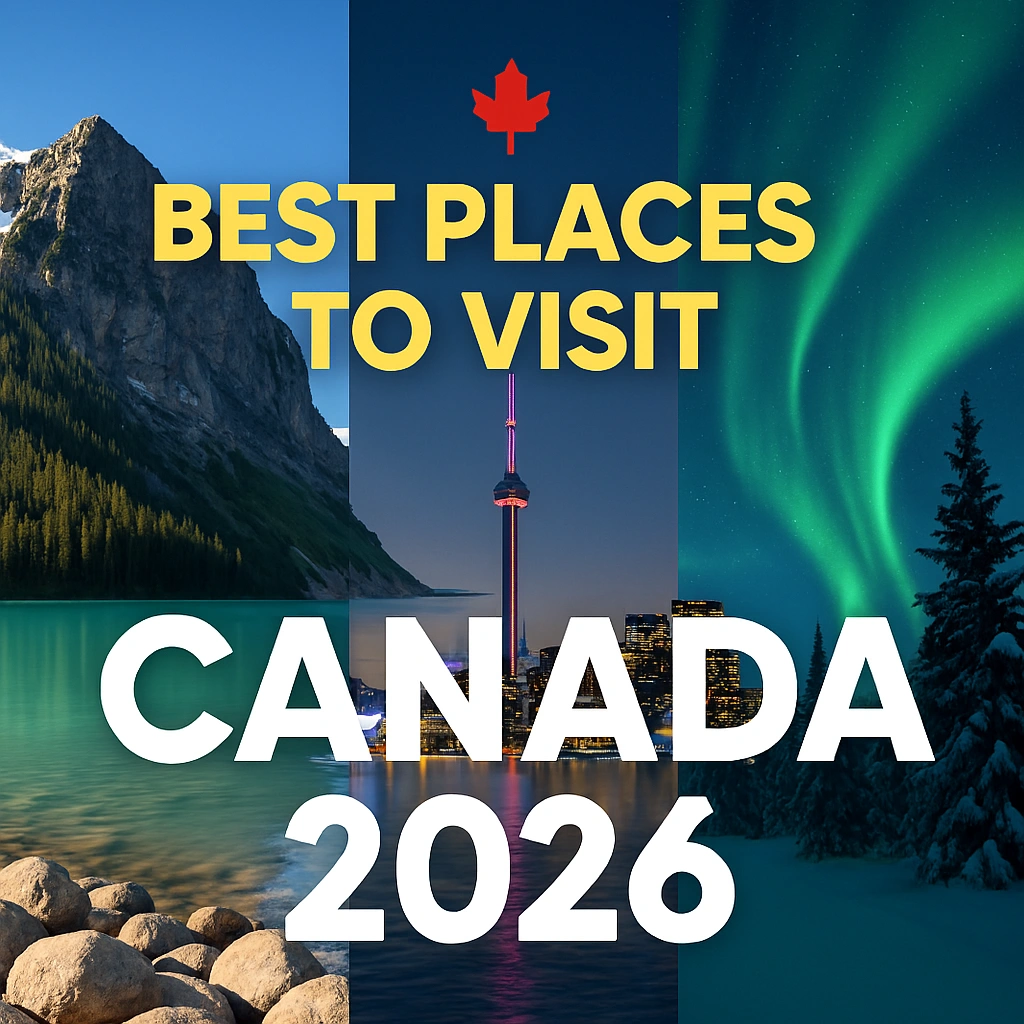
The Great White North is experiencing an unprecedented tourism boom, and 2026 promises to be its breakthrough year on the global stage
Discover why Canada ranks as 2026’s #1 travel destination. From Banff’s turquoise lakes to Vancouver’s FIFA World Cup excitement, explore 15 unmissable locations backed by tourism data and insider insights.
Canada has quietly positioned itself as the world’s most compelling travel destination for 2026, and the numbers tell a remarkable story. The country has earned recognition as the top travel destination for 2026, surpassing traditional favorites like the United States, Mexico, and European powerhouses. With domestic visitor spending projected to reach nearly $104 billion in 2025 and international tourism recovering to near pre-pandemic levels, Canada is experiencing a transformative moment that will reshape North American travel for years to come.
But 2026 isn’t just another year for Canadian tourism. It’s the year the world descends on Canada for the FIFA World Cup, with Toronto hosting six matches and Vancouver hosting seven matches, including Canada’s historic first-ever men’s World Cup match on home soil. The tournament alone is projected to generate billions in economic impact, drawing millions of international visitors who will discover what savvy travelers have known for years: Canada offers an unparalleled diversity of experiences that few destinations can match.
Summer 2025 was already record-breaking for Canada, with tourism revenue from May to August reaching nearly $60 billion, a 6% increase over the previous year. This momentum sets the stage for an even bigger 2026, with hotel occupancies and visitor spending reaching levels not seen in over a decade. As we look ahead, the question isn’t whether to visit Canada in 2026—it’s which of these fifteen extraordinary destinations will make your itinerary.
1. Banff National Park: The Crown Jewel of the Canadian Rockies
Why 2026 is pivotal: Record visitation meets enhanced sustainability initiatives
Banff National Park stands as Canada’s most iconic destination, and for good reason. The park attracted approximately 4.29 million visitors in fiscal year 2023/24, up from 4.13 million the previous year, making it Canada’s busiest national park. The turquoise waters of Lake Louise and Moraine Lake have become the stuff of Instagram legend, but there’s substance behind the social media hype.
What makes Banff essential for 2026 is the park’s aggressive evolution toward sustainable tourism. Visitation to the Lake Louise area has grown 31% over the last decade, with some areas seeing increases up to 70%, prompting Parks Canada to implement comprehensive visitor management strategies. The new reservation systems and enhanced transit options mean 2026 visitors will experience a more curated, less crowded version of these legendary landscapes.
What you’ll experience: Beyond the famous lakes, explore the Cave and Basin hot springs that inspired the park’s 1885 creation, hike through elk-filled valleys to alpine meadows bursting with wildflowers, and ski at three world-class resorts—Mount Norquay, Lake Louise, and Sunshine Village—offering one of North America’s longest seasons from November through May.
Insider tip: Summer RevPAR (Revenue Per Available Room) reached $410.92 in 2024, so book accommodations well in advance. Winter presents better value, with rates improving but occupancy still below summer peaks.
Budget breakdown: Park pass $10/day, mid-range hotel $200-400/night, dining $50-100/day, activities $100-200/day.
2. Vancouver: World Cup Host and Pacific Gateway
Why 2026 is pivotal: FIFA World Cup spotlight meets urban transformation
Vancouver ranks 12th on National Geographic’s best places to visit in 2026, in part for hosting seven FIFA World Cup matches from June through July. The city’s selection as a host venue isn’t surprising—it’s consistently ranked among the world’s most livable cities, where ocean, mountains, and cosmopolitan energy converge in perfect harmony.
But Vancouver’s appeal extends far beyond the tournament. The city is leveraging this global attention to showcase its Indigenous heritage, outdoor adventures, and culinary innovation. The renewed PNE Amphitheatre will host the official FIFA Fan Festival, featuring live match broadcasts, entertainment, cultural programming, and diverse food options.
What you’ll experience: Bike the seawall encircling Stanley Park, explore Granville Island’s artisan markets, take the Peak 2 Peak Gondola at Whistler (just two hours north), and join Indigenous-led canoe tours through Burrard Inlet. Vancouver’s diverse neighborhoods—from historic Gastown to vibrant Chinatown—offer endless cultural discoveries.
Match schedule highlight: Vancouver will host matches featuring Belgium with star Kevin de Bruyne, plus two knockout rounds, guaranteeing world-class soccer throughout June and early July.
Budget breakdown: Mid-range hotel $150-300/night, dining $60-120/day, World Cup tickets $100-500+, activities $75-150/day.
3. Quebec City: Europe Without the Flight
Why 2026 is pivotal: Four centuries of history meet modern sustainability
Quebec City ranked 28th on U.S. News’ best places to visit in the world for 2026, noted for its cobblestone streets, historic architecture, and undeniable charm. Walking through Old Quebec—a UNESCO World Heritage Site—feels like stepping into an 18th-century European painting, complete with stone fortifications, grand cathedrals, and bistros serving world-class French cuisine.
What sets Quebec City apart in 2026 is its position as a gateway to Indigenous experiences in northern Quebec. Quebec earned the number two spot on National Geographic’s 2026 list for the creation of Nibiischii Park, a vast wilderness now managed by the Cree Nation of Mistissini, spanning over 4,000 square miles.
What you’ll experience: Wander the Quartier Petit-Champlain’s boutiques, tour the imposing Château Frontenac, sample maple-infused cuisine at authentic cabanes à sucre, and use the city as a launching point for the new Indigenous cultural center in Kahnawà:ke, opening in 2026.
Best time to visit: June through September and December through February are peak times for festivals and events.
Budget breakdown: Mid-range hotel $120-250/night, dining $45-90/day, attractions $75-125/day.
4. Toronto: Canada’s Cosmopolitan Powerhouse
Why 2026 is pivotal: World Cup opener on Canadian soil
Toronto will host six World Cup matches, including Canada’s opening game—the first-ever men’s World Cup match played on Canadian soil. This historic moment on June 12, 2026, will transform Toronto into the epicenter of global soccer fever, but the city’s appeal extends far beyond sports.
Toronto embodies “the world in a city,” with neighborhoods representing virtually every global culture. The city’s skyline, dominated by the iconic CN Tower, masks an extraordinarily diverse street-level experience where you can eat your way around the world without ever leaving downtown.
What you’ll experience: Explore the Distillery District’s Victorian-era architecture now housing galleries and restaurants, catch a show in the Entertainment District, visit the Royal Ontario Museum’s world-class collections, and experience the city’s legendary food scene from authentic dim sum to innovative fusion cuisine.
World Cup impact: BMO Field is undergoing a $146 million renovation to prepare for the World Cup, with improvements that will benefit sports and entertainment events for decades.
Budget breakdown: Mid-range hotel $150-300/night, dining $60-120/day, World Cup tickets $150-600+, activities $80-150/day.
5. Montreal: Cultural Capital with French Flair
Why 2026 is pivotal: New Indigenous cultural initiatives reshape the city’s identity
Montreal has always marched to its own beat—a city where European sophistication meets North American energy, where French is the language of daily life, and where summer festivals transform the city into a non-stop celebration.
Montreal’s new Indigenous cultural initiatives include an Inuit art gallery at the Museum of Fine Arts and the Kahnawà:ke Cultural Arts Center, opening in 2026. These additions enhance an already rich cultural landscape that includes Old Montreal’s cobblestone streets, the trendy Mile End neighborhood, and North America’s largest open-air market at Jean-Talon.
What you’ll experience: Sample authentic Montreal bagels at St-Viateur, indulge in smoked meat at Schwartz’s Deli, explore the underground city’s 33 kilometers of climate-controlled shopping, attend the Formula 1 Grand Prix or Jazz Festival, and bike along the Lachine Canal.
Cultural edge: Montreal’s festival calendar is unmatched—from Just for Laughs to Osheaga music festival, something’s always happening.
Budget breakdown: Mid-range hotel $130-270/night, dining $50-95/day, festival tickets $50-250, activities $70-130/day.
6. Whistler: Year-Round Mountain Adventure
Why 2026 is pivotal: Summer Olympics infrastructure meets adventure tourism evolution
While Whistler is legendary for hosting the 2010 Winter Olympics, the resort town has successfully transformed into a year-round destination. The infrastructure investments from those games continue paying dividends, with the Peak 2 Peak Gondola connecting Whistler and Blackcomb Mountains offering breathtaking 360-degree views.
Summer in Whistler rivals winter for activities: mountain biking on world-championship trails, zip-lining through old-growth forests, hiking alpine meadows, and enjoying the vibrant village atmosphere. The ski season remains one of North America’s longest, typically running from early November through late May.
What you’ll experience: Ski or snowboard 8,171 acres of terrain in winter, bike downhill trails ranging from beginner to expert in summer, explore Lost Lake’s peaceful trails, dine at award-winning restaurants, and soak in Scandinave Spa’s outdoor hot pools.
Sustainability note: Whistler is committed to becoming the world’s first resort community to operate within regenerative natural cycles by 2040.
Budget breakdown: Mid-range hotel $180-350/night, lift tickets/bike park $100-180/day, dining $65-130/day, equipment rentals $60-100/day.
7. Jasper National Park: Wilderness at Its Wildest
Why 2026 is pivotal: Dark Sky Preserve status draws astronomy enthusiasts worldwide
Jasper ranked second overall on U.S. News’ list of best places to visit in Canada for 2026, praised for sweeping mountain views and outdoor adventure. As the world’s second-largest Dark Sky Preserve, Jasper offers unparalleled stargazing opportunities, with the annual Dark Sky Festival drawing astronomers and photographers from around the globe.
Jasper feels wilder and less developed than Banff, which is precisely its appeal. The park’s 11,000 square kilometers contain pristine wilderness where you’re more likely to encounter elk, bears, and caribou than tour buses.
What you’ll experience: Drive the Icefields Parkway (one of the world’s most scenic roads), walk on the Athabasca Glacier, soak in Miette Hot Springs, spot wildlife along Maligne Lake, and stargaze under some of the darkest skies in North America.
Adventure opportunity: The Columbia Icefield Skywalk extends 280 meters along a cliff edge with a glass floor 918 feet above the Sunwapta Valley.
Budget breakdown: Park pass $10/day, mid-range hotel $160-320/night, dining $50-100/day, glacier tour $100-150, activities $80-150/day.
8. Churchill, Manitoba: Polar Bear Capital of the World
Why 2026 is pivotal: Climate change awareness meets once-in-a-lifetime wildlife encounters
Churchill offers something virtually no other accessible destination can: reliable polar bear viewing in the wild. This remote Hudson Bay town, accessible only by train or plane, has become a pilgrimage site for wildlife enthusiasts and photographers seeking intimate encounters with the world’s largest land carnivores.
Beyond polar bears (best viewed October-November), Churchill offers beluga whale watching in summer, Northern Lights viewing, and rich Indigenous Inuit culture. The town’s isolation has preserved its authentic character while developing world-class ecotourism infrastructure.
What you’ll experience: View polar bears from specialized tundra vehicles, kayak alongside beluga whales in Churchill River estuary, learn about Inuit culture at Itsanitaq Museum, explore historic Prince of Wales Fort, and photograph the Aurora Borealis.
Travel reality: Expect high costs due to remoteness, but the experience is genuinely once-in-a-lifetime. Book polar bear tours 12-18 months in advance.
Budget breakdown: Flights from Winnipeg $500-800 roundtrip, polar bear tour packages $3,000-6,000 (3-5 days), meals $80-120/day.
9. Prince Edward Island: Maritime Charm Meets Culinary Excellence
Why 2026 is pivotal: Sustainable seafood tourism and Anne of Green Gables renaissance
Prince Edward Island is home to rolling green hills, sandy beaches, red sandstone cliffs, and a delicious bounty of seafood, including the famous PEI mussels. This smallest province punches well above its weight in culinary tourism, with world-renowned oysters, lobster, and mussels paired with island-grown potatoes and produce.
The island’s literary heritage, centered on Lucy Maud Montgomery’s “Anne of Green Gables,” attracts literary pilgrims, while golf enthusiasts come for championship courses with ocean views. Four seal species call PEI home, adding wildlife viewing to the island’s quiet charms.
What you’ll experience: Cycle the Confederation Trail, explore red sand beaches at Prince Edward Island National Park, tour Anne of Green Gables Heritage Place, feast on seafood at waterfront restaurants, and play golf on coastal courses.
Culinary highlight: The island hosts numerous food festivals celebrating everything from oysters to potatoes, with the Fall Flavours festival (September-October) showcasing the best of island cuisine.
Budget breakdown: Mid-range hotel $110-220/night, dining $50-90/day (seafood splurges higher), activities $60-120/day.
10. Okanagan Valley, British Columbia: Wine Country with Mountain Views
Why 2026 is pivotal: Climate-driven vintages and culinary tourism explosion
The Okanagan Valley has evolved from Canada’s fruit basket into a world-class wine region producing exceptional vintages that surprise even seasoned oenophiles. The valley’s unique climate—hot, dry summers and cold winters—creates ideal conditions for both cool-climate varieties and bold reds.
Beyond wine, the Okanagan offers pristine lakes perfect for water sports, farm-to-table dining showcasing local ingredients, and a landscape that transitions from desert ecosystems in the south to lush orchards in the north.
What you’ll experience: Tour 200+ wineries along the Naramata Bench and around Kelowna, dine at Mission Hill’s acclaimed restaurant, swim in Okanagan Lake, pick fresh fruit at roadside stands, and explore the desert ecosystem around Osoyoos.
Wine insight: Book winery tours and restaurant reservations well in advance, especially during harvest season (September-October).
Budget breakdown: Mid-range hotel $140-280/night, dining (with wine) $80-150/day, wine tours $100-200/day.
11. Yellowknife: Northern Lights Headquarters
Why 2026 is pivotal: Peak solar cycle enhances Aurora visibility
Yellowknife sits directly beneath the Aurora Oval, making it one of Earth’s best locations for Northern Lights viewing with visibility on approximately 240 nights per year. The 2024-2025 solar maximum period extends into early 2026, promising spectacular Aurora displays.
This territorial capital on Great Slave Lake offers a unique combination of Northern frontier culture, Indigenous heritage, and modern amenities. Winter visitors experience the unique Snowking Castle built annually on frozen Great Slave Lake.
What you’ll experience: Chase the Northern Lights with expert guides, visit Old Town’s colorful houseboats and artisan shops (including Old Town Glassworks), explore Indigenous culture and art, experience winter activities like dog sledding, and see the midnight sun in summer.
Planning tip: Aurora season runs September through mid-April, with March offering the best combination of visibility and relatively mild weather.
Budget breakdown: Mid-range hotel $150-300/night, Aurora tours $100-200/night, dining $70-120/day, activities $80-150/day.
12. Halifax and Nova Scotia: Maritime Heritage Meets Ocean Adventure
Why 2026 is pivotal: Bay of Fundy’s highest tides and maritime culture renaissance
Nova Scotia embodies Atlantic Canadian charm with its fishing villages, Celtic heritage, and warm maritime hospitality. Halifax serves as the gateway to the province’s attractions, from the historic waterfront to the nearby Bay of Fundy—home to the world’s highest tides.
The Bay of Fundy’s tides can rise high enough to swallow the ocean floor under water in a matter of hours, or fall enough to let visitors walk on the rocky bottom. This natural phenomenon creates unique ecosystems and opportunities for tidal bore rafting.
What you’ll experience: Explore Halifax’s historic waterfront and Citadel, witness dramatic tidal changes in the Bay of Fundy, kayak among whales and seabirds, tour the Cabot Trail’s coastal cliffs and Celtic culture, visit Peggy’s Cove lighthouse, and sample fresh lobster and Digby scallops.
Cultural note: Nova Scotia’s Scottish and Acadian heritage comes alive through music festivals, Highland games, and traditional kitchen parties.
Budget breakdown: Mid-range hotel $120-240/night, dining $50-95/day, whale watching $80-120, activities $70-130/day.
13. Ottawa: Capital Culture and Festival Central
Why 2026 is pivotal: Year-round programming and museum expansions
Canada’s capital city combines impressive architecture, world-class museums, and a festival calendar that rivals much larger cities. The Rideau Canal—a UNESCO World Heritage Site—transforms into the world’s largest skating rink in winter and a scenic waterway for boats and paddleboards in summer.
Ottawa’s compact downtown makes it ideal for visitors wanting to maximize their time. Parliament Hill’s Gothic Revival buildings provide a stunning backdrop for the changing of the guard ceremony, while the ByWard Market offers eclectic shopping and dining.
What you’ll experience: Tour Parliament Buildings, explore museums including the Canadian Museum of History and National Gallery of Canada, celebrate Canada Day (July 1) on Parliament Hill, skate the Rideau Canal in winter, and enjoy festivals from Bluesfest to Winterlude.
Festival highlight: Canada Day in Ottawa is the nation’s largest celebration, with hundreds of thousands gathering for concerts, fireworks, and national pride.
Budget breakdown: Mid-range hotel $130-250/night, dining $55-105/day, museum passes $50-80 (multi-day), activities $60-120/day.
14. Victoria, British Columbia: Gardens, Tea, and Pacific Charm
Why 2026 is pivotal: Wellness tourism and sustainable urban design
Victoria is trending with searches up 115%, thanks to increased domestic travel, easy access, and growing interest in wellness-focused escapes. British Columbia’s capital maintains a distinctly British character with afternoon tea, stunning gardens, and Victorian architecture—all set against a backdrop of Pacific Ocean beauty.
Victoria is one of the most sustainable urban destinations in North America, making it ideal for eco-conscious travelers. The compact downtown is easily walkable, with neighborhoods offering distinct character from the historic Inner Harbour to quirky Cook Street Village.
What you’ll experience: Tour Butchart Gardens’ 55 acres of floral displays, enjoy afternoon tea at the Fairmont Empress, explore Royal BC Museum’s Indigenous and natural history collections, whale watch in the Salish Sea, kayak the coastline, and bike the Galloping Goose Trail.
Wildlife bonus: Victoria’s waters host over 80 orcas, making it one of the world’s best locations for whale watching from May through October.
Budget breakdown: Mid-range hotel $140-280/night, dining $60-110/day, whale watching $100-150, garden admission $35-40, activities $70-130/day.
15. Ucluelet, Vancouver Island: Pacific Rim’s Hidden Gem
Why 2026 is pivotal: Emerging destination status before the crowds arrive
Ucluelet on Vancouver Island’s west coast reveals the Pacific Northwest’s raw, windswept soul with rugged shorelines, misty forests, and the kind of quiet that makes you feel miles away from anywhere. Less developed than neighboring Tofino, Ucluelet offers authentic coastal experiences before mass tourism discovers it.
The Wild Pacific Trail is the crown jewel—a cliff-hugging path through ancient cedar groves along dramatic headlands with views of crashing waves and the Amphitrite Point Lighthouse. The town serves as a gateway to Pacific Rim National Park Reserve’s pristine beaches and rainforests.
What you’ll experience: Hike the Wild Pacific Trail, storm-watch from luxury lodges (November-February), explore tide pools at low tide, kayak in Barkley Sound, spot gray whales during spring and fall migrations, and experience genuine fishing village culture.
Local secret: Ucluelet offers similar experiences to Tofino at lower prices with fewer crowds—the locals’ preferred choice.
Budget breakdown: Mid-range hotel $130-260/night, dining $55-100/day, kayak tours $90-140, activities $70-130/day.
Practical Planning for Your 2026 Canada Adventure
Best Time to Visit
- Summer (June-August): International visitor spending saw a 10% increase in summer 2025, with visitors spending more per trip. Peak season brings the best weather but highest prices and crowds.
- Fall (September-October): Shoulder season offers lower prices, smaller crowds, and spectacular autumn colors, especially in Eastern Canada.
- Winter (December-March): Ideal for skiing, Northern Lights, and winter festivals. Significantly lower accommodation costs except during Christmas and spring break.
- Spring (April-May): Variable weather but excellent value, with parks awakening and wildlife emerging.
Budget Expectations
International visitor spending is forecast to hit $34 billion in 2025, with spending per visitor increasing. Budget $150-300/day for mid-range travel including accommodation, meals, and activities. Luxury travelers should budget $400-800/day, while budget-conscious visitors can manage on $75-125/day using hostels, cooking meals, and choosing free activities.
Transportation
Canada’s vast distances require strategic planning. Major cities are well-connected by air, with VIA Rail offering scenic train journeys between Eastern Canadian cities. Renting a car is essential for exploring the Rockies, Maritime provinces, and rural areas. The Transportation Shift campaign promoted transit use, with more than 3 million using buses and shuttles in Banff alone, showing increased emphasis on sustainable transport.
FIFA World Cup Impact
The 2026 World Cup represents an unprecedented economic opportunity, with FIFA’s official assessment showing that for every Canadian dollar spent, the World Cup will contribute $1.09 to Canada’s GDP. Book accommodations immediately for Toronto and Vancouver during June and July, with prices expected to surge 200-400% during match days.
Sustainability Considerations
Canada is leading sustainable tourism initiatives. Parks Canada has implemented reservation systems at popular sites to manage crowds and protect ecosystems. Choose shoulder seasons when possible, use public transit, book Indigenous-led tours to support local communities, and follow Leave No Trace principles.
The Data-Driven Case for Canada in 2026
The statistics overwhelmingly support Canada as 2026’s must-visit destination. Domestic visitor spending is projected to reach nearly $104 billion, more than double the year-on-year growth rate. Tourism revenue reached nearly $60 billion just from May to August 2025, representing a 6% year-over-year increase.
By 2035, the World Travel & Tourism Council forecasts Canada’s tourism sector will contribute $233.5 billion to the national economy and support more than 2.1 million jobs. This isn’t speculative—it reflects sustained investment in infrastructure, experience development, and sustainable practices.
National hotel occupancy reached 80.7% in August 2025, the highest since 2014, with hotel RevPAR rising 7.6% overall over summer. These metrics indicate robust demand that will only intensify with the World Cup’s global spotlight.
Why 2026 is Canada’s Moment
The convergence of factors makes 2026 uniquely significant for Canadian tourism. The FIFA World Cup brings unprecedented global attention, with billions of viewers discovering Canada through match broadcasts and media coverage. Major infrastructure improvements across host cities will benefit travelers for decades. Indigenous tourism initiatives are reshaping how visitors experience Canada’s original cultures and lands.
Climate considerations also play a role. As traditional European and Mediterranean destinations struggle with overtourism and extreme summer heat, Canada offers comfortable temperatures, vast spaces, and a commitment to sustainable practices. The country’s geographic diversity—from Arctic tundra to temperate rainforests—provides options for every season and interest.
Most importantly, Canada in 2026 offers authenticity in an era of commodified travel experiences. Whether witnessing polar bears in Churchill, walking ancient cedar forests on Vancouver Island, or exploring Indigenous-led cultural centers in Quebec, these experiences connect travelers with places and cultures that remain genuine and deeply rooted.
The Verdict
Canada’s emergence as the world’s top travel destination for 2026 isn’t accidental—it’s the result of decades of strategic investment in sustainable tourism, infrastructure development, and experience creation. From the glacier-fed lakes of Banff to the cobblestone streets of Quebec City, from FIFA World Cup excitement in Vancouver and Toronto to Northern Lights dancing over Yellowknife, Canada offers a rare combination of world-class experiences and authentic encounters.
The fifteen destinations highlighted here represent just the beginning of what Canada offers. Each region provides countless opportunities for discovery, whether you’re seeking adventure, culture, culinary excellence, or simply the space to breathe deeply and reconnect with nature.
As Destination Canada noted, 89% of regions posted year-over-year gains, with 59% outperforming major metro areas—clear evidence that tourism benefits extend well beyond the big cities. Wherever you choose to explore in 2026, you’ll find a country ready to welcome you with characteristic warmth, natural beauty, and experiences you’ll remember for a lifetime.
The only question remaining: which of these fifteen destinations will you visit first?
Discover more from Vagabond Diaries
Subscribe to get the latest posts sent to your email.


