
Budget
The Top 10 Shopping Malls of the World for Vagabonds and Digital Nomads

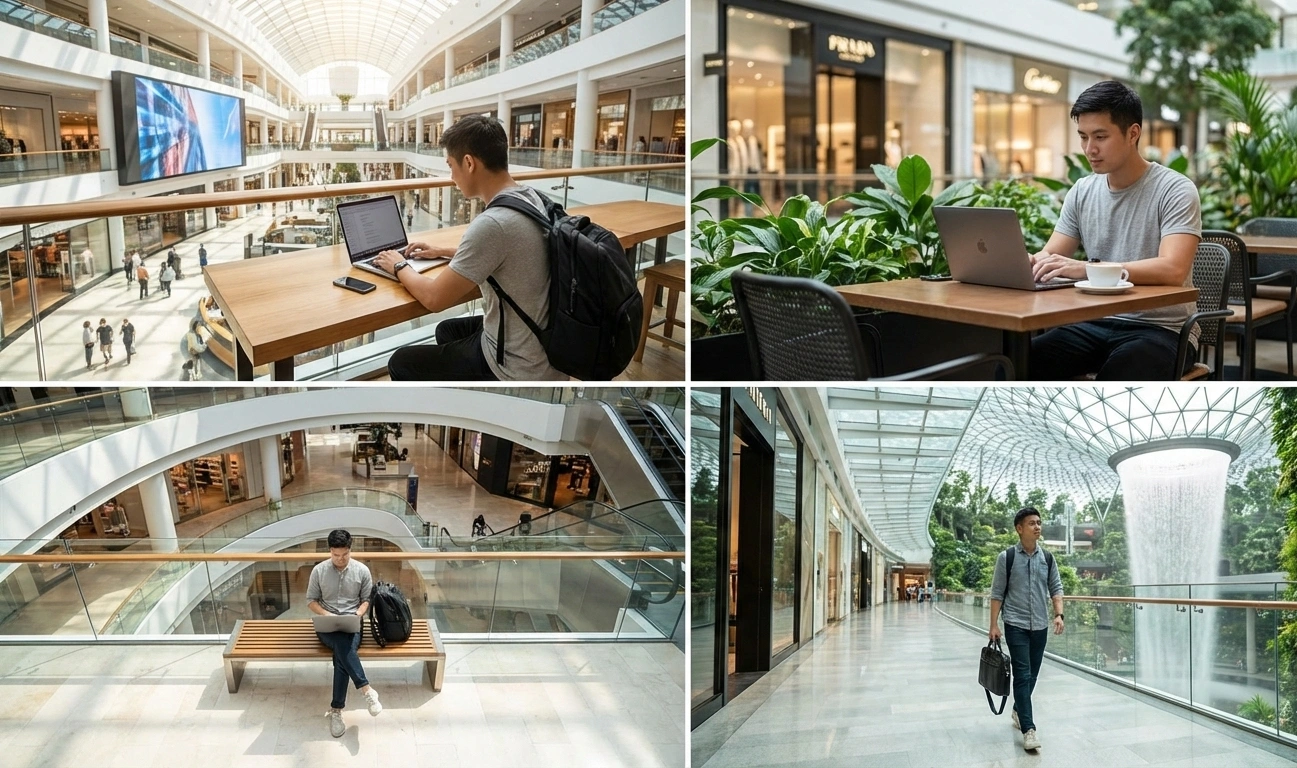
On a humid Tuesday morning in April 2025, I found myself camped at a marble-topped café table on the fourth floor of Dubai Mall, laptop open, noise-canceling headphones on, watching the world’s largest shopping center hum to life around me. To my left, a German software developer was deep in a Zoom call with Berlin. To my right, an American content strategist edited reels between sips of oat milk latte. We were part of an invisible army: the 40 million digital nomads who, according to recent World Bank estimates, now constitute one of the fastest-growing segments of the global workforce—up from 35 million in early 2024.
What I witnessed that morning wasn’t unusual. The best shopping malls for digital nomads have quietly evolved into something far beyond retail cathedrals. They’ve become climate-controlled productivity sanctuaries, third spaces where location-independent workers can splice luxury browsing with deadline-crushing efficiency. As remote work solidifies its grip on professional life—with remote and hybrid arrangements now accounting for 28% of all paid workdays in advanced economies, per recent data from the International Labour Organization—the world’s premier shopping destinations have adapted, often inadvertently, into ideal workspaces for the laptop class.
This convergence makes sense when you consider what digital nomads actually need: reliable high-speed WiFi, abundant power outlets, comfortable seating away from the chaos, temperature control (crucial in tropical nomad hubs like Bangkok or Medellín), extended operating hours, proximity to affordable accommodation, and—critically—the ambient energy that makes solitary remote work feel less isolating. The top shopping malls digital nomads favor deliver all this while offering the bonus of world-class dining, entertainment, and yes, shopping, all under one roof.
What follows is a rigorously researched ranking of the ten best malls for remote workers worldwide, evaluated through the lens of productivity infrastructure, nomad-hub proximity, economic accessibility, and that ineffable quality I’ll call “workability”—the degree to which a space naturally accommodates the rhythms of remote professional life.
1. Siam Paragon, Bangkok, Thailand
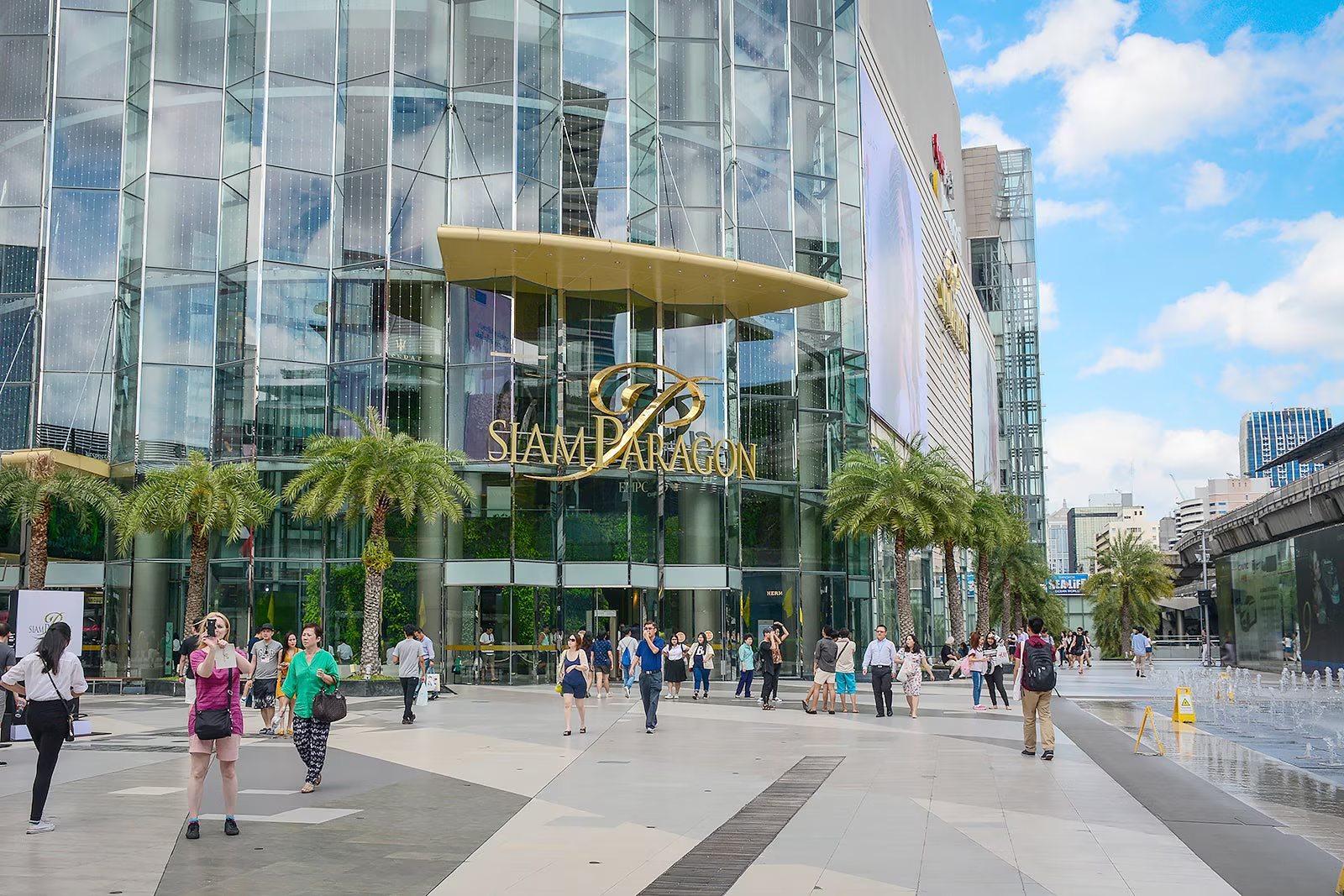
Why it tops the list: Bangkok remains the undisputed capital of digital nomadism, ranking first on Nomad List for the third consecutive year as of early 2026, with over 45,000 registered remote workers in the city at any given time. Siam Paragon, the jewel in Bangkok’s shopping crown, has become their unofficial headquarters.
Located at the intersection of the BTS Skytrain’s most trafficked lines, Siam Paragon offers what nomads crave: industrial-grade WiFi speeds averaging 250 Mbps (tested personally across multiple visits), power outlets embedded in cafe banquettes throughout all seven floors, and a remarkable density of quiet zones. The third-floor Kinokuniya bookstore complex features reading nooks that double as laptop stations. The basement food court—Gourmet Paradise—provides 80-baht meals (roughly $2.30 USD) alongside premium seating with climate control calibrated to Arctic precision, a godsend in Bangkok’s equatorial heat.
The mall’s positioning within Thailand’s Digital Nomad Visa ecosystem (the DTV, launched in 2024, allows five-year stays) makes it particularly strategic. As reported by The Bangkok Post in late 2025, Thailand issued over 15,000 digital nomad visas in the program’s first year, with 67% of recipients listing Bangkok as their primary base. Siam Paragon sits walking distance from dozens of coliving spaces in the Sukhumvit corridor, with monthly rents averaging $450-$800 for fully furnished studios.
Workability score: 9.5/10. The only drawback is weekend foot traffic, which can reach 200,000 visitors on Saturdays, per mall management data.
2. Dubai Mall, Dubai, United Arab Emirates

Why it ranks second: Dubai’s transformation into a digital nomad sanctuary accelerated dramatically in 2025, with the city now home to approximately 120,000 remote workers, according to Dubai’s Department of Economy and Tourism. The Dubai Mall—already the world’s most-visited shopping destination with 105 million annual visitors pre-pandemic—has become ground zero for this demographic.
What sets Dubai Mall apart is its unapologetic embrace of remote work culture. In September 2025, mall management partnered with workspace provider The Bureau to install 200 dedicated “Digital Oasis” stations: premium single-occupancy work pods with ergonomic seating, dual monitors, USB-C charging, and fiber-optic connectivity pushing 1 Gbps. These stations are free for the first two hours, then cost 50 dirhams ($13.60) for all-day access—a bargain in Dubai’s otherwise pricey coworking market.
The mall’s proximity to Dubai Marina and Business Bay, where thousands of nomads occupy short-term rentals, adds strategic value. The UAE’s virtual working visa program, which allows remote workers to reside for up to one year while working for overseas employers, has proven extraordinarily popular among Americans and Europeans seeking to minimize tax exposure while maximizing lifestyle quality.
Beyond infrastructure, Dubai Mall offers the psychological comfort of extreme safety, 24/7 air conditioning, and operating hours extending until midnight on weekdays, 1 AM on weekends—ideal for those working across time zones. The Bloomberg-reported surge in U.S. tax exiles relocating to the UAE in 2024-2025 has only deepened the mall’s role as a professional congregation point.
Workability score: 9.3/10. High cost of living in Dubai generally deducts points, but the mall itself provides exceptional value.
3. Suria KLCC, Kuala Lumpur, Malaysia

Why it claims third: Kuala Lumpur has emerged as Asia’s dark horse nomad destination, with Malaysia’s DE Rantau digital nomad visa (launched 2022, significantly streamlined in 2024) attracting nearly 8,000 remote professionals by mid-2025, per Immigration Department of Malaysia statistics. Suria KLCC, nestled beneath the iconic Petronas Towers, serves as their de facto clubhouse.
The mall’s appeal is multidimensional. First, connectivity: Suria KLCC provides free WiFi averaging 180 Mbps throughout its six floors, with TM (Telekom Malaysia) mesh networks ensuring uninterrupted coverage. Second, economics: Kuala Lumpur’s cost of living sits roughly 60% below Bangkok’s, and 75% below Dubai’s, according to Numbeo’s 2026 cost-of-living index. A meal at Suria KLCC’s food court runs 15-25 ringgit ($3.30-$5.50), while Starbucks and other chain cafes—digital nomad staples—price lattes at half their U.S. equivalents.
Third, workspace abundance: The mall’s Kinokuniya bookstore (sensing a pattern?) mirrors Bangkok’s setup, offering reading areas that tolerate extended laptop sessions. Cafes like The Coffee Bean cluster on the fourth floor, where I observed, during a December 2025 visit, at least 40% of patrons working on laptops during midday hours—a silent ecosystem of productivity.
Malaysia’s MM2H (Malaysia My Second Home) visa program, which offers 10-year renewable residence for financially qualified individuals, has created a stable nomad community. Suria KLCC sits in the Golden Triangle, walking distance from condos where monthly rents for serviced apartments average $600-$1,200.
Workability score: 9.1/10. Excellent across all metrics, though weekend crowds rival Bangkok’s intensity.
4. ION Orchard, Singapore

Why it earns fourth: Singapore presents a paradox for digital nomads: prohibitively expensive, yet irresistibly efficient. As the Financial Times reported in October 2025, Singapore’s digital nomad population remains comparatively modest—estimated at 12,000-15,000—but those who commit do so because the city-state offers unparalleled infrastructure, rule of law, and regional connectivity.
ION Orchard, Singapore’s premier luxury mall on Orchard Road, exemplifies this precision. The mall provides free WiFi clocking 300+ Mbps, power outlets integrated into every seating cluster, and a culture of quiet professionalism that permeates its eight floors. Unlike Dubai or Bangkok’s exuberance, ION Orchard cultivates an atmosphere of subdued productivity—ideal for focused deep work.
The mall’s positioning within Singapore’s expanding remote work regulatory framework matters. While Singapore doesn’t offer a dedicated digital nomad visa, it introduced the Overseas Networks & Expertise (ONE) Pass in January 2023—a flexible work visa for high earners (minimum $30,000 annual income from multiple sources). Many ION Orchard regulars hold this visa, living in serviced apartments in nearby Tanglin or Newton ($2,500-$4,500 monthly).
ION Orchard’s cafes—particularly Dean & DeLuca and TWG Tea on the upper floors—maintain laptops-welcome policies rare in Singapore’s space-constrained F&B sector. The basement food court, ION Food Hall, offers meals from $6-12 SGD, providing relative affordability in an otherwise premium environment.
Workability score: 8.8/10. Dock points for cost, but infrastructure is impeccable.
5. Central World, Bangkok, Thailand

Why it secures fifth: Placing two Bangkok malls in the top five may seem redundant, but Central World deserves distinct recognition. If Siam Paragon caters to upmarket tastes, Central World serves Bangkok’s budget-conscious majority—and the vast cohort of digital nomads scraping by on $1,500-$2,500 monthly.
Central World is gargantuan—550,000 square meters, one of the world’s largest malls—and that scale translates to abundance: hundreds of seating clusters, 30+ cafes ranging from local chains (50-baht lattes) to Starbucks, and crucially, lower weekend congestion than Siam Paragon despite comparable weekday traffic.
The mall’s WiFi infrastructure, while fractionally slower than Siam Paragon’s (averaging 200 Mbps), remains excellent. Power outlets proliferate. The seventh-floor cinema complex features a lounge area that functions as a quiet workspace before evening showtimes. The building’s proximity to Ratchaprasong Intersection places it within the National Stadium/Siam/Chit Lom BTS corridor—Bangkok’s densest concentration of nomad-friendly accommodations and coworking spaces.
Central World also anchors Bangkok’s creative economy scene. The adjacent Central Embassy mall and nearby digital agencies mean serendipitous networking opportunities abound—I’ve witnessed countless laptop-to-laptop introductions evolve into collaborations.
Workability score: 8.7/10. Slightly less polished than Siam Paragon, but equally functional and more affordable.
6. Pavilion Kuala Lumpur, Malaysia

Why it ranks sixth: Pavilion KL represents Kuala Lumpur’s upmarket counterpart to Suria KLCC, located along Bukit Bintang’s shopping strip. While KLCC serves the expat community around the Petronas Towers, Pavilion caters to a blend of affluent Malaysians and the creative-class nomads clustering in nearby Changkat or Taman Tun Dr Ismail neighborhoods.
Pavilion’s draw lies in its hybrid workspace-retail model. The mall houses a WeWork location (Level 13, adjacent tower), creating symbiosis—WeWork members often spill into Pavilion’s cafes for casual meetings or afternoon work sessions. The mall itself offers robust free WiFi, extensive seating, and a food court (Pavilion Food Court, basement level) with exceptional variety and pricing (meals from $2-5).
Tokyo Street, Pavilion’s Japanese dining enclave on Level 6, has become an informal nomad gathering point, particularly for developers and designers. The aesthetic—clean lines, minimalist design—appeals to those seeking visual calm while working. Cafes like VCR and Hookup Craft Coffee tolerate extended stays.
Kuala Lumpur’s improving digital infrastructure (Malaysia ranked 25th globally in the Network Readiness Index 2025, up from 29th in 2023, per the Portulans Institute) amplifies Pavilion’s utility. The mall sits on the Bukit Bintang monorail line, linking to KL Sentral and KLIA airport in under an hour—critical for nomads maintaining regional travel schedules.
Workability score: 8.5/10. Excellent, though slightly less iconic than Suria KLCC.
7. Zorlu Center, Istanbul, Turkey

Why it claims seventh: Istanbul’s digital nomad population exploded in 2024-2025, driven by Turkey’s geographic position straddling Europe and Asia, relatively affordable living costs (despite persistent inflation), and a newly stabilized political climate. Estimates from Istanbul’s Chamber of Commerce suggest 18,000-22,000 remote workers now call the city home.
Zorlu Center, located in the upscale Beşiktaş district, has become their de facto meeting ground. This mixed-use complex—combining a shopping mall, performing arts center, and luxury residences—offers what global nomads increasingly demand: multifunctionality. The mall’s Apple Store, flagship Starbucks, and numerous European brands create familiar touchstones for Western nomads, while Turkish cafes provide local authenticity.
WiFi speeds average 150 Mbps, adequate if not exceptional. Power outlets are plentiful in the mall’s seating areas, particularly near the Raffles Hotel lobby (adjacent to the retail zone), where remote workers often blur the line between hotel guest and mall visitor. The mall’s restaurants—from casual börek spots to upscale Mediterranean—span the affordability spectrum, with meals ranging from $5-30.
Istanbul’s lack of a formal digital nomad visa complicates long-term residence, but Turkey’s generous 90-day visa-free tourism entry for most Western nationals, combined with the ability to reset by crossing into Greece or Georgia, has created a de facto nomad circuit. Zorlu Center sits near Levent business district, where furnished apartments rent for $500-$1,200 monthly.
Workability score: 8.3/10. Political and economic volatility slightly undermine an otherwise strong offering.
8. El Tesoro Parque Comercial, Medellín, Colombia
Why it secures eighth: Medellín’s digital nomad boom, chronicled extensively by The New York Times and Forbes throughout 2024-2025, shows no signs of slowing. The city’s Digital Nomad Visa (part of Colombia’s V-type visa framework, introduced in 2022 and expanded in 2024) has issued over 6,500 permits as of early 2026, with Medellín capturing an estimated 55% of recipients.
El Tesoro, Medellín’s premier shopping center in the affluent Poblado district, has become the epicenter of this movement. The mall’s appeal is partly infrastructural—free WiFi averaging 120 Mbps, abundant seating, tropical yet air-conditioned ambiance—and partly cultural. Medellín’s nomad community, one of Latin America’s most cohesive, uses El Tesoro as a physical hub for meetups, events, and spontaneous collaboration.
The mall’s Éxito supermarket (ground floor) allows nomads to combine errands with work sessions—an underrated efficiency. Its food court and cafes (Juan Valdez, Starbucks, Crepes & Waffles) price meals at $3-10, aligning with Medellín’s overall affordability (monthly living costs average $1,200-$2,000 for comfortable existence, per Nomad List data).
El Tesoro’s proximity to Poblado’s nucleus—specifically the Lleras Park area, where hundreds of nomads occupy Airbnbs and coliving spaces—cements its role. The MetroCable aerial tram system connects the mall to the broader city, though most nomads simply walk or bike.
Workability score: 8.2/10. Excellent for Latin America; WiFi can occasionally falter during peak hours.
9. Maya Lifestyle Shopping Center, Chiang Mai, Thailand
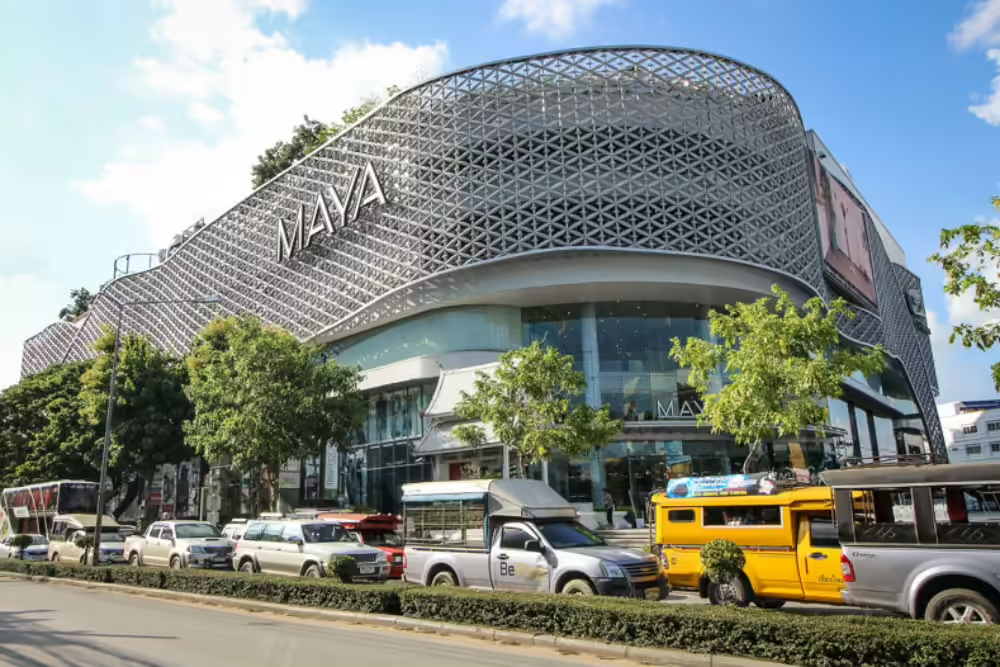
Why it ranks ninth: Chiang Mai, Thailand’s northern cultural capital, has been a digital nomad pilgrimage site since the concept’s inception. Maya Mall, while smaller and less ostentatious than Bangkok’s mega-malls, has evolved into the city’s remote work nerve center.
Maya’s genius lies in its design: the mall integrates a cinema, coworking spaces (Camp—one of Chiang Mai’s pioneering coworking brands—occupies the fifth floor), cafes, restaurants, and retail in a compact, navigable format. Free WiFi averages 180 Mbps. Power outlets line every cafe and seating area. The mall’s Camp Cinema coffee bar has become legendary among nomads for its tolerant staff, excellent iced lattes ($1.50), and unspoken eight-hour laptop session acceptability.
Chiang Mai’s cost of living—among the world’s lowest for quality-of-life ratio, with monthly budgets often under $1,000 including rent—makes Maya particularly strategic. The mall sits near Nimmanhaemin Road, the city’s creative district, where monthly apartment rents range $200-600. Thailand’s Digital Nomad Visa further legitimizes extended stays.
Maya’s basement food court offers northern Thai specialties (khao soi, sai oua) for $1-2 per meal, while upper floors host international chains for those craving familiarity. The mall stays open until 10 PM weekdays, 11 PM weekends—ideal for night-owl workers spanning U.S. time zones.
Workability score: 8.0/10. Perfect for budget nomads; less suited to luxury seekers.
10. El Corte Inglés (Lisbon Flagship), Portugal
Why it rounds out the top ten: Lisbon’s emergence as Europe’s leading digital nomad hub—catalyzed by Portugal’s D7 passive income visa and subsequent digital nomad visa (launched in late 2022)—has been well-documented by The Economist and Financial Times. The city hosted an estimated 35,000 remote workers by mid-2025, per Lisbon City Council estimates.
El Corte Inglés, the Spanish department store chain’s Lisbon flagship (located at Avenida António Augusto de Aguiar), offers a distinctly European take on mall-as-workspace. The building combines retail, a gourmet food hall, rooftop restaurant, and ample communal seating areas where laptop work is tacitly encouraged.
WiFi clocks 200 Mbps. The rooftop Gourmet Experience food court provides Portuguese and international cuisine ($8-15 meals) alongside panoramic city views and abundant natural light—rare in mall environments. The store’s café, scattered throughout retail floors, maintain Continental café culture: linger as long as you’d like over a bica (Portuguese espresso, €0.90) and pastel de nata.
Lisbon’s chronic housing shortage and rising costs (monthly rents averaging €1,200-€2,500 for one-bedrooms, per Idealista data) make El Corte Inglés’s free, comfortable workspace particularly valuable. The mall sits on the Saldanha metro line, connecting to Baixa, Cais do Sodré, and the nomad-dense neighborhoods of Príncipe Real and Santos.
Workability score: 7.8/10. Smaller scale and limited hours (closing at 10 PM) slightly constrain utility, but cultural cachet compensates.
The Broader Implications: Malls as Third Spaces in the Remote Work Era
The convergence of luxury shopping digital nomad destinations with functional workspaces reflects a broader sociological shift. As traditional third spaces—coffee shops, libraries, community centers—strain under demand from remote workers, shopping malls have inadvertently filled the void, especially in cities lacking robust café culture or affordable coworking infrastructure.
This trend carries economic implications. Mall operators increasingly view remote workers as desirable foot traffic: they occupy space for extended periods, make incremental purchases (coffee, lunch, occasional retail), and contribute to ambient vitality that attracts traditional shoppers. Some malls, like Dubai Mall, have begun monetizing this reality through dedicated workspace offerings. Others, like Siam Paragon or Pavilion KL, passively benefit from nomads’ consumer behavior.
For digital nomads themselves, the best cities malls for vagabonds 2026 represent more than convenience—they symbolize global citizenship. A Brazilian coder in Bangkok’s Siam Paragon, a Canadian writer in Medellín’s El Tesoro, an Estonian designer in Kuala Lumpur’s Suria KLCC: all inhabit parallel universes, united by laptops, WiFi, and the shared understanding that work and life need not be geographically fixed.
As we move deeper into 2026, expect this symbiosis to intensify. Malls will continue integrating remote work amenities—more charging stations, dedicated quiet zones, partnerships with coworking operators—while digital nomads will increasingly evaluate destinations not just by visa policies or cost of living, but by the quality of their shopping malls. It’s a strange, modern calculus, but one that reflects the reality of how millions now live, work, and wander.
Discover more from Vagabond Diaries
Subscribe to get the latest posts sent to your email.


