
Beaches
The World’s Most Beautiful Islands: A Geographic and Cultural Analysis

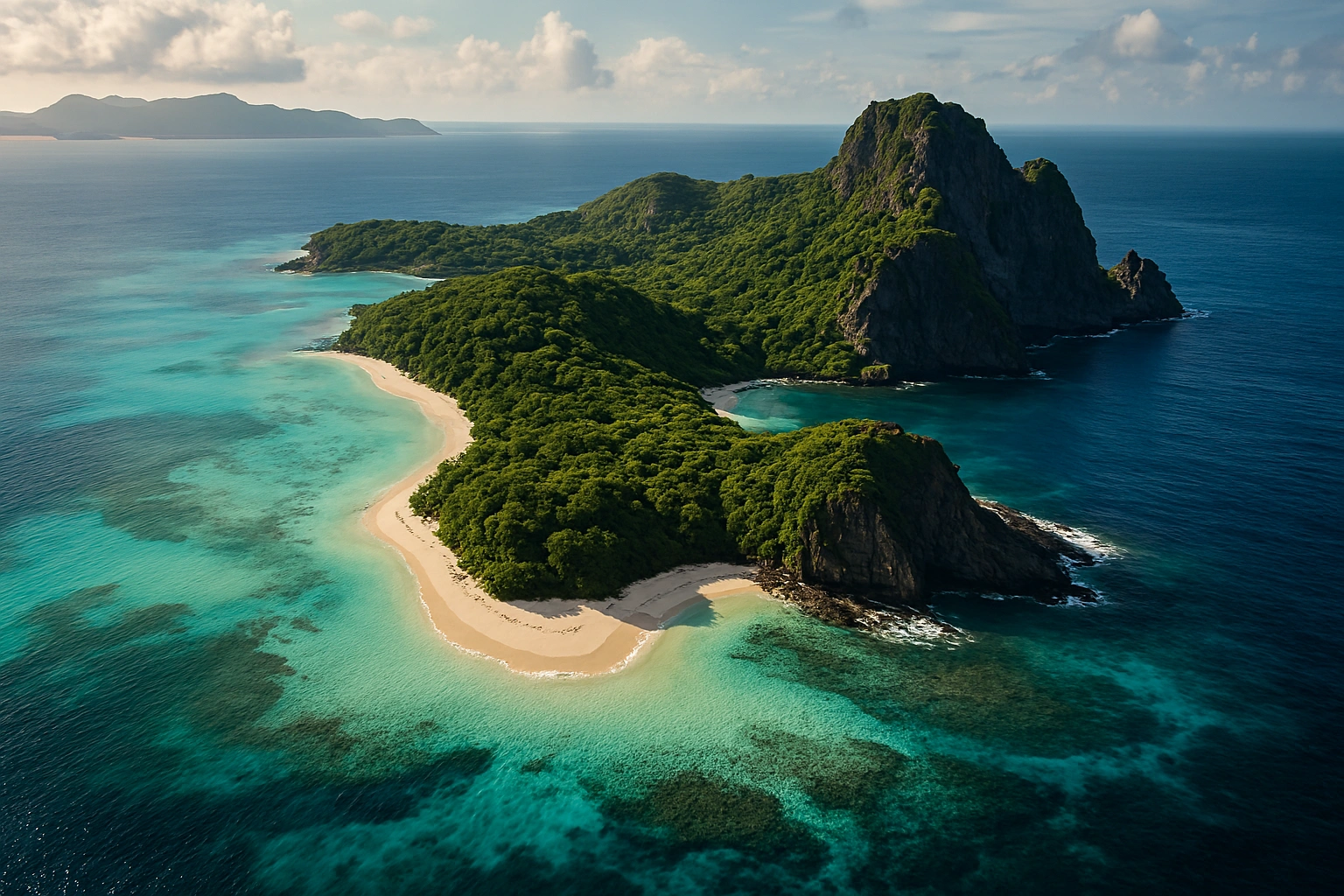
Understanding Island Beauty Beyond the Postcard
The concept of island beauty has evolved considerably since tourism became a global industry. What once meant isolated beaches and palm trees now encompasses biodiversity richness, cultural preservation, climate resilience, and the delicate balance between accessibility and environmental protection. According to the World Tourism Organization, island destinations account for approximately 2% of global landmass yet attract nearly 15% of international tourist arrivals—a concentration that speaks both to their appeal and their vulnerability.
This analysis examines islands not merely as vacation destinations but as complex ecosystems where geology, human culture, and environmental stewardship intersect. The most compelling islands share certain characteristics: dramatic topography shaped by volcanic or tectonic forces, marine ecosystems of exceptional diversity, cultural traditions adapted to isolation, and increasingly, communities grappling with the dual pressures of tourism revenue and environmental degradation.
The islands examined here represent different models of beauty—some defined by remoteness and preservation, others by the layering of human history onto natural landscape, and several by their role as laboratories for sustainable tourism practices that other destinations now study.
The Volcanic Arc: Islands Shaped by Fire
Santorini, Greece
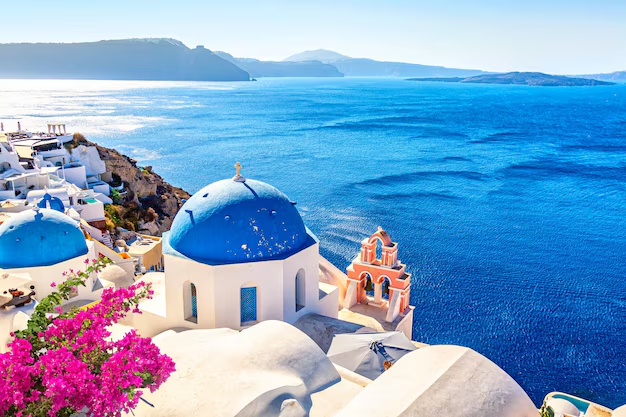
Santorini’s caldera, formed by one of history’s most violent volcanic eruptions around 1600 BCE, created a landscape that defies conventional island aesthetics. Rather than gentle shores, visitors encounter 300-meter cliffs plunging into an submerged crater, white-washed villages perched on unstable volcanic rock, and a color palette of black, red, and white beaches created by different mineral compositions.
The island’s beauty is architectural as much as natural. Cycladic design—flat roofs, blue domes, whitewashed walls—emerged not from aesthetic preference but from practical responses to limited timber, abundant pumice stone, and intense solar radiation. This vernacular architecture, now protected by strict building codes, has become inseparable from the landscape itself.
Tourism pressure remains severe. UNESCO studies indicate that Santorini receives approximately 2 million annual visitors despite a permanent population of 15,000—a ratio that threatens water resources, waste management capacity, and the authenticity that attracts visitors initially. The Greek government’s recent introduction of cruise ship quotas represents an attempt to balance economic dependence with environmental limits.
Bora Bora, French Polynesia

Bora Bora exemplifies the classic Pacific volcanic island in its mature stage—a central peak surrounded by a lagoon and barrier reef. Mount Otemanu, the remnant of an extinct volcano, rises 727 meters from an island only 29 square kilometers in area, creating the vertical drama that distinguishes French Polynesian islands from lower-lying atolls.
The lagoon ecosystem, protected by the outer reef, maintains water clarity and marine biodiversity that have made Bora Bora synonymous with overwater bungalow tourism. However, this model—pioneered here in the 1960s—now faces scrutiny. French Polynesian authorities have tightened regulations on lagoon construction following research by the French National Centre for Scientific Research documenting sediment disruption and coral stress near resort developments.
The island’s economy is almost entirely tourism-dependent, a vulnerability exposed during the COVID-19 closure when unemployment exceeded 70%. This has prompted discussions about economic diversification and the carrying capacity of small island environments—conversations relevant far beyond French Polynesia.
Iceland

Iceland occupies a unique position in island beauty discussions—too large and climatically harsh to fit tropical paradise stereotypes, yet increasingly recognized for landscapes shaped by the interaction of volcanic activity and glacial systems found nowhere else at this scale.
The island straddles the Mid-Atlantic Ridge, where the North American and Eurasian tectonic plates diverge at approximately 2.5 centimeters annually. This geology produces a landscape of active volcanism, geothermal features, glacial rivers, and black sand beaches formed from basaltic lava fragmented by wave action. The Icelandic Meteorological Office monitors roughly 30 active volcanic systems, several of which have erupted in recent years, reshaping landscapes in real-time.
Iceland’s tourism surge—from 500,000 visitors in 2010 to over 2 million by 2018—created infrastructure strain and environmental impact documented by Statistics Iceland. The government has responded with site access fees, visitor education programs, and infrastructure investment, treating overtourism as a planning challenge rather than an inevitable consequence. The results offer lessons for other island destinations experiencing similar growth trajectories.
Coral Reef Systems: Islands Built by Biology
The Maldives

The Maldives represents island beauty at its most precarious. The entire nation consists of 26 atolls—ring-shaped coral reef systems enclosing lagoons—with an average elevation of 1.5 meters above sea level. This makes the Maldives the lowest-lying country on Earth and exceptionally vulnerable to sea-level rise projected by the Intergovernmental Panel on Climate Change.
The atolls themselves are biological constructions—limestone structures built over millennia by coral polyps, shaped by wave patterns and currents into their characteristic circular forms. The clarity and diversity of Maldivian marine environments reflect the oligotrophic (nutrient-poor) conditions of open Indian Ocean waters, which favor coral growth while limiting plankton that would reduce visibility.
Tourism accounts for approximately 28% of Maldivian GDP according to World Bank data, creating acute tension between economic dependence and environmental protection. The government has implemented strict regulations on resort development—one island, one resort—to contain impact, while investing in artificial island construction and exploring radical adaptation measures including floating structures. The Maldives functions as both a premium destination and a real-time case study in climate adaptation.
Palawan, Philippines
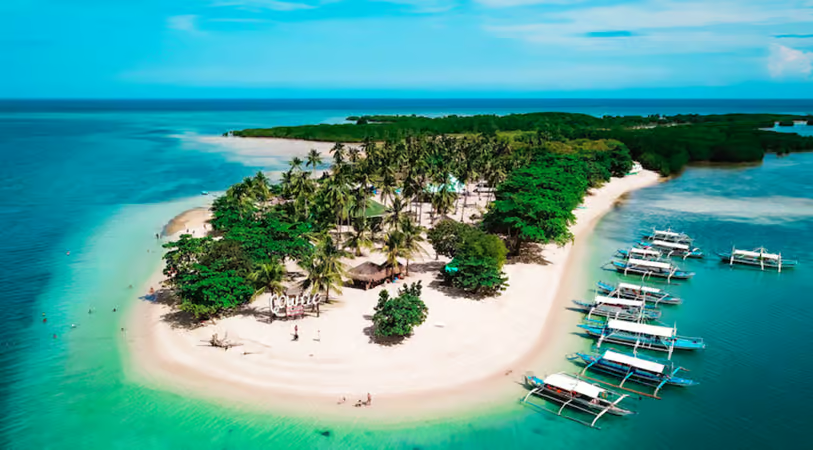
Palawan, voted by Condé Nast Traveler readers as the world’s best island multiple times, demonstrates how effective environmental governance can preserve beauty despite development pressure. The island spans 450 kilometers and encompasses limestone karst landscapes, underground rivers, coral reef systems, and intact rainforest.
The Puerto Princesa Subterranean River National Park, a UNESCO World Heritage Site, protects an 8.2-kilometer navigable underground river flowing through a cave system beneath a limestone karst mountain range. The park’s designation and strict management have prevented the mining and logging that degraded much of the Philippines’ natural landscapes elsewhere.
El Nido and Coron, at Palawan’s northern end, face the classic tourism dilemma. Their limestone cliffs and hidden lagoons attract visitors seeking what guidebooks call “untouched” beauty, yet visitor volume threatens the ecosystems that create that appeal. Recent temporary closures of Boracay and other Philippine islands for environmental rehabilitation signal governmental willingness to prioritize long-term preservation over short-term revenue—a significant policy shift in a developing economy.
Cultural Landscapes: Where Human and Natural Beauty Converge
Bali, Indonesia
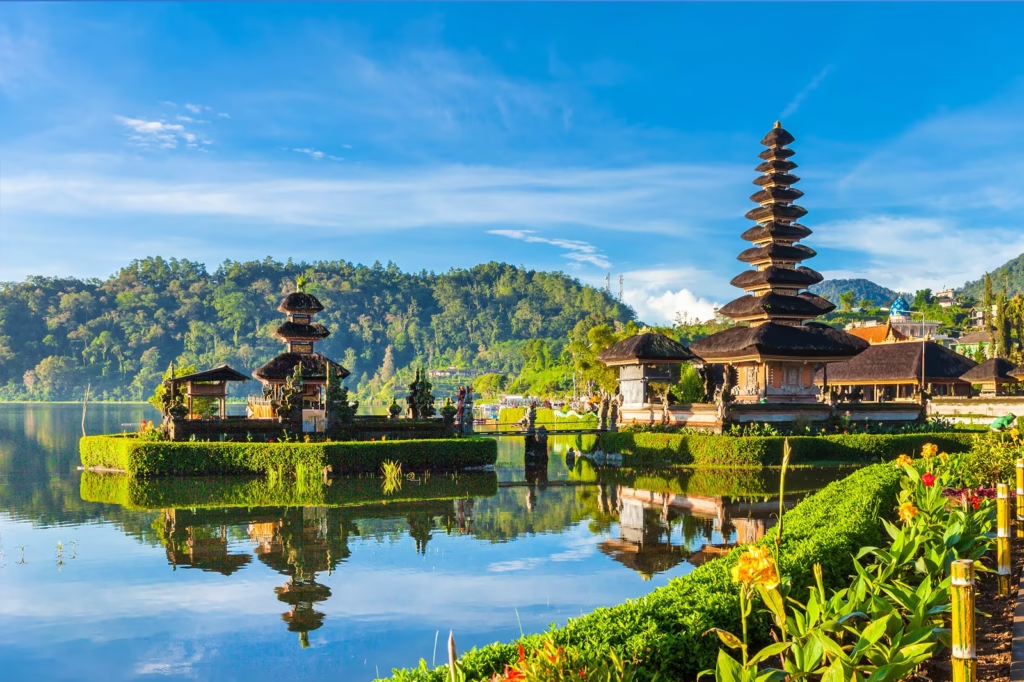
Bali’s beauty is fundamentally cultural—rice terraces shaped by the subak irrigation system, temple architecture integrated into volcanic slopes, and a Hindu tradition that persists in the world’s largest Muslim-majority nation. The island’s aesthetic appeal stems from how Balinese culture has shaped its tropical landscape over centuries.
The subak system, recognized by UNESCO as a cultural landscape, represents a sophisticated water management cooperative dating to the 9th century. Terraced rice paddies that appear purely scenic actually function as complex hydraulic systems coordinated through water temples, demonstrating how beauty can emerge from agricultural necessity refined over generations.
Tourism has transformed Bali dramatically since the 1970s. The island now receives over 6 million international visitors annually according to Indonesian government statistics, concentrated heavily in the southern peninsula. This has generated wealth but also traffic congestion, water stress, and cultural commercialization. The Balinese response—preserving cultural practices while adapting economically—offers a model of cultural resilience under tourism pressure, though sustainability remains contested.
Capri, Italy

Capri represents island beauty as cultivated over millennia of Mediterranean history. The island’s limestone cliffs, sea caves, and endemic flora attracted Roman emperors, inspired writers from Homer to Graham Greene, and became synonymous with a particular vision of sophisticated European leisure.
The Blue Grotto, Capri’s most famous feature, demonstrates how natural phenomena become cultural landmarks. The cave’s intense blue light results from sunlight filtering through underwater openings, a purely physical process that has generated centuries of artistic representation and tourist fascination. The grotto’s current management—timed boat entries, visitor limits—shows how even natural features require cultural regulation to remain accessible.
Capri faces the challenge of maintaining character while accommodating mass tourism. Day-trippers from Naples and cruise ships create density that threatens the refined atmosphere that is itself part of Capri’s appeal. Local authorities have implemented measures including limited vehicle access and architectural preservation zones, treating the island as a managed cultural artifact rather than simply a natural resource.
Remote Ecosystems: Beauty Through Isolation
Seychelles
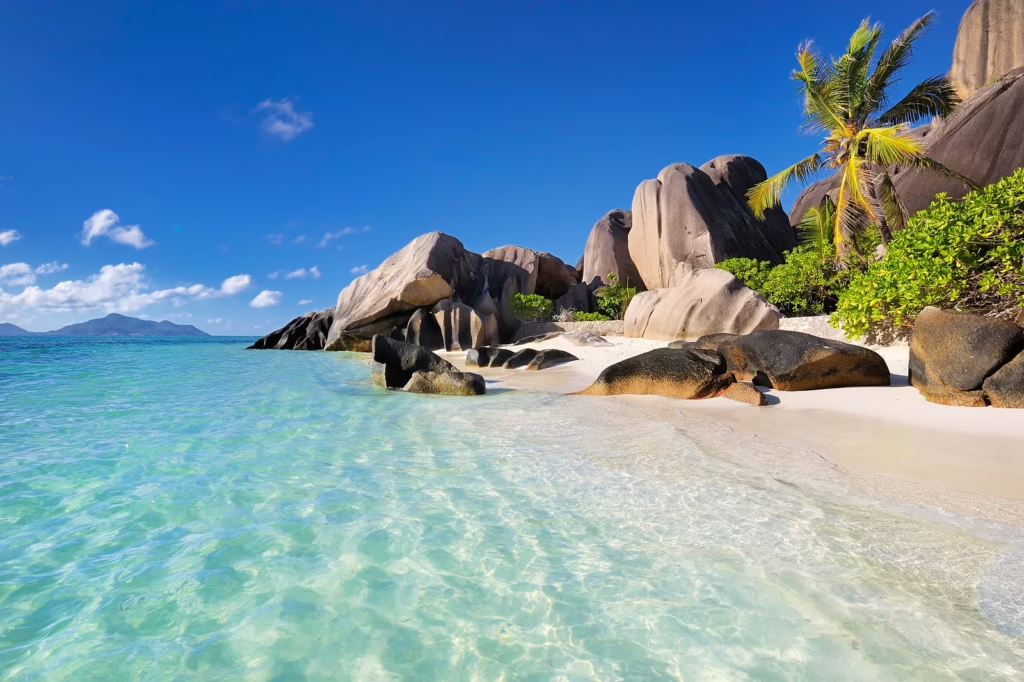
The Seychelles archipelago, isolated in the western Indian Ocean, evolved unique flora and fauna found nowhere else. The islands’ granite formations—unusual for oceanic islands, which are typically volcanic or coral—date to the breakup of Gondwana supercontinent, making them among Earth’s oldest oceanic islands.
This geological isolation produced remarkable endemism. The coco de mer palm, producing the largest seed in the plant kingdom, grows naturally only on two Seychelles islands. The islands shelter unique bird species, giant tortoises, and marine ecosystems protected through one of the world’s most extensive marine conservation programs.
Seychelles has pursued high-value, low-volume tourism as deliberate strategy. According to Seychelles National Bureau of Statistics, visitor numbers remain capped below 400,000 annually despite demand, with policy favoring environmental preservation over tourism growth. The nation has also pioneered debt-for-nature swaps, using debt restructuring to fund marine protected areas that now cover roughly 30% of its exclusive economic zone—a model that The Nature Conservancy has helped replicate elsewhere.
Galápagos Islands, Ecuador
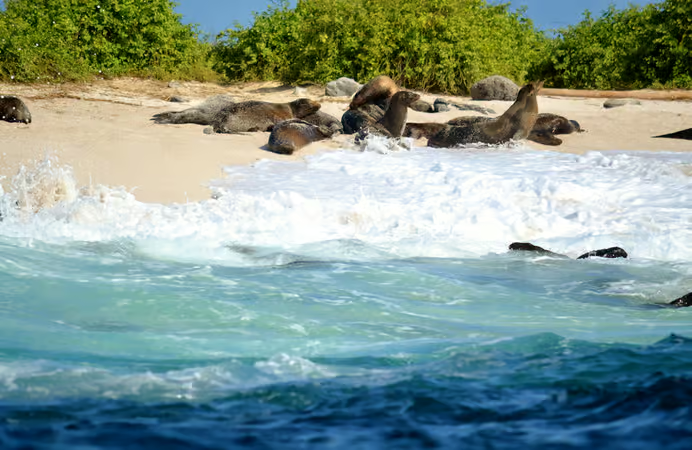
The Galápagos require little introduction—their role in Darwin’s development of evolutionary theory has made them perhaps the most scientifically significant islands on Earth. Their beauty is inseparable from their biological uniqueness: marine iguanas, flightless cormorants, giant tortoises, and finch species that demonstrate adaptive radiation in real-time.
Visitor management in Galápagos represents the most stringent of any island destination. The Galápagos National Park limits annual visitors, requires certified guides, restricts access to specific trails and sites, and imposes strict biosecurity measures to prevent invasive species introduction. These regulations reflect hard lessons—invasive species have already driven several endemic species extinct or to the brink.
Tourism revenue funds both conservation and local economy, creating aligned incentives unusual in protected areas. However, this model requires constant calibration. The Ecuadorian government faces ongoing pressure to increase visitor numbers for economic reasons while scientists argue that even current levels stress some ecosystems. The Galápagos exemplifies the fundamental tension between accessibility and preservation that all beautiful islands must navigate.
Measuring Island Beauty: Beyond Subjective Assessment
What makes an island beautiful? The question initially seems subjective, yet certain measurable factors recur across islands consistently rated as exceptional.
Biodiversity and ecosystem health: Islands with intact ecosystems, high endemism, and visible wildlife score consistently higher in both scientific assessments and visitor satisfaction surveys. Conservation International’s biodiversity hotspot mapping shows strong correlation between ecological richness and tourism appeal.
Landscape diversity: Islands offering multiple ecosystem types—beaches, mountains, forests, reefs—within small areas generate higher engagement than monotonous landscapes. This variety creates both visual interest and activity options.
Cultural authenticity: Destinations where local culture remains visible and integrated into visitor experience receive better satisfaction ratings than those where tourism infrastructure has replaced local character. The Global Sustainable Tourism Council criteria emphasize cultural preservation as integral to sustainable tourism.
Environmental management: Counterintuitively, islands with stricter regulations and visible conservation efforts often receive higher ratings than unregulated destinations. Visitors increasingly value evidence of environmental stewardship, and managed sites typically offer better visitor experiences than degraded areas.
Accessibility versus exclusivity: Islands must balance ease of access with the perception of special experience. Too difficult to reach limits visitors; too easy creates crowding that diminishes appeal. The optimal balance varies by market segment.
The Future of Island Tourism: Climate, Capacity, and Conservation
Island destinations face converging pressures that will reshape which islands remain beautiful and accessible in coming decades.
Climate change: Sea-level rise threatens low-lying islands directly. The UN Environment Programme projects that several island nations may become partially or wholly uninhabitable by century’s end under current emissions trajectories. Even islands not existentially threatened face beach erosion, coral bleaching, intensified storms, and shifting weather patterns that alter their appeal.
Carrying capacity: The concept of tourism carrying capacity—the number of visitors a destination can sustain without environmental or cultural degradation—is being operationalized through visitor caps, seasonal restrictions, and differential pricing. Islands from Santorini to Raja Ampat are implementing or debating such measures.
Economic dependence: Islands heavily dependent on tourism proved exceptionally vulnerable during COVID-19 closures. This has renewed discussions about economic diversification and the risks of single-sector economies, particularly in small island developing states.
Technology and monitoring: Satellite imagery, drone surveillance, and environmental sensors enable monitoring of reef health, erosion, visitor distribution, and ecosystem stress with unprecedented precision. This data increasingly informs adaptive management that adjusts regulations based on real-time conditions rather than static rules.
Visitor expectations: Post-pandemic tourism shows evidence of shifting values, with growing segments prioritizing sustainability, cultural engagement, and environmental impact over pure leisure. Islands positioning themselves as responsible destinations may gain competitive advantage as these preferences strengthen.
Conclusion: Preserving Paradise Through Intelligent Limits
The world’s most beautiful islands share a paradox: their appeal generates the visitors whose presence threatens what made them appealing. Resolving this paradox requires acknowledging that island beauty is not infinite or resilient—it requires active management, difficult choices about access and use, and recognition that preservation sometimes means saying no to economic opportunity.
The most successful islands examined here have embraced limits—on visitor numbers, on development density, on resource extraction—treating constraints not as obstacles but as essential to maintaining the qualities that create value. Seychelles’ high-value, low-volume model, Galápagos’ strict visitor management, and Iceland’s infrastructure investment in response to growth all represent variations on this theme.
For travelers, this means island beauty increasingly comes with responsibility. The days of treating islands as unlimited resources for consumption are ending, replaced by models requiring visitors to understand, respect, and contribute to preservation. The future of island tourism belongs to destinations that master this balance and visitors who accept it.
The most beautiful islands in the world will be those that remain beautiful—which requires ensuring they remain islands in more than geography, preserving the isolation, ecosystem integrity, and cultural distinctiveness that define island beauty in the first place.
Discover more from Vagabond Diaries
Subscribe to get the latest posts sent to your email.


