
Beaches
Why the Bahamas Is Becoming the Caribbean’s Unexpected Economic Powerhouse in 2026

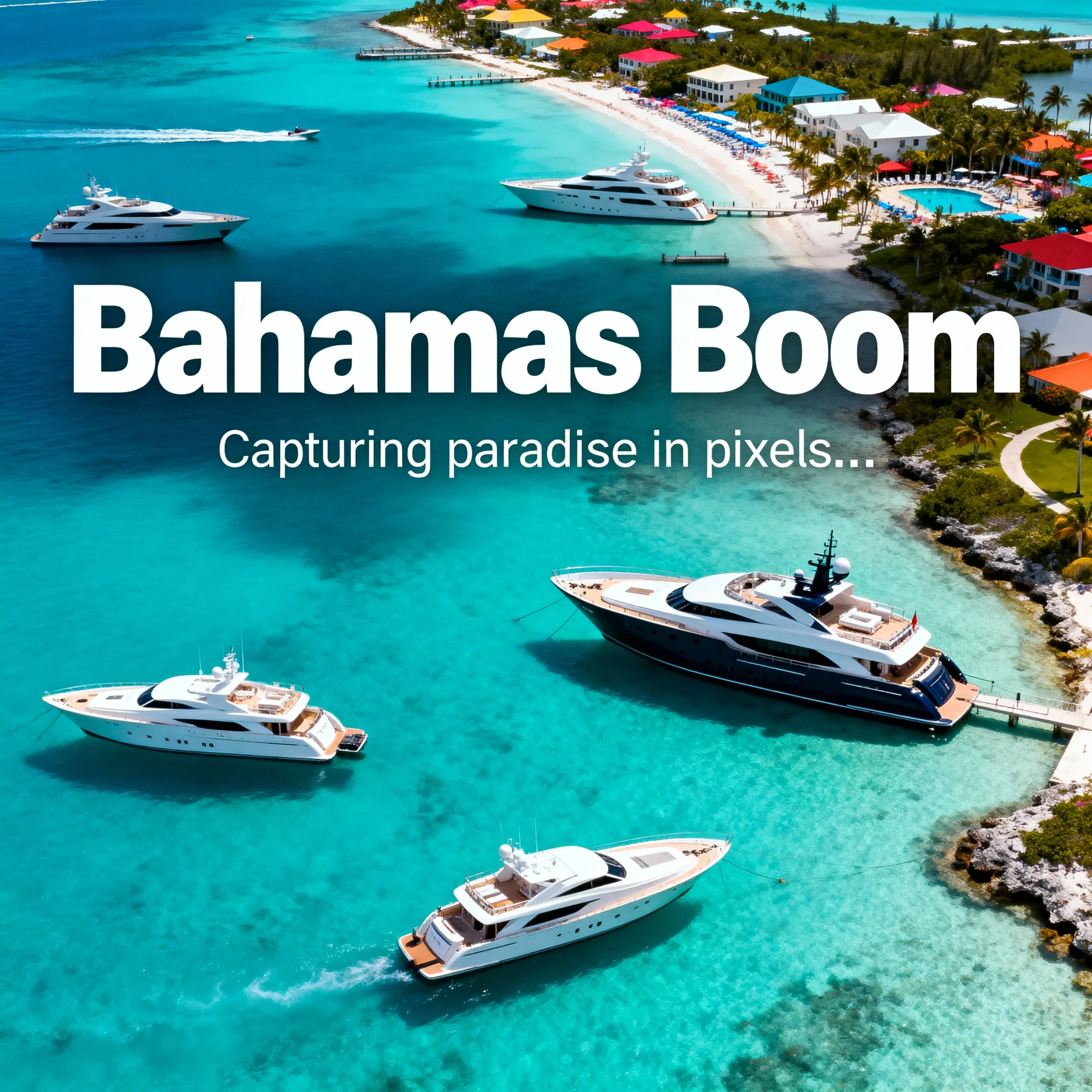
The Bahamas has long been synonymous with turquoise waters and powder-white beaches, but beneath the postcard-perfect surface, a more complex economic narrative is unfolding. As global capital flows shift and Caribbean nations compete for relevance in an increasingly multipolar world, the Bahamas is quietly positioning itself as more than just a vacation destination—it’s becoming a case study in adaptive island economics.
The Financial Services Renaissance
While tourists flock to Nassau and Paradise Island, the archipelago’s financial services sector has been undergoing a profound transformation. The Bahamas ranks as one of the world’s leading offshore financial centers, managing assets estimated at over $300 billion according to recent International Monetary Fund assessments. This isn’t accidental—it’s the result of deliberate regulatory modernization following years of international pressure.
The implementation of stricter compliance frameworks has paradoxically strengthened the Bahama’s competitive position. By adopting OECD standards for tax transparency, the jurisdiction has shed its “tax haven” stigma while retaining legitimate advantages: political stability, common law infrastructure, and proximity to American markets. Major international banks have expanded their Nassau operations, and the Central Bank of the Bahamas made history by launching the Sand Dollar, the world’s first fully deployed central bank digital currency, in 2020.
“The Bahamas has successfully navigated what many offshore jurisdictions couldn’t—evolving from opacity to compliance without sacrificing competitiveness,” notes a Financial Times analysis of Caribbean financial centers.
Tourism’s Strategic Pivot
The tourism sector, which contributes approximately 50% of GDP and employs nearly half the workforce, has emerged from the pandemic fundamentally restructured. Rather than simply recovering pre-2020 visitor numbers, the Bahamas Tourism Board has pursued a premium positioning strategy—targeting higher-spending travelers while managing overtourism concerns.
Investment in luxury infrastructure has accelerated. Baha Mar, the $4.2 billion mega-resort complex in Nassau, represents the largest single investment in Caribbean history, while boutique properties across the Out Islands cater to ultra-high-net-worth travelers seeking exclusivity. The World Travel & Tourism Council projects the Bahamas will see tourism GDP contribution reach $4.3 billion by 2028, assuming current growth trajectories hold.
More significantly, the Bahamas is diversifying its tourism product. Sports tourism, particularly through partnerships with major leagues and championship events, has created year-round demand beyond the traditional winter season. The Battle 4 Atlantis basketball tournament and the Bahamas Great Exuma Classic have become fixtures on the American sports calendar, generating millions in economic impact while building brand equity with younger demographics.
The Sustainability Imperative
Climate vulnerability has transformed from existential threat to strategic opportunity. As a low-lying archipelago of 700 islands, the Bahamas faces acute risks from sea-level rise and hurricane intensification—Hurricane Dorian’s 2019 devastation of Abaco and Grand Bahama remains etched in national memory. But this vulnerability has catalyzed ambitious sustainability initiatives that are reshaping development paradigms.

The Bahamas National Trust manages 32 protected areas covering 2.2 million acres, making it one of the Caribbean’s conservation leaders. Marine protected areas now encompass 20% of the nation’s waters, with plans to expand to 30% by 2030—a target that aligns with the UN Convention on Biological Diversity framework.
Renewable energy deployment is accelerating. Solar installations across the Family Islands are reducing diesel dependency, while the government has committed to generating 30% of electricity from renewables by 2030. These aren’t merely environmental gestures—they’re economic necessities that reduce fuel import costs and create resilience against supply disruptions.
“Small island developing states like the Bahamas can’t afford greenwashing,” explains a Washington Post analysis of Caribbean climate policy. “Their survival literally depends on adaptation.”
Geopolitical Positioning in a Competitive Caribbean
The Bahamas operates in an increasingly crowded regional marketplace. Barbados has leveraged remote work visa programs to attract digital nomads. The Cayman Islands remains the preferred jurisdiction for hedge fund domiciles. Jamaica is investing heavily in tourism infrastructure. Against this backdrop, the Bahamas is playing to distinctive strengths.
Geographic proximity to the United States—just 50 miles from Florida—provides unmatched logistical advantages for tourism and trade. The Bahamas serves as a natural transhipment hub, though officials remain vigilant against becoming a conduit for illicit flows. Cultural affinity with North American markets, reinforced by decades of people-to-people ties, creates brand recognition that newer entrants struggle to match.
Political stability is perhaps the Bahamas’ most underappreciated asset. While constitutional monarchy may seem anachronistic, the Westminster parliamentary system has delivered orderly democratic transitions and policy continuity. This matters enormously to institutional investors and multinational corporations evaluating long-term commitments.
The Challenges Ahead
Yet significant headwinds remain. Income inequality is pronounced, with wealth concentrated in Nassau while Out Island communities face limited economic opportunities. Youth unemployment exceeds 20%, creating social pressures that manifest in crime rates that concern both residents and tourists. The murder rate, while declining from peak years, remains elevated by Caribbean standards.
Debt levels are another concern. Public debt reached 100% of GDP during the pandemic, constraining fiscal space for development spending. The IMF has called for comprehensive fiscal reforms, including revenue mobilization measures and expenditure rationalization—politically challenging prescriptions in any democracy.
Infrastructure gaps persist. Beyond New Providence and Grand Bahama, many islands lack reliable electricity, internet connectivity, and healthcare facilities. Bridging this divide requires substantial capital investment that competes with other priorities in constrained budgets.
Looking Forward
The Bahamas is at an inflection point. The easy gains from tourism growth and financial services liberalization have been largely captured. The next phase requires more sophisticated interventions: human capital development, innovation ecosystems, and institutional strengthening.
Encouragingly, there are green shoots. The University of the Bahamas is expanding STEM programs and research capacity. Tech startups, though nascent, are beginning to emerge in the fintech and marine technology spaces. Public-private partnerships are financing infrastructure projects that wouldn’t be feasible through traditional procurement.
What distinguishes the Bahamas from peer jurisdictions is recognition that island economies can’t simply replicate continental development models. Success requires bespoke strategies that leverage unique advantages—natural beauty, geographic position, institutional heritage—while managing inherent vulnerabilities.
As climate change, digitalization, and geopolitical realignment reshape the global economy, the Bahamas is writing a playbook for how small states navigate disruption. Whether that playbook proves successful will have implications far beyond the Caribbean—it will offer lessons for the dozens of island nations and territories grappling with similar challenges.
For now, the Bahamas remains what it has always been: a compelling paradox. A place where offshore finance meets pristine nature, where vulnerability breeds resilience, and where the boundaries between tropical paradise and economic laboratory blur in fascinating ways. The world would be wise to pay closer attention.
Discover more from Vagabond Diaries
Subscribe to get the latest posts sent to your email.


