
Airways
Where the Road Runs Out: A Journey Through Naran Kaghan Valley

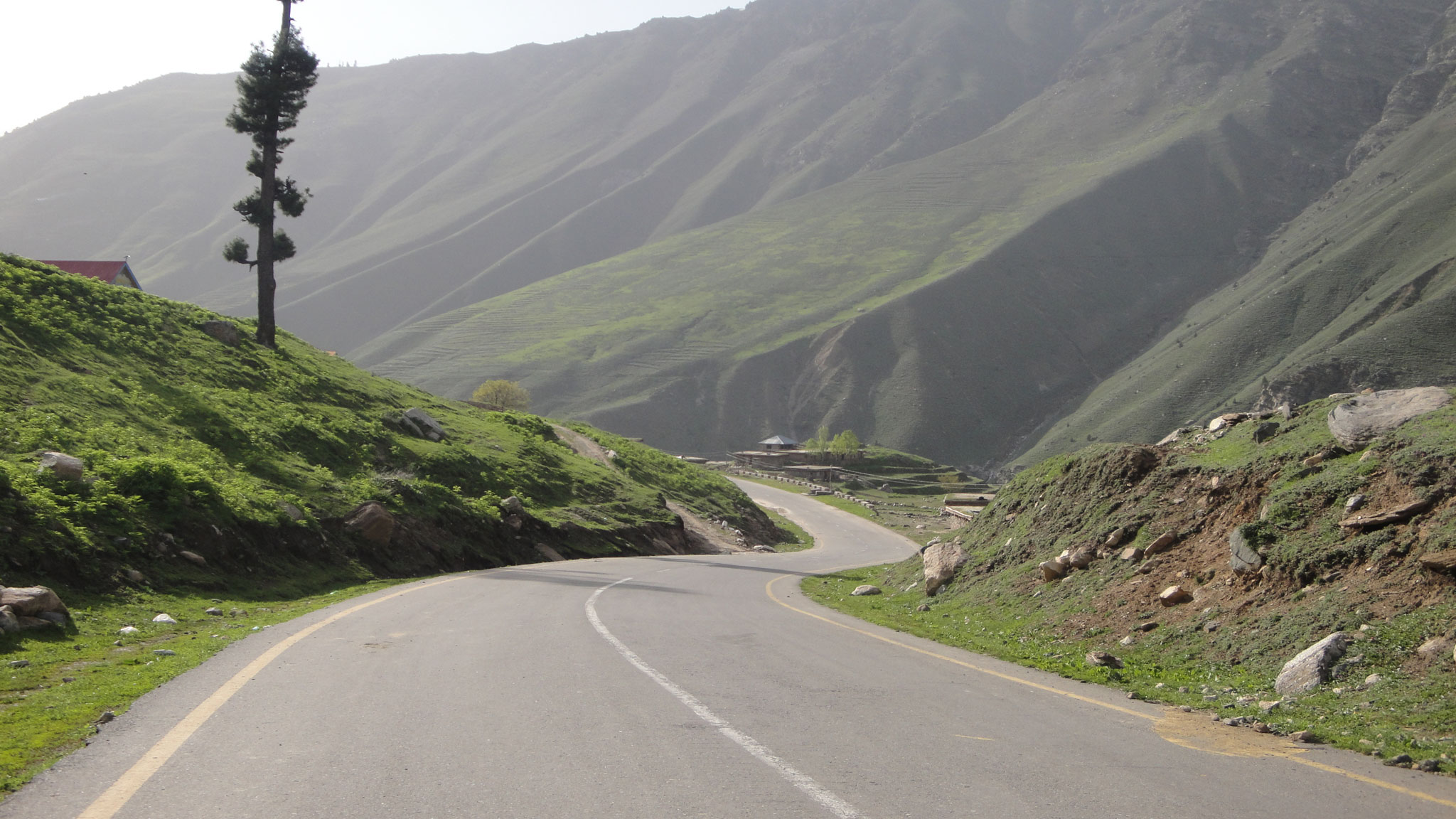
The truck ahead of us spills half its load of firewood somewhere between Balakot and Kaghan, and no one, including the truck driver, seems particularly troubled by this. Traffic halts. A boy appears from a roadside shop with tea on a tray. The Kunhar River, running cold and furious thirty metres below, does not pause. It never does. This is how Pakistan’s most spectacular mountain highway announces itself — not with a sign, not with a tollbooth, but with an interruption, a glass of chai, and the creeping realisation that you’ve entered a place operating on entirely different terms. I had driven 280 kilometres from Islamabad to reach this point, and I was barely halfway.
Naran Kaghan Valley has become one of Pakistan’s most consequential tourism corridors in the past decade — not simply because of its scenery, which is extreme and genuine, but because of what that scenery means for a country working hard to reposition itself as a credible travel destination. Naran Kaghan Valley recorded over five million visitors in a recent annual count, making it the single most visited destination in Khyber Pakhtunkhwa, ahead of Swat and Chitral. The numbers are reshaping local economies along the Kunhar River basin, where hospitality and jeep hire have displaced subsistence farming as primary livelihoods in many households. Pakistan’s travel and tourism sector contributed 5.8% to GDP in 2023, adding the equivalent of 5.59 trillion Pakistani rupees to the national economy — and valleys like this one are doing significant work in that calculation. To drive the Kaghan road in summer is to understand both the beauty and the pressure that flows from it. The Friday TimesGlory Magazine

The Road as the Journey: Islamabad to Naran Kaghan
Leaving Islamabad before five in the morning is non-negotiable if you intend to reach Naran in daylight and with any composure intact. The motorway to Hazara gives way to the N-35 at Mansehra — a city of surprising commerce and very little grace — before the road narrows and the valley begins to impose its authority. At Balakot, elevation drops briefly and the mountains press closer. Then the Kaghan Valley opens.
The drive from Mansehra to Naran covers roughly 119 kilometres. It takes between four and six hours depending on season, traffic, and the frequency of roadside diversions that one ought to resist calling delays. This is the primary Naran Kaghan travel guide advice that no pamphlet gives you plainly: the journey is not the preamble to the experience. It is the experience. Every bend in the road past Shogran reveals something — a waterfall cutting through pine canopy, a glacier visible above the treeline, a stretch of river so clear you can count stones at four metres depth.
I stopped at Kiwai Waterfall, twenty minutes past Shogran, where the mist was so fine it appeared less like spray and more like the mountain breathing. A group of students from Lahore had set up an impromptu cricket match in the clearing below. One of them had a speaker playing Coke Studio recordings that echoed improbably off the cliff face. This kind of juxtaposition — the sublime and the mundane pressed up against each other — defines Kaghan Valley more honestly than any tourism photograph.
Naran Valley sits at an altitude of 2,409 metres (7,904 feet), located in the Mansehra district of Khyber Pakhtunkhwa. That elevation is felt. By the time I checked into a guesthouse in Naran town, the air carried a sharpness that registered at the back of the throat — the first sign that you’ve climbed out of the plains into something else entirely. Pakistantourntravel
What Does Lake Saif ul Malook Look Like in Person?
Nothing prepares you for it. That’s the honest answer, and it resists the kind of inflation that travel writing applies to landscapes that are merely pretty.
Saif ul Malook Lake sits at 3,224 metres above sea level, reached by a steep 15-kilometre jeep track north of Naran town. It lies in the shadow of Malika Parbat, the highest peak in the Naran region, rising to 5,290 metres. The track itself is an act of faith — single-lane, unpaved, edged on one side by rock face and the other by a drop that the jeep drivers navigate with a cheerful indifference that borders on performance art. The village boys who drive these routes learn the road before they learn to read. It shows. Nature Hike Pakistan
The lake appears suddenly. One moment there is mountain; the next, an expanse of water so cold and clear that its colour shifts across the spectrum of blue-green depending on the angle of light and the position of cloud. The surrounding peaks — snowbound even in July — are reflected in the surface with a precision that makes the scene feel staged. It isn’t.
What strikes you on arrival, beyond the lake itself, is the silence underneath the noise. There are hundreds of tourists, horses for hire, food stalls, and vendors selling shawls and dried apricots. Yet the landscape absorbs all of it. The mountains are indifferent to us in a way that is, strangely, a relief.
Featured Snippet Target: What is the best time to visit Naran Kaghan? The best time to visit Naran Kaghan Valley is from late May through September. Roads are open, weather is stable, and attractions including Saif ul Malook Lake and Babusar Top are accessible. July and August are peak months. Winter brings heavy snowfall that closes the road beyond Kaghan entirely, typically from November through late May.
Babusar Top and the Upper Valley: Where Pakistan Meets Gilgit-Baltistan
The second day belongs to the upper valley. Babusar Top, at 13,700 feet above sea level, is the highest point in the Kaghan Valley, connecting the region via Thak Nala to Chillas on the Karakoram Highway. The road from Naran to Babusar covers 80 kilometres, skirting Lulusar Lake before climbing through a landscape that sheds vegetation progressively, like a thing undressing. Trip Maker Pakistan

Lulusar Lake arrives first. At 11,200 feet above sea level, it is the primary source of water for the Kunhar River, and on the morning I passed it, a thin mist was lifting from the surface. Three Hunza traders had stopped to pray on the lakeshore, their carpet rolled out on the gravel. The scene was unremarkable to them. To every tourist with a camera, it was the best photograph they’d ever taken. Rozefs Tourism
Above Lulusar, the alpine forest recedes. You’re in high pasture now, moving through a landscape of straw and rock where Gujjar herdsmen graze their buffalo on a seasonal circuit that predates every road. The herds move slowly across the hillsides in a way that modern transport makes seem prehistoric, though the herdsmen carry smartphones.
At Babusar Top itself, the wind is constant and the view — south into the Kaghan Valley, north toward the Karakoram — is the kind that forces a long pause. The access road beyond this point toward Chillas is accessible only by four-wheel-drive vehicles, slippery and narrow, especially in rain. Several buses were parked at the summit when I arrived. Families had gathered at the stone marker. A man in his seventies, clearly making the journey for the first time, stood very still for a long time looking north. Natureadventureclub
Is the discomfort of getting here part of what makes it matter? I think so. Ease and transcendence rarely arrive together.
The Picture Is More Complicated: Overtourism and the Valley’s Carrying Capacity
The same forces driving Pakistan’s tourism ambitions are beginning to extract costs from the very landscapes that attract visitors. Naran town in peak summer — July and especially August — is a different proposition from the valley you encounter in early June. During Eid-ul-Fitr alone, Naran and Kaghan collectively drew over 42,111 visitors in a single holiday period, straining infrastructure built for a fraction of that volume. Traffic jams between Shogran and Naran can extend to several hours. Hotel prices triple. Plastic waste appears on trailheads. Travel And Tour World
The KPK Tourism Authority has taken steps — tourism police, helplines, crowd management protocols during peak season — but the structural tension between access and preservation remains unresolved. Complaints registered through the provincial tourism helpline have consistently centred on deteriorating road conditions, traffic congestion, and overcharging by hotels and restaurants. The Friday Times
There is a dissenting view worth engaging: some economists and local leaders argue that restricting access in the name of conservation is, in practice, a policy that benefits relatively affluent travellers who can self-organise and keeps out lower-income domestic tourists for whom a Naran trip represents a significant financial and logistical achievement. The crowds, on this reading, are not a failure of planning but a democratic success of improved road access and rising middle-class disposable income. The argument has merit. It also sits uncomfortably beside a glacier that has retreated 300 metres in living memory.
Pakistan ranked 101st out of 119 countries in the 2024 Travel and Tourism Development Index — a ranking that reflects infrastructure deficits as much as raw potential. Naran Kaghan is an illustration of that gap in miniature: extraordinary natural capital, insufficient institutional capacity to manage it sustainably.
The Closing Mile
I left Naran before sunrise on my final morning, driving back through Kaghan in the dark with the river invisible below but audible. The valley is different at that hour. The food stalls are shuttered, the jeeps parked in rows, the town quiet in a way that allows you to hear what it actually sounds like — which is mostly water and wind and, occasionally, a dog.
By Balakot it was light. By Mansehra, the plains were reasserting themselves with their flat certainty. I stopped for breakfast in a dhaba outside town where the paratha was made on a concave tawa over gas flame and the tea was strong enough to justify the drive home.
Naran Kaghan Valley will draw more visitors this season than last, and more again the season after. Babusar Top is expected to open for tourists in mid-June 2026 following the seasonal travel advisory, and the packages are already sold. That momentum is not, in itself, a problem. The problem — and the opportunity — is whether Pakistan builds the institutions to match it. The mountains are patient. The glaciers are not. Trip Maker Pakistan
Discover more from Vagabond Diaries
Subscribe to get the latest posts sent to your email.


