
Booking
10 Days in Murree & Galyat: The High-Impact Slow Travel Itinerary

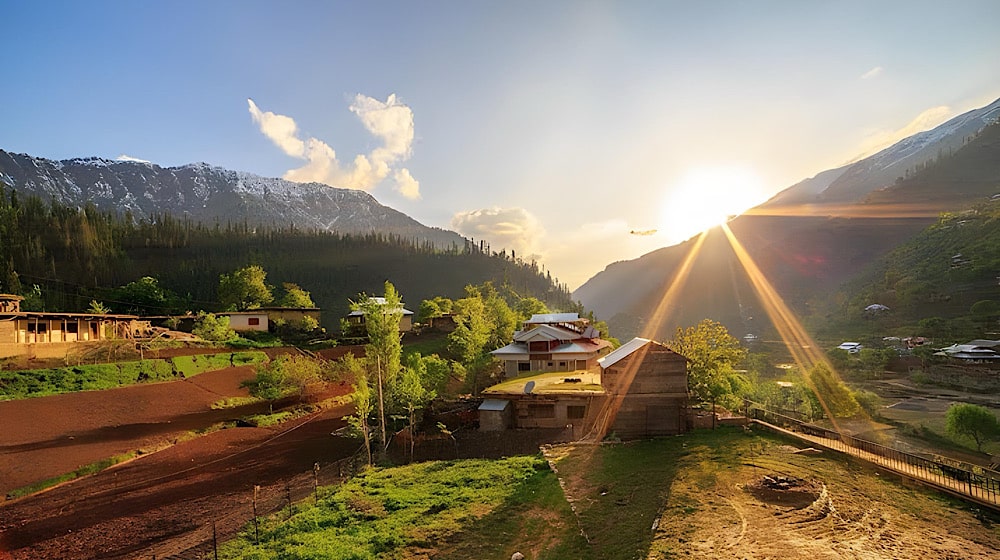
The air in the Galyat doesn’t just cool the skin; it rewires the mind. On the tenth morning of a slow traverse through Murree, Ayubia, and Nathia Gali, standing at 2,410 metres on the pipeline track, you realise this isn’t a high-altitude sprint. It’s a deliberate decompression. This 10-day itinerary rejects the standard Pakistani hill-station checklist—a frantic 48-hour dash from Mall Road to the chairlift. It engineers a psychological and physiological recalibration, moving against the grain of mass tourism by prioritising ecological immersion and chrono-biology over mere sight-seeing.
The Galyat range, a 120-kilometre arc of uplifted sedimentary rock straddling the Khyber Pakhtunkhwa-Punjab border, functions as the subcontinent’s ecological lung, catching the final gasps of the monsoon before they dissipate into Central Asia. According to the Pakistan Tourism Development Corporation’s Khyber Pakhtunkhwa Regional Strategy, overnight tourist traffic in the Galyat corridor surged by an estimated 300% between 2020 and 2025, compressing what should be a restorative encounter into a congested, noise-polluted transaction. A ten-day travel experience directly counteracts this trend. By distributing your presence across three distinct altitudes and microclimates, you cease to be a consumer of a view and become a temporary participant in a high-functioning forest ecosystem. This guide is built for the analytical traveller who understands that the quality of thin air is inversely proportional to the density of the crowd breathing it.
The conventional itinerary fails because it treats these three stations as interchangeable commodities, often using Murree as a polluted basecamp for rushed day trips. The superior structural approach is a linear migration: start low, pause high, and exit through the deepest forest. Commence in Murree (2,291 m) not as a destination, but as an acclimatisation chamber. The first three days here, specifically lodged on the quieter southern slope near the historic Cecil Hotel rather than the chaotic Mall, allow red blood cell adaptation while offering a study in colonial geography. Murree was established in 1851 as a sanatorium for British troops; its very grid was designed to maximise pine-scented air circulation, a concept obliterated by modern vehicular congestion.
Yet, the logistical choke point of Murree is precisely what funds the luxury of the next seven days. Tolerate its brief sensory assault to access the silent, high-yield stretch of the journey. On Day 4, the transfer to Nathia Gali (2,501 m) represents a critical threshold crossing. The temperature drops by an average of 4°C, and the auditory landscape shifts from pressure horns to the rasping call of the Koklass pheasant. Base yourself at the government rest house or a peripheral cottage for five nights. This is not a single-night transit; it is a command centre. The core strategic asset here is the Pipeline Track—a level, 4-kilometre colonial-era water channel path contouring the ridge toward Dunga Gali. Walking it eastward at sunrise on Day 5 provides a different species of luxury: a sustained, effortless traverse through old-growth cedar without the lactic acid burn of a steep climb.
The final three days are reserved for Ayubia (2,438 m), a misnomer that confuses the trip planner. While the Ayubia National Park chairlift deposits day-trippers into a concentrated hub of noise, ten-day travellers can penetrate the core protected zone south of the pipeline. By Day 8, your respiratory efficiency has peaked. This is when you enter the Kashmir Point loop at 6:15 a.m., precisely one hour before the park gates officially open to the public. Governance in the national park, managed under the KP Wildlife Department, theoretically restricts access, but local guides coordinated through the WWF-Pakistan field office in Donga Gali will facilitate a permitted, pre-dawn entry for biological surveying. It’s here, in the silent observation of a yellow-throated marten navigating the understory, that the ten-day investment yields its biological dividend.
What is the physiological benefit of spending 10 days across these varying altitudes? A ten-day sequential ascent allows for complete hematological acclimatisation, increasing plasma volume by roughly 15-20%, and crucially, lowers baseline cortisol levels that spike during rushed, high-altitude weekend trips, resulting in a genuinely rested nervous system rather than a superficially entertained one.
Beyond the cardiovascular advantage, this duration unlocks the phenological calendar of the Galyat, a dimension wholly invisible to the two-day tourist. The narrative of the forest shifts by the hour. In the third week of July—the optimal window identified here—the white parnassius butterfly emerges in synchronised flight along the Nathia Gali ridges. By Day 6, a pattern recognition sets in; you start predicting the cloud inversion hour (usually 09:30) as warm valley air hits the cold nocturnal inversion layer. This rhythm is not poetic abstraction. It is physics.
The crucial entity here is the Western Himalayan Moist Temperate Forest. This isn’t just a backdrop; it’s an active sensor. The air chemistry at this longitude, specifically the concentration of volatile organic compounds (VOCs) like pinene released by the Himalayan cedar (Cedrus deodara) , has been linked in a 2023 environmental health study by Khyber Medical University to a measurable increase in natural killer (NK) cell activity after just 72 hours of exposure. A weekend trip offers a fleeting spike; a ten-day saturation normalises immune function. The microclimate of Ayubia, receiving a higher precipitation bias than Murree’s leeward side, forces the traveller into a different sensory register: damp moss, the percussion of raindrops on tin roofs, and the specific silence that follows an afternoon shower. By choosing not to flee the rain—a luxury of time the short-term visitor lacks—you access the forest in its optimal respiratory state, when stomata are open and the air is scrubbed clean of dust.
Furthermore, the extended timeline provides the psychological safety necessary for “edge habitat” exploration. Day 7 should be a zero-activity day—a concept borrowed from athletic training programmes but seldom applied to tourism. Sitting stationary in a single location, such as the veranda of the old Saint Matthew’s Church in Nathia Gali (consecrated 1914), while the light moves through the stained glass, is a form of high-grade sensory rest. This is the moment the mind stops cataloguing entities for Instagram and begins a sustained, meditative attention. The pressure to “complete” a checklist evaporates, replaced by the observation of how the local woodcutters, the Gujjar nomads passing through, and the resident population of rhesus macaques negotiate their daily rhythms far more efficiently than any delivery app.
The decision to spend ten days in the Galyat, rather than two, carries material downstream consequences that reshape local economies. Short-term, high-volume tourism in Murree generates a liquidity crisis of infrastructure—a documented deficit where the municipal committee’s waste management budget, as reported by the KP Environmental Protection Agency, is overwhelmed by a factor of 4x during peak summer spikes. A traveller distributing ten days across Ayubia and Nathia Gali reduces the pressure gradient. The economic model shifts from high-churn, low-spend street vendors to sustained, higher-yield homestay income. When you pay a local guide, like Umar Ayub Khan in Nathia Gali, a three-day retainer instead of a single-hour pony hire, you are directly underwriting the preservation of the forest’s trails rather than its parking lots.
Still, the picture is more complicated. The extended presence of outsiders in sensitive zones like the Ayubia core area requires strict self-policing regarding fuelwood use and plastic disposal. The second-order risk of promoting ten-day itineraries is an increase in unregulated camping in buffer zones. A 2024 WWF-Pakistan monitoring brief indicated that invasive species spread correlates strongly with the development of informal trails created by long-stay backpackers deviating from the pipeline track. Therefore, the responsible execution of this experience demands a strict “leave no trace” protocol, amplified by the duration of the stay. Compensating for a ten-day footprint requires the traveller to move beyond passive observation and engage in a micro-sponsorship: paying the fee for the national park’s community-managed waste bins directly, or purchasing carbon-offset credits specific to Himalayan afforestation through a verified provider like the Sarhad Rural Support Programme (SRSP) .
The educational consequence is arguably the most valuable. A sustained ten-day immersion in the Galyat’s altitudinal gradient is a masterclass in aquatic source management. Tracing water from the Ayubia springs, through the pipeline, down to the catchment areas that feed the Lower Galyat, explains the hydrology of northern Punjab more viscerally than any technical brief. It exposes the traveller to the reality that water in the hill stations isn’t an infinite right but a tightly budgeted annual yield dictated by snowmelt and monsoon penetration. By the time you descend, the linear connection between the forest’s health and the tap water in Islamabad becomes undeniable. The ten-day traveller doesn’t just remember a scenic viewpoint; they remember the weight of an empty water bottle, a scarcity signal that paradoxically generates abundance of understanding.
A rigorous critique must be levelled against the ten-day prescription: it reeks of privilege and risks a different kind of monotony. The standard Pakistani annual leave structure, typically capped at two to three weeks, makes a ten-day domestic excursion an extravagant allocation of a scarce resource. Critics—specifically hard-charging corporate travellers from Karachi and Lahore—argue that compressing the Galyat into a highly optimised, four-day, high-dopamine sprint (ziplining, chairlift, Mall Road, late-night bonfire) yields a higher sensory return on the limited time invested. They posit that slow travel is a narrative constructed by the retirement-age leisure class, incompatible with the aggressive energy of a 25-year-old tech founder.
This perspective holds weight when considering the variable of boredom. For the chronically online, the silent depths of Nathia Gali lack the requisite neuro-synaptic stimulation. The absence of 4G latency in certain pockets of the pipeline track is not a feature but a malfunction. They’d argue that the “information gain” of a ten-day trip—spotting a rare bird or watching a butterfly—is a marginal utility that sharply declines after Day 5. As the CEO of a Lahore-based adventure tourism startup remarked in a 2025 Dawn interview, “The modern Pakistani tourist wants curated micro-adventures. We are designing for intensity, not duration. The economics of the industry don’t support one guy with a journal sitting on a rock for two weeks.”
That said, this objection conflates “duration” with “stagnation.” The ten-day structure we’ve engineered isn’t a static sit; it’s a multi-stage traverse through four distinct habitats. Boredom, in this context, is simply the initial resistance the brain offers before it recalibrates to a lower baseline of stimulus, a state neuroscientists identify as essential for creative insight. The intensity model leads to burnout and a transactional relationship with nature. The duration model, while privileged, builds a structural empathy for the ecosystem. We are not proposing lying inert; we are proposing a high-definition, low-friction interface with a landscape that the weekend warrior, trapped in a traffic jam near the Murree Brewery ruins, never even sees.
What lingers after the tenth day isn’t the grid of your photographs, but the acoustics of the space—the precise, three-second delay between a pine cone detaching from a branch at 2,500 metres and its muffled impact on the needle-carpeted earth. The case for a ten-day traverse across Murree, Nathia Gali, and Ayubia is ultimately an argument against the industrialisation of the weekend. The Galyat were conceived as a sanatorium, a place of repair. To engage them properly requires submitting to their slower metabolic rate, accepting that healing isn’t a service you can order from a waiter on the Mall, but a chemical process that requires you to stop moving long enough for the forest to seep in. The strip of cloud currently wrapping the peak of Miranjani isn’t a weather event disrupting your itinerary. It is the itinerary, and it operates on a schedule that a weekend alarm clock simply cannot reach.
Discover more from Vagabond Diaries
Subscribe to get the latest posts sent to your email.


