
Booking
The Vagabond’s Switzerland: 10 Boutique Hotels and the Flight Strategy to Reach Them

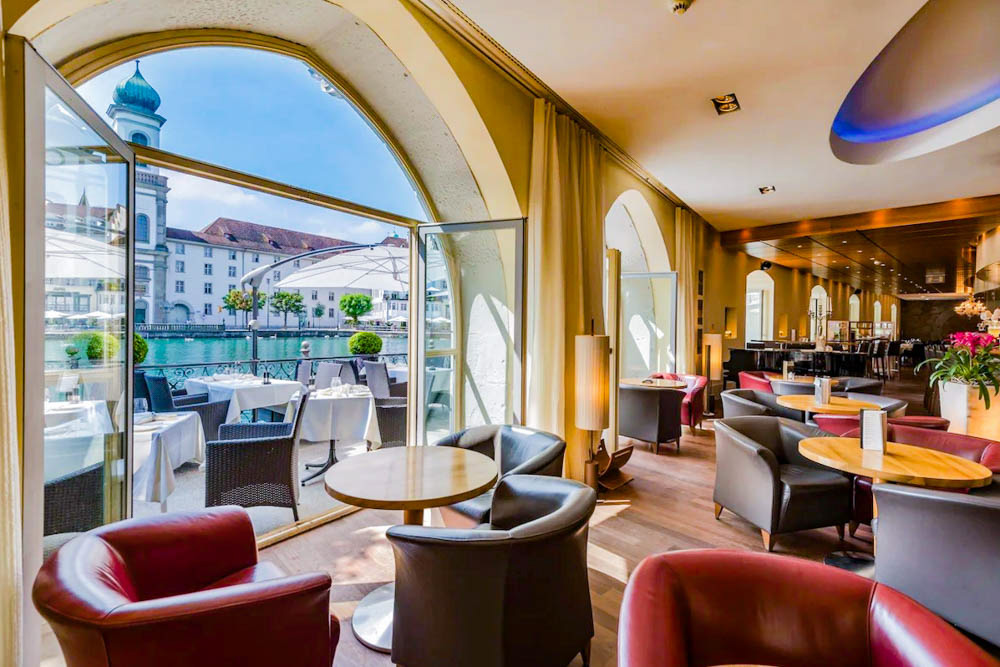
Switzerland is a country built on a magnificent contradiction. Its railways run to the second — the SBB network’s punctuality is practically a national religion — while its landscapes refuse all scheduling whatsoever. A glacier does not care what time your train departs Zermatt. A foehn wind sweeping down from the Alps will reroute your afternoon regardless of what your itinerary says. This tension between engineered precision and untamed terrain is precisely what separates Switzerland from every other alpine destination, and it is exactly why the modern vagabond is drawn here.
This is not the budget backpacker of decades past, hauling a frame pack between hostel bunks. The modern vagabond is an independent operator with means: a remote-working creative director, a private equity associate between mandates, a documentary photographer with a taste for thousand-thread-count linen. They despise the sterility of chain hospitality — the interchangeable lobby, the corporate art, the front desk script. What they want instead is texture: a 400-year-old chalet with original larch floorboards that creak in a way no architect could replicate, a converted cable-car station perched at 2,112 metres, a family-run Relais that still serves the same rösti recipe it did under Habsburg rule.
But texture without logistics is just inconvenience. The vagabond’s defining trait is not asceticism — it is the refusal to let friction interrupt spontaneity. They will pay a meaningful premium to skip a connection, secure a same-day upgrade, or lock in a suite that was supposedly sold out. This is where booking architecture becomes inseparable from travel philosophy. Among the best online booking sites for Europe travel, the ones that actually serve this traveler are not the mass-market aggregators but platforms offering granular fare rules, flexible cancellation windows, and direct access to boutique inventory — Switzerland Tourism’s own MySwitzerland portal, the SBB app for rail integration, and direct hotel booking engines that bypass OTA commission markups and unlock loyalty perks unavailable through third parties.
What follows is a working blueprint: how to fly in with intention, how to move through the country without losing days to logistics, and which ten properties reward the traveler willing to plan with the same precision Switzerland applies to its trains.
Choosing Your Gateway: Zurich Versus Geneva
Switzerland offers two genuine international gateways, and the choice between them should be dictated by your first three days, not habit. Zurich Airport (ZRH) sits roughly ten minutes by train from the city’s Hauptbahnhof, and from there the entire eastern and central alpine corridor — Graubünden, the Bernese Oberland, Lucerne — opens up via direct rail connections. Geneva Airport (GVA), by contrast, drops you almost literally onto the platform of Geneva’s main station, with the fastest line of access into the Valais, Lake Geneva’s Lavaux terraces, and the Matterhorn approach through Visp.
For travelers prioritizing speed and connection density, Zurich wins on raw frequency — it remains Switzerland’s primary intercontinental hub, with Swiss International Air Lines (a Lufthansa Group carrier) running the bulk of long-haul widebody service. Star Alliance partners (United, Singapore Airlines, Austrian) feed in heavily from North America and Asia, which matters enormously when you’re optimizing premium cabin availability.
Securing Business Class Flights to Zurich
Booking business class flights to Zurich rewards a counterintuitive approach: don’t fixate on the lowest published business fare. Instead:
- Monitor mixed-cabin routings. Swiss frequently prices business class more competitively on indirect routings through Frankfurt or Brussels than on nonstop service — a worthwhile trade if your schedule allows a 90-minute connection.
- Book into saver award space early, premium cash fares late. Star Alliance award inventory for Swiss business class (look for “Swiss Saver” tier) tends to open 330 days out and tighten dramatically inside 60 days. If you’re paying cash, the inverse is often true — last-minute upgrades to business class can undercut advance-purchase fares by 20–30% when Swiss is managing unsold premium inventory within 14 days of departure.
- Use airline-direct booking for irregular operations protection. Swiss.com and the carrier’s own app offer rebooking flexibility that third-party aggregators frequently cannot match during the foehn-driven delays that plague Zurich in spring and autumn.
- Consider Geneva as a positioning flight. Some seasons see meaningfully better business class award availability into Geneva than Zurich, particularly on United and Lufthansa metal — worth a quick multi-city search before committing to your gateway.
Multi-City Strategy and Packaged Bookings
For the vagabond stitching together a longer European arc — Paris, then Switzerland, then onward to Milan — multi-city booking through a single carrier alliance preserves both fare value and baggage continuity. Building this as one PNR (passenger name record) rather than three separate one-ways also protects you contractually if an earlier segment is delayed.
When evaluating Switzerland flight and hotel packages online, the calculus shifts depending on trip length:
- Under 5 nights: Bundled flight-and-hotel packages through major OTAs can yield real savings (8–15%) but typically lock you into non-refundable terms — acceptable only if your dates are fixed.
- 5+ nights or multi-region itineraries: Book flights and hotels separately. The flexibility to extend a stay at a single standout property, or pivot away from a disappointing one, outweighs the package discount almost every time.
- Rail-air integration: The Swiss Travel Pass, purchased online before arrival, eliminates the need to book individual point-to-point rail tickets and pairs well with either booking strategy, since it’s date-flexible within its validity window rather than train-specific.
The operating principle for the modern vagabond: lock in the flight, the highest-friction and least-flexible piece of any itinerary, but leave hotel and rail bookings loose enough to chase weather, snow conditions, or a sudden change of heart.
The Curated 10 — A Definitive Hotel Portfolio
Each property below was selected for a distinct aesthetic register: historic grandeur, radical alpine minimalism, or genuine remoteness. Together they form a working shortlist for luxury boutique hotels Switzerland booking decisions across the country’s major regions.
1. Chetzeron — Crans-Montana, 2,112 Metres
The identity: A former cable-car arrival station converted into a sixteen-room mountaintop retreat, accessible only by gondola or ski piste. Polished concrete, raw timber, and floor-to-ceiling glass framing the Plaine Morte glacier define the aesthetic — closer to a Bond villain’s lair than a conventional hotel.
The vagabond edge: There is no vehicular road. Arrival itself becomes the experience, and the isolation is real rather than marketed — once the last gondola descends, the mountain is effectively yours.
Booking intelligence: Chetzeron’s own direct booking engine offers the most accurate live inventory, since the property’s limited room count (sixteen) sells out fast through OTAs during ski season. For last minute luxury travel Switzerland, calling the property directly often surfaces cancellations not yet reflected on third-party platforms.
2. Badrutt’s Palace Hotel — St. Moritz
The identity: Opened in 1896, this is the institution against which all Swiss grand hotels are measured — turreted, lake-facing, and steeped in the history of St. Moritz’s role in popularizing winter alpine tourism after Johannes Badrutt’s famous 1864 wager with English summer guests.
The vagabond edge: Beneath the formality lies genuine eccentricity — the Renaissance Bar’s late-night energy and the hotel’s role as ground zero for St. Moritz’s polo-on-snow and White Turf horse racing each February give it a social current that pure heritage hotels often lack.
Booking intelligence: Badrutt’s loyalty program (Palace Circle) unlocks suite upgrades unavailable through OTAs. For winter season, book directly six to nine months out; the property rarely discounts, so last-minute cash savings are minimal — last-minute value here means availability, not price.
3. Aurora Lodge — Gstaad (Eco-Alpine Cocoon)
The identity: A newer entrant built around sustainable timber construction, geothermal heating, and a deliberately restrained nine-suite footprint within reach of Gstaad’s village core.
The vagabond edge: Genuine eco-credentials rather than greenwashing — locally sourced spruce construction, a closed-loop water system, and a kitchen sourcing nearly all produce from within a 30-kilometre radius.
Booking intelligence: Smaller eco-focused properties like this often list exclusively through direct booking engines and Swiss Tourism’s curated boutique portal rather than mainstream OTAs — search MySwitzerland’s accommodation directory if a property doesn’t surface on the usual aggregators.
4. Hotel Eden Roc — Ascona (Ticino’s Mediterranean Switzerland)
The identity: A modernist lakeside property on Lake Maggiore in Ticino, Switzerland’s Italian-speaking canton, where palm trees and lakefront promenades feel more Lombardy than Lucerne.
The vagabond edge: Ticino offers an entirely different sensory register — subtropical microclimate, risotto and polenta in place of fondue, and proximity to Italy’s Lake Como for a cross-border day trip few visitors realize is feasible.
Booking intelligence: Shoulder season (May, September) sees significant rate drops here, often 25–30% below July–August peak, while the lake climate remains genuinely pleasant — a strong target window for value-conscious last-minute bookings.
5. The Cambrian — Adelboden (Design-Forward Alpine Minimalism)
The identity: A radical reimagining of a traditional Bernese Oberland chalet hotel, stripped to Scandinavian-inflected minimalism with a striking glass-walled rooftop pool overlooking the Engstligen Valley.
The vagabond edge: Adelboden remains relatively undiscovered by international crowds compared to Zermatt or St. Moritz, despite hosting an annual FIS World Cup ski event — genuine alpine authenticity without the saturation.
Booking intelligence: The Cambrian’s website runs frequent direct-book promotions tied to World Cup ski weekends (early January); booking around, rather than during, that window yields the best last-minute rates.
6. Hotel de Glace-Adjacent: Whitepod — Les Giettes (Geodesic Pod Camping, Elevated)
The identity: A cluster of geodesic dome “pods” perched above the Rhône Valley near Monthey, blending glamping aesthetics with genuine five-star service and wood-stove heating.
The vagabond edge: This is Switzerland’s most literal answer to the vagabond ethos — semi-permanent structures, minimal environmental footprint, and a sense of camping reinvented for travelers who still expect a turn-down service.
Booking intelligence: Whitepod’s limited pod count (around twenty) and weather-dependent access mean direct booking with flexible cancellation terms is strongly advised over fixed-rate OTA bookings.
7. Storchen Zurich — Zurich Old Town
The identity: Documented as a guesthouse since 1357, occupying a riverside position on the Limmat in Zurich’s old town — one of continental Europe’s longest continuously operating hospitality addresses.
The vagabond edge: For travelers using Zurich as a logistical hub rather than a final destination, Storchen offers a base with genuine historic weight, walking distance to the Hauptbahnhof, and river-facing balconies over the medieval guild houses.
Booking intelligence: Because it functions as a gateway-city hotel rather than a destination resort, Storchen frequently appears with competitive same-week rates on best online booking sites for Europe travel — a useful first or last night anchor for any rail-based itinerary.
8. Villa Honegg — Ennetbürgen (Lake Lucerne Infinity Views)
The identity: A converted Belle Époque villa above Lake Lucerne, famous for an infinity pool framing the Bürgenstock ridge and the lake below — among the most photographed hotel views in Switzerland, though the property itself remains intimate at just twenty-three rooms.
The vagabond edge: Helicopter transfer arrangements from Zurich are genuinely practical here given the property’s relative remoteness from the nearest train station, turning arrival into part of the experience rather than a chore.
Booking intelligence: Villa Honegg books out 6–12 months in advance for summer weekends; the realistic path to last minute luxury travel Switzerland here is targeting Sunday–Tuesday stays or November/early December shoulder weeks.
9. Romantik Hotel Schweizerhof — Grindelwald (Eiger North Face Views)
The identity: A family-run property with direct sightlines to the Eiger’s north face, blending traditional Bernese chalet architecture with genuinely personal, multi-generational service.
The vagabond edge: Unlike larger resort hotels in Grindelwald, the Schweizerhof retains the texture of independent ownership — the kind of property where the owner still greets returning guests by name.
Booking intelligence: Direct booking here often includes complimentary regional transit passes not offered through OTA channels — always check the property’s own site before booking elsewhere, even if the headline rate looks marginally higher.
10. The Chedi Andermatt — Andermatt (Asian-Alpine Fusion in a Reborn Village)
The identity: A striking fusion property blending Alpine chalet bones with Asian-inflected interior design, anchoring Andermatt’s ambitious transformation from a sleepy military-garrison town into a year-round resort destination.
The vagabond edge: Andermatt itself is the story — a village reinventing its identity in real time, with the Chedi as its architectural centerpiece and the Furka and Gotthard passes within easy striking distance for those wanting to self-drive through some of the Alps’ most dramatic engineered roads.
Booking intelligence: As Andermatt’s profile rises, rates have climbed accordingly; the most reliable savings come through the hotel’s own membership program (GHA Discovery) layered atop direct booking rather than through generic OTA discounting.
The Vagabond Compass — Practical Booking Blueprint
Best Booking Windows by Season
| Travel Window | Booking Strategy | Crowd Level |
|---|---|---|
| January (post-New Year) | Strong last-minute ski rate drops after the holiday peak | Low-Moderate |
| February (school holidays vary by canton) | Book 4+ months ahead; rates peak | High |
| May | Best value window; shoulder pricing, opening trails | Low |
| June–August | Book 3–6 months ahead for lake and Ticino properties | High |
| September–early October | Excellent value, stable weather, harvest season | Low-Moderate |
| November | Deepest discounts; many alpine properties partially closed | Very Low |
Train Versus Boutique Helicopter: Airport Connections
| Route | Train Option | Helicopter Option | When Helicopter Wins |
|---|---|---|---|
| Zurich Airport → St. Moritz | ~3h15, one change at Chur | ~45 min, direct | Tight same-day arrivals, heavy luggage, ski equipment |
| Geneva Airport → Zermatt | ~3h30 via Visp (car-free village, final approach by cogwheel train) | ~40 min, lands at Zermatt heliport | Storm-disrupted rail schedules, late arrivals |
| Zurich Airport → Andermatt | ~2h, scenic Gotthard approach | ~30 min | Winter pass closures |
| Zurich Airport → Crans-Montana (for Chetzeron) | ~3h45 plus gondola | ~50 min, lands near resort | Avoiding the final gondola cutoff time |
| Geneva Airport → Gstaad | ~2h30, scenic GoldenPass line | ~35 min | Time-constrained business travelers |
Final Operational Checklist for Premium Bookings on the Move
- Confirm cancellation windows before departure. Boutique properties vary widely — some require 72-hour notice, others 14 days during peak season.
- Register loyalty programs in advance. GHA Discovery, Relais & Châteaux membership, and individual hotel loyalty circles often unlock same-day upgrade priority that pure OTA bookings cannot access.
- Carry a downloaded SBB app with offline timetables. Mountain valleys frequently lose signal; pre-downloaded schedules prevent missed connections.
- Set fare alerts on Swiss.com directly, not just aggregators, since last-minute business class availability releases often appear first on the carrier’s own engine.
- Reconfirm helicopter transfers 24 hours out. Alpine weather can ground flights with little notice; always have the train alternative timetabled as backup.
- Pack for vertical climate swings. A property at 2,112 metres and a lakeside hotel in Ascona may sit within a three-hour transfer of each other yet differ by 15°C or more.
Switzerland rewards travelers who treat its efficiency as a tool rather than a constraint. The trains will run on time regardless of what you do with that reliability — the only real variable is whether your booking strategy is precise enough to match it.
Discover more from Vagabond Diaries
Subscribe to get the latest posts sent to your email.


