
Street Food
Yum China Takes Full Slice of Pizza Hut China in US$1.2 Billion Deal

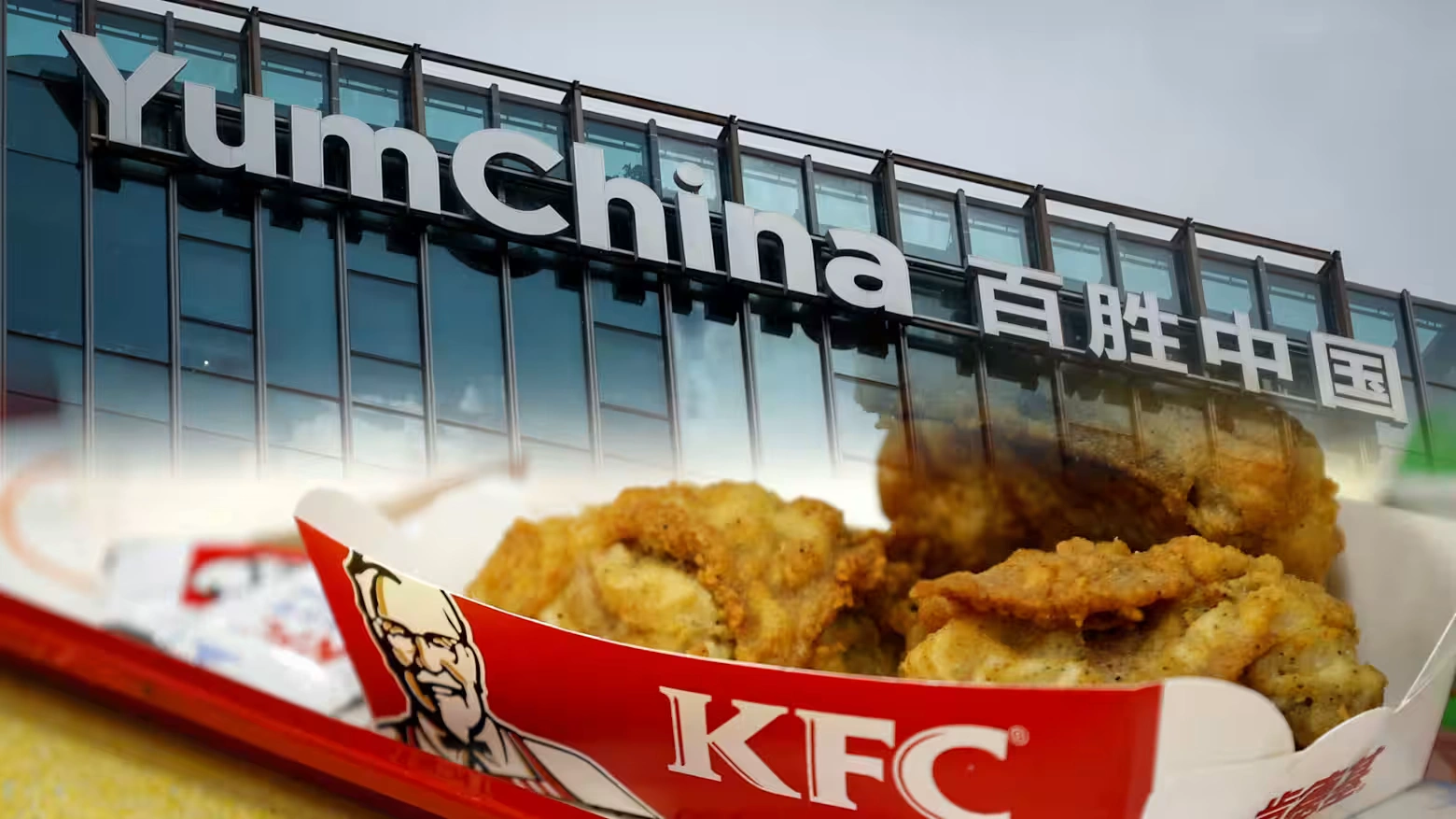
The End of a 38-Year Arrangement Signals a New Chapter for China’s Dominant Restaurant Operator
On the morning of June 16, 2026, Joey Wat sat in Yum China’s Shanghai headquarters and watched her company’s share price tick upward on the Hong Kong exchange. The board had just approved the largest single-brand acquisition in the company’s nine-year independent history. For $1.2 billion, Yum China Holdings would take full ownership of Pizza Hut China — the casual-dining chain it had operated under licence since 1990, but never fully controlled. The deal, announced simultaneously by parent Yum! Brands in Louisville, Kentucky, severs the last structural tether between China’s largest restaurant company and its former American owner. Wat’s bet is simple: Pizza Hut’s turnaround is real, the margin inflection is durable, and the only way to capture the full upside is to own the asset outright.
China’s restaurant sector is not recovering uniformly. Consumer confidence remains fragile, and the “consumption downgrade” that began in 2024 has forced operators to choose between volume and margin. Most have failed to thread that needle. Yum China hasn’t. In the first quarter of 2026, the company opened a record 636 net new stores across its portfolio, with franchisees contributing 42% of KFC and Pizza Hut’s new openings. Revenue grew 10% year-over-year to $3.27 billion, while operating profit expanded 12% — the eighth consecutive quarter in which Yum China grew revenue, profit, and margin simultaneously.
The macro backdrop matters. China’s pizza market, valued at RMB 48 billion ($6.6 billion) in 2024, is projected by Frost & Sullivan to reach RMB 77.1 billion by 2027, a 15.5% compound annual growth rate. Yet penetration remains low: even in Tier 1 cities, there are only 24 pizza stores per million people, compared with 28 in Japan and South Korea. In Tier 3 and lower-tier cities, that figure drops to 6 per million. The whitespace is enormous, and Yum China has spent the past three years building the operational machinery to fill it.
The transaction is one half of a larger divestiture. Yum! Brands is selling its entire Pizza Hut division for $2.7 billion in aggregate. LongRange Capital, a private-equity firm, will acquire Pizza Hut’s ex-China operations for approximately $1.5 billion. Yum China gets the mainland piece for $1.2 billion. Yum! Brands expects roughly $2.3 billion in net after-tax proceeds and has authorised an incremental $4 billion share buyback.
For Yum China, the logic is operational, not sentimental. Since its 2016 spin-off, the company has paid royalties and franchise fees to Louisville for the right to operate Pizza Hut in mainland China. Those payments — invisible to consumers, material to the P&L — are now eliminated. More importantly, full ownership removes the friction of dual reporting, accelerates menu localisation, and allows Yum China to deploy its proprietary technology stack — Byte by Yum!, its AI-powered ordering and kitchen-management platform — without licencing constraints.
The timing is not accidental. Pizza Hut’s financial trajectory has shifted. In 2025, the brand delivered:
- $2.32 billion in total revenues, up 3% year-over-year
- $183 million in operating profit, up 19% year-over-year
- An OP margin of 7.9%, an 110 basis-point expansion and a record since Yum China’s 2016 listing
- 4,168 stores at year-end, with 444 net new openings in 2025 alone
- 12 consecutive quarters of same-store transaction growth
On the Q1 2026 earnings call, Wat described the inflection with characteristic directness: “Sales first, profit later. Now is later. Later is now for Pizza Hut.” CFO Adrian Ding added that the brand’s Q1 restaurant margin of 15% was “one of the highest since the turnaround initiatives in 2018.” Analyst Chen Luo of Morgan Stanley noted that Yum China’s three-year target of 14.5% restaurant margin for Pizza Hut might be achieved “earlier than expected.” Wat’s one-word reply: “Slightly.”
The deal is expected to close in Q3 2026, pending regulatory approvals.
How Much Did Yum China Pay for Pizza Hut China?
Yum China paid approximately $1.2 billion for full ownership of Pizza Hut’s mainland China operations. The price represents roughly 0.5x Pizza Hut China’s 2025 system sales and approximately 6.5x its 2025 operating profit. By comparison, the ex-China business sold to LongRange Capital at a higher multiple, reflecting the maturity of Western markets versus the growth optionality embedded in China’s lower-tier cities.
The valuation is less important than the strategic optionality it unlocks. Full ownership means Yum China can now:
- Accelerate franchise penetration. In Q1 2026, franchisees already contributed 42% of net new KFC and Pizza Hut openings. The WOW format — a stripped-down, lower-capex Pizza Hut variant costing RMB 650,000–850,000 per store versus RMB 1.2 million for a traditional unit — is purpose-built for franchisees in lower-tier cities. WOW store count doubled year-over-year to roughly 390 by Q1 2026, with nearly 80 Gemini openings (WOW stores side-by-side with KFC) in that quarter alone.
- Eliminate royalty drag. Yum China no longer pays Yum! Brands a percentage of Pizza Hut China sales. In a business where every basis point of margin matters — and where Pizza Hut’s OP margin was just 3.7% as recently as Q4 2024 — the savings are material.
- Integrate Pizza Hut into the broader ecosystem. Yum China’s membership base for KFC and Pizza Hut combined exceeded 590 million at year-end 2025, with 265 million active members (those who transacted in the past 12 months). Cross-selling between brands, unified loyalty rewards, and shared delivery infrastructure become simpler without a licensor looking over the shoulder.
- Deploy AI without constraint. Yum China’s “RGM 3.0” strategy — Resilience, Growth, Moat — leans heavily on agentic AI for demand forecasting, dynamic pricing, and supply-chain optimisation. Full ownership means Pizza Hut’s data flows into the same models that already power KFC’s industry-leading efficiency.
Yum China shareholders are the clearest beneficiaries. The company is on track to return $1.5 billion to shareholders in 2026 through dividends and buybacks, roughly 9.7% of its current market capitalisation. From 2027, it plans to return approximately 100% of annual free cash flow after subsidiary dividends — an average of $900 million to $1 billion-plus annually. The Pizza Hut acquisition, funded from existing cash and debt capacity, does not derail that capital-return programme.
Yum! Brands shareholders receive a clean exit from a division that had become a drag on group multiples. Pizza Hut’s profitability had “lagged behind stronger revenue from Taco Bell,” as Wikipedia’s entry on the company noted, prompting the strategic review that began in November 2025. The $4 billion buyback authorisation signals management’s confidence that the proceeds are best deployed in the remaining KFC and Taco Bell empire.
The competitive landscape shifts.DPC Dash — Domino’s Pizza’s China operator — has been the fastest-growing pizza chain on the mainland, expanding from roughly 100 stores in 2017 to 1,405 by January 2026. It commands approximately 10% of the market, versus Pizza Hut’s dominant share. DPC Dash’s stores are roughly one-third the size of Pizza Hut’s network, but its same-store sales growth and digital-native model pose a long-term threat. DPC Dash has also been aggressive on delivery, achieving 94% on-time delivery rates and capturing 48 of the top 50 positions for first-30-day sales across Domino’s global network of 21,500 stores.
Yet DPC Dash’s average ticket is lower, and its brand lacks Pizza Hut’s 38-year consumer trust in China — a moat that Wat has repeatedly called “something money cannot buy.” The acquisition gives Yum China the balance-sheet flexibility to outspend DPC Dash on store expansion, technology, and menu innovation without royalty obligations diluting returns.
Regulatory risk is minimal but not zero. China’s Ministry of Commerce has historically scrutinised large foreign food-sector acquisitions — Yum’s 2011 purchase of Little Sheep spent four months in antitrust review. Yet this transaction is intra-group: Yum China is already the operator, and no competitive structure changes. Approval is widely expected by Q3 2026.
Not every analyst is convinced. Skeptics point to three vulnerabilities.
First, Pizza Hut’s margin recovery may be cyclical, not structural. The 110 basis-point OP margin expansion in 2025 was aided by favourable commodity prices and streamlined operations. If food costs reverse — or if China’s deflationary pressures deepen — the brand’s value-for-money strategy, which has already compressed ticket averages by 11% year-over-year in Q4 2025, could squeeze margins further.
Second, the $1.2 billion price tag assumes aggressive store-rollout economics. Yum China plans to add 600+ Pizza Hut net new stores annually through 2028, bringing the total to 6,000+. That requires franchisees to commit capital in an uncertain consumer environment. The WOW format’s payback period of two to three years is attractive on paper, but lower-tier city consumers are notoriously price-sensitive and brand-fickle.
Third, delivery-platform subsidies are rationalising. Joey Wat noted “early signs” of reduced subsidies on smaller orders in Q1 2026, which could pressure Pizza Hut’s delivery-heavy sales mix — 47% of company sales in 2025, up from 39% in 2024. If platforms shift toward higher-ticket orders, Pizza Hut’s mass-market positioning may not align with the new economics.
These are valid concerns. Yet they are largely priced into Yum China’s valuation. At a forward P/E of 15.17 and a PEG ratio of 1.16, the stock trades at a discount to DPC Dash’s 29.4x trailing P/E and most global QSR peers. The market, in other words, is already sceptical. The acquisition is a bet that operational execution — not macro tailwinds — will drive the next leg of returns.
The $1.2 billion price tag will dominate headlines. It shouldn’t. The real story is what full ownership enables: a fully integrated, AI-powered, franchise-led expansion into a market where Pizza Hut currently operates in 1,000 cities but KFC already reaches 2,500. That gap — 1,500 cities of whitespace — is the prize.
Yum China has spent eight years proving it can run Pizza Hut better than Louisville ever could. It localised the menu (durian pizza now accounts for roughly 25% of sales), built a delivery infrastructure that rivals pure-play platforms, and created the WOW format to crack lower-tier cities at franchisee-friendly economics. The only thing it couldn’t do was keep the profits. Now it can.
On a humid June afternoon in Shenzhen, Wat told investors her company would exceed 30,000 stores by 2030. The Pizza Hut acquisition doesn’t make that target inevitable. But it removes the last structural obstacle standing in the way.
The pizza was always going to be Chinese. Now the profits will be, too.
Discover more from Vagabond Diaries
Subscribe to get the latest posts sent to your email.


