
AI
Airbnb Travel Trends 2026: Why You Need Premium Travel Insurance

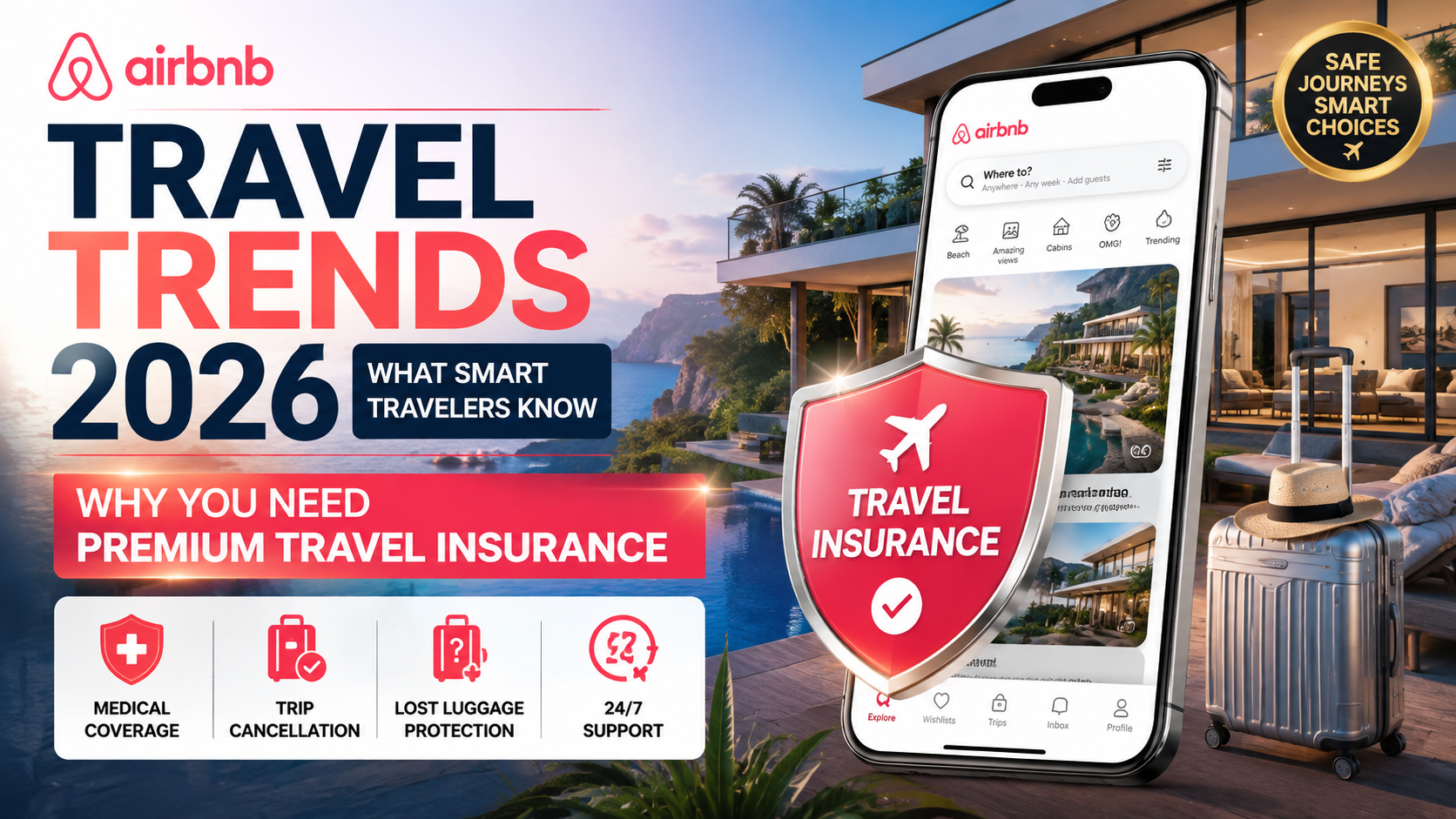
Travel patterns have shifted noticeably in 2026, and Airbnb’s own booking data reflects it — longer stays, more remote-work-driven travel, and a continued rise in off-peak and secondary-destination bookings as travelers chase both value and fewer crowds. But alongside these shifting patterns, one risk factor has become impossible to ignore: cancellation policies, host-side disruptions, and unpredictable global events have made premium travel insurance far more relevant for short-term rental travelers than it was even a few years ago.
This piece breaks down what’s actually driving Airbnb booking trends this year, why standard trip protections often fall short for short-term rental stays specifically, and what to actually look for in a premium travel insurance policy if you’re booking an Airbnb for an upcoming trip. If you’ve ever assumed your credit card’s built-in travel protection has you covered, this is worth a closer look before your next booking.
What’s Driving Airbnb Booking Trends in 2026
Extended-stay bookings — trips of a week or longer — continue to make up a growing share of Airbnb’s overall booking volume, driven largely by remote and hybrid workers treating travel as an extension of their work setup rather than a strictly vacation-bound trip. Secondary and tertiary destinations have also seen booking growth outpace major gateway cities, as travelers increasingly prioritize value and lower crowds over marquee-name destinations. This has meaningfully changed the risk profile of the average trip, since longer stays and less-traveled destinations often come with fewer easily accessible backup accommodation options if something goes wrong.
Airbnb’s own policy updates have also played a role, with the platform continuing to refine its cancellation and host-guarantee policies — changes that, while generally guest-friendly, still leave meaningful gaps that standalone travel insurance is designed to fill.
Why Standard Trip Protection Often Isn’t Enough for Airbnb Stays
Many travelers assume their credit card’s built-in travel protection or Airbnb’s own AirCover policy fully protects them, but both have notable limitations specific to short-term rental bookings. Credit card travel protection frequently excludes coverage for trip interruption caused by reasons outside a narrow, specifically listed set of covered events, and coverage limits are often far lower than the actual cost of a longer, higher-value Airbnb stay. AirCover, meanwhile, is primarily designed to protect against host-side issues (listing inaccuracies, last-minute cancellations by the host) rather than the broader range of travel disruptions — medical emergencies, flight cancellations, natural disasters affecting your destination — that a comprehensive travel insurance policy covers.
Gaps Standard Protection Typically Doesn’t Cover
- Medical emergencies abroad – Most credit card travel protection excludes or severely limits medical coverage
- Trip interruption for personal reasons – Illness, family emergencies, or job-related disruptions often fall outside standard coverage
- Extended-stay cancellation value – Coverage limits are often calibrated for short trips, not multi-week extended stays
- Evacuation and emergency transport – Rarely included in basic protections, but often the most expensive gap if something goes wrong
- Pre-existing condition coverage – Requires specific policy riders that most default protections don’t include
What to Look for in a Premium Travel Insurance Policy
Key Features Worth Paying For
- “Cancel for any reason” (CFAR) coverage – Provides flexibility standard policies don’t, particularly valuable for extended or remote-work trips with less predictable schedules
- Adequate trip cost coverage limits – Make sure your coverage limit actually matches the full value of an extended Airbnb stay, not just a standard week-long trip
- Emergency medical and evacuation coverage – Especially critical for international trips or remote destinations with limited local medical infrastructure
- Rental property-specific coverage – Some premium policies now explicitly address short-term rental disruptions distinct from hotel-focused policy language
- 24/7 travel assistance services – Real-time support for rebooking, medical referrals, and emergency coordination while traveling
Comparing Protection Types for Airbnb Travelers
| Protection Type | Covers Host Cancellations | Covers Medical Emergencies | Covers Trip Interruption (Any Reason) | Coverage Limit Adequacy for Extended Stays |
|---|---|---|---|---|
| Airbnb AirCover | Yes | No | Limited | Low |
| Credit Card Travel Protection | Partial | Limited | Narrow, listed reasons only | Low to moderate |
| Standard Travel Insurance | Partial | Yes | Listed reasons | Moderate |
| Premium/CFAR Travel Insurance | Partial | Yes | Yes (with CFAR) | High |
How to Choose the Right Policy for Your Trip
- Match your coverage limit to the actual total cost of your Airbnb stay plus flights and other prepaid, non-refundable expenses
- If your trip length or destination has any uncertainty (remote work travel, flexible dates), prioritize CFAR coverage even though it costs more
- Check specifically whether the policy addresses short-term rental disruptions, not just hotel-style bookings
- Compare the medical and evacuation coverage limits carefully for international trips, since this is where standard protections fall shortest
- Buy travel insurance early — many CFAR benefits and pre-existing condition waivers require purchase within a set window of your initial trip deposit
Extended-Stay Travelers Face a Different Risk Calculus
Travelers booking multi-week or month-long Airbnb stays — increasingly common among remote workers — face a meaningfully different risk profile than a traditional weeklong vacationer, and their insurance approach should reflect that. A longer stay means more time exposed to potential medical issues, more prepaid non-refundable costs at stake if plans change, and often less certainty about exact return dates given the more flexible nature of remote-work travel. For this growing traveler segment, it’s worth specifically looking for travel insurance providers who explicitly support longer policy durations, since some standard travel insurance products cap coverage windows in ways that don’t comfortably accommodate month-plus stays. Reading the fine print on maximum trip length coverage before purchasing is a step extended-stay travelers in particular shouldn’t skip.
Frequently Asked Questions
When should I buy travel insurance relative to booking my Airbnb?
As early as possible after making your initial trip deposit, particularly if you want access to “cancel for any reason” coverage or pre-existing condition waivers, since many policies require purchase within a specific window (often 14-21 days) of your first trip payment to qualify for these enhanced benefits.
Does travel insurance cover a host cancelling my Airbnb reservation?
This is primarily what Airbnb’s own AirCover is designed to address, typically by helping you rebook similar accommodations. Standalone travel insurance generally isn’t the primary tool for host-side cancellations, though it becomes essential for the broader range of disruptions AirCover doesn’t cover, like medical emergencies or trip interruption for personal reasons.
Is CFAR coverage worth the extra cost for a typical week-long trip?
For shorter, less flexible trips with straightforward plans, standard coverage often provides sufficient protection at a lower cost. CFAR becomes more valuable as trip length increases, plans become less certain (such as remote-work travel with flexible dates), or the total prepaid trip cost is high enough that flexibility carries real financial value.
Can I buy travel insurance directly through Airbnb, or do I need a separate provider? Airbnb’s AirCover is built into every booking automatically and doesn’t require separate purchase, but it isn’t a substitute for comprehensive travel insurance. Premium travel insurance with medical, evacuation, and CFAR coverage typically needs to be purchased separately through a dedicated travel insurance provider.
Final Thoughts
As Airbnb booking patterns shift toward longer stays, remote-work-driven travel, and less predictable destinations, the gap between what standard trip protections cover and what travelers actually need has widened. Premium travel insurance — particularly policies with CFAR coverage and adequate limits for extended stays — has moved from a nice-to-have to a genuinely important part of planning a higher-value or longer-duration Airbnb trip in 2026.
Have you ever had an Airbnb trip disrupted and found your existing coverage came up short? What did you wish you’d had in place beforehand? Share your experience in the comments.
Discover more from Vagabond Diaries
Subscribe to get the latest posts sent to your email.


