
Booking
Best Digital Nomad Hotels in Singapore 2026: Top 10 Co-Living Spaces

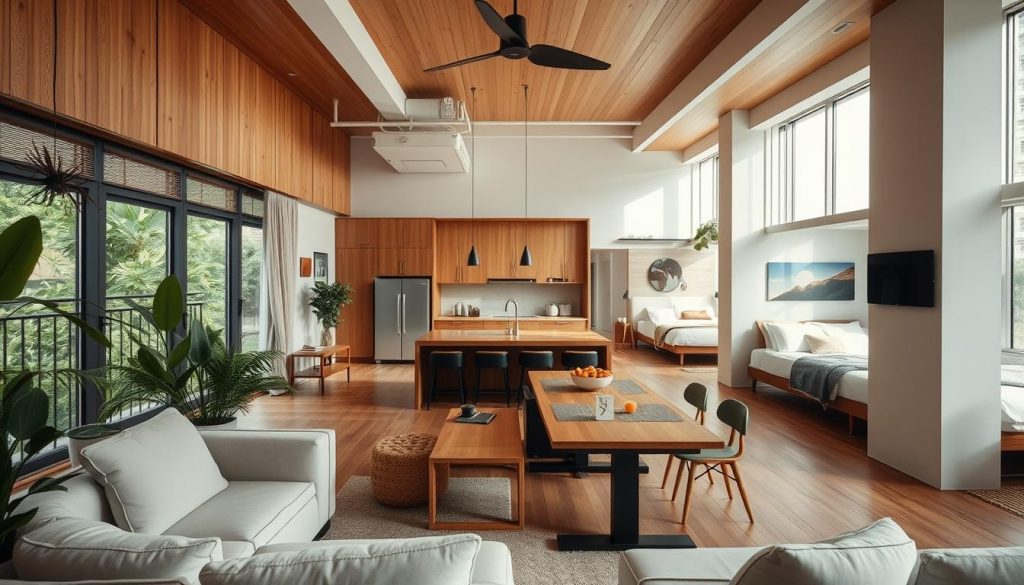
Singapore was never built for the vagabond. For decades, the city-state’s hospitality machine was engineered to extract maximum yield from corporate executives and high-net-worth tourists dropping thousands on Orchard Road. Yet, the demographic tides have turned. A new breed of location-independent worker has arrived, armed with strong currencies but a fierce aversion to the sterile, transient nature of traditional luxury. They demand community, hyper-connectivity, and long-stay economics. In response, Southeast Asia’s most expensive city is undergoing a quiet structural shift. The traditional hotel model is being disrupted by hybrid co-living spaces and fringe-district boutique concepts that cater specifically to this high-yielding, slow-travelling nomad.
This pivot is not merely an aesthetic trend; it is a macro-economic necessity. The Singapore Tourism Board expects international visitor arrivals to reach between 17 million and 18 million in 2026. Yet, beneath that bullish headline lies a stark warning on spending. Officials project tourism receipts to contract slightly to $31 billion, down from the record highs of previous years. The diagnosis is clear: geopolitical friction and rising travel costs are forcing visitors into shorter stays or cheaper accommodation tiers.
Simultaneously, the city’s average room rate remains stubbornly high. This friction between rising arrival volumes and shrinking individual budgets has catalysed a $1.4 billion co-living and hybrid hotel market. Developers are aggressively retrofitting under-performing commercial assets into long-stay sanctuaries in fringe neighbourhoods like Jalan Besar, Tiong Bahru, and Kampong Glam. What follows is an architectural and financial recalibration of how Singapore houses its most transient, yet highly capitalised, digital workforce.
The Core Development: Unbundling the Hotel
When examining the best digital nomad hotels in Singapore, the criteria have fundamentally changed. The modern vagabond doesn’t want a bellboy; they want an enterprise-grade Wi-Fi network, an institutionalised co-living framework, and proximity to the city’s cultural underbelly. Developers have responded by launching properties that aggressively blur the lines between residential leasing and short-term hospitality.
Leading this charge is Mama Shelter Singapore, which opened its first Southeast Asian outpost near Orchard Road in late 2025. It offers 115 creatively styled rooms that sacrifice square footage for sprawling, highly functional communal spaces. Similarly, the Hotel Waterloo Singapore, part of the Handwritten Collection, strips away legacy hotel bloat to offer streamlined, AI-assisted living on the edge of the civic district.
The most aggressive expansion, however, comes from the co-living specialists. Ascott’s Lyf Bugis and Lyf Funan have practically monopolised the entry-level premium market, providing shared kitchens and regular networking events tailored specifically for remote workers. Competing directly for this demographic is Coliwoo Hotel Kampong Glam, which leverages dual licensing to capture both daily transients and three-month residential leases, maintaining occupancy rates that routinely eclipse 96 percent.
For those requiring slightly more polish, Naumi Hotel Singapore has repositioned itself as an unexpected oasis for the design-conscious digital drifter, while Varel Singapore, a Tribute Portfolio property launching in April 2026, is banking heavily on its proximity to Little India’s creative melting pot.
The budget-conscious segment has also professionalised. Wink at Jalan Besar and The Initial Sama Serviced Residences provide entry points for younger remote workers without sacrificing core amenities. Meanwhile, heritage-focused concepts like KēSa House and Owen House by Habyt have transformed 19th-century shophouses into flexible-stay hubs.
As Channel News Asia reports, the surge in distinct, differentiated experiences is what keeps the city competitive. These 10 properties represent a deliberate unbundling of the luxury hotel experience. They strip away the expensive, under-utilised amenities—concierge desks, massive lobbies, multiple dining venues—and reinvest that capital into community programming and flexible lease terms. By doing so, they’ve created a parallel hospitality infrastructure that serves a demographic traditional hoteliers spent decades ignoring.
The Analytical Layer: The Yield Arbitrage of Co-Living
Why are developers suddenly so focused on Singapore co-living spaces 2026? The answer lies in the unforgiving mathematics of Singaporean real estate.
Operating a traditional full-service hotel requires vast amounts of labour, an asset that has become increasingly scarce and expensive in the city-state. By pivoting to a co-living or hybrid model, operators drastically reduce their variable costs. Housekeeping is dialled back from daily to weekly. Room service is replaced by communal, self-service kitchens. This operational leanness allows developers to charge lower monthly rents while maintaining healthy margins.
What are the best co-living spaces for digital nomads in Singapore?
For digital nomads in 2026, the best co-living spaces in Singapore are Lyf Funan for central networking, Coliwoo Kampong Glam for flexible short-to-long leases, and Owen House by Habyt for boutique shophouse living. These properties combine enterprise-grade Wi-Fi, community programming, and prime fringe-CBD locations to support location-independent professionals.
This operational efficiency makes the asset class deeply attractive to institutional capital. Just a few years ago, private equity viewed the co-living sector as speculative. Today, it’s regarded as a defensive play. The sector currently accounts for just six percent of Singapore’s total rental market. In a city with over 1.5 million private and public residential units, that represents an immense runway for growth.
Furthermore, the dual-licensing strategy employed by firms like Coliwoo is a masterstroke in risk mitigation. By operating under both a hotel license and a residential leasing framework, these properties can seamlessly toggle between short-term tourists paying high daily rates and long-term remote workers providing baseline revenue stability. If a global shock disrupts air travel, the property simply leans on its six-month residential leases. If a major corporate summit comes to town, they open inventory to daily transients.
This isn’t just hospitality; it’s yield arbitrage. By redefining what it means to host a guest, these operators are unlocking value from older, under-performing commercial buildings that would otherwise be stranded assets. Kelvin Lim, a key executive in the space, noted that converting an old hotel into an institutionalised co-living property costs less than $50,000 per room. In the context of Singapore commercial real estate, that is an absolute bargain.
Implications: Redrawing the Urban Map
The downstream consequences of this shift will fundamentally rewire Singapore’s urban geography. For decades, tourist activity was heavily concentrated around the Marina Bay and Orchard Road precincts. The rise of the modern vagabond is decentralising this capital flow, pushing it outward into fringe neighbourhoods. Areas like Lavender, Tiong Bahru, and Jalan Besar are the primary beneficiaries of this demographic dispersion.
When a 200-room co-living space opens in a historic district, it doesn’t just house remote workers; it alters the local micro-economy. Because these properties explicitly avoid housing large-scale, in-house food and beverage operations, their residents are forced outward into the neighbourhood. Local coffee shops, independent fitness studios, and hawker centres see a direct, sustained uplift in foot traffic. This creates a symbiotic relationship between the developer and the district, contrasting sharply with the walled-garden economics of traditional integrated resorts.
From a policy perspective, this trend aligns perfectly with the government’s broader urban planning objectives. The state is actively trying to rejuvenate older commercial districts without tearing down the existing architectural fabric. Converting aging budget hotels into slick, design-led co-living spaces achieves this goal through private capital rather than public subsidies.
However, the investment landscape is shifting rapidly to accommodate this. According to a comprehensive market analysis published by Hotel Investment Today, majority sentiment among investors has flipped: 65 percent now view the co-living sector as stable, driving internal rate of return targets down to below 15 percent. This normalisation of risk means we will likely see a massive influx of institutional capital entering the space over the next 24 months. Pension funds and sovereign wealth entities, historically hesitant to back nomad concepts, are now quietly accumulating portfolios of flexible-stay assets. The long-term stay has officially transitioned from a niche millennial quirk into a core pillar of institutional real estate strategy.
The Counterargument: A Self-Limiting Revolution?
Yet, the narrative of an unstoppable co-living revolution faces serious pushback from traditional hoteliers and conservative asset managers. The counterargument centres on the opportunity cost of conversion in a market where short-stay yields remain incredibly lucrative.
Critics argue that while co-living reduces operational expenditure, it fundamentally caps the upside revenue potential. In a constrained market like Singapore, where average room rates for traditional hotels sit comfortably above $270 a night, locking down inventory for a $3,000 monthly lease means leaving money on the table.
Xander Nijnens, a senior executive at JLL, has publicly challenged the blanket optimism surrounding hotel-to-co-living conversions in an interview with Hotel Investment Today. He notes that while investors remain eager to execute these strategies, the underlying mathematics are becoming increasingly difficult to justify. Because Singapore’s traditional hotel market continues to perform exceptionally well, it is remarkably challenging for the economics of a long-stay model to compete with the aggressive, high-margin returns generated by short-stay hotel operations. The lower operating costs of a co-living space, he argues, rarely offset the severe drop in revenue per available room.
This structural reality suggests that the co-living boom may be self-limiting. It is a highly effective strategy for rescuing distressed or poorly located assets, but it is financially irrational for prime real estate. The future of Singapore’s hospitality landscape is therefore not a wholesale replacement of the luxury hotel, but rather a rigid bifurcation. The prime districts will remain the domain of the ultra-luxury short stay, while the fringe areas will be permanently ceded to the slow-travelling vagabond.
Synthesis
The evolution of the best digital nomad hotels in Singapore is ultimately a story about the financialisation of time. Traditional hotels price time in discrete, highly expensive 24-hour blocks. The new wave of co-living operators has simply figured out how to wholesale that time, packaging it into 30-, 60-, or 90-day tranches that appeal to a highly mobile, globalised workforce.
Singapore in 2026 is no longer just a brief layover for the wealthy. It is actively re-engineering its urban fabric to capture the location-independent worker who demands community over concierge services. By unbundling luxury and aggressively repurposing fringe real estate, the city has created a blueprint for the future of urban hospitality.
The era of the transient tourist is giving way to the age of the institutionalised vagabond.
Discover more from Vagabond Diaries
Subscribe to get the latest posts sent to your email.


