
Featured
The Alpine Conduit: Optimizing the Dual-Valley Transit Across Northern Pakistan

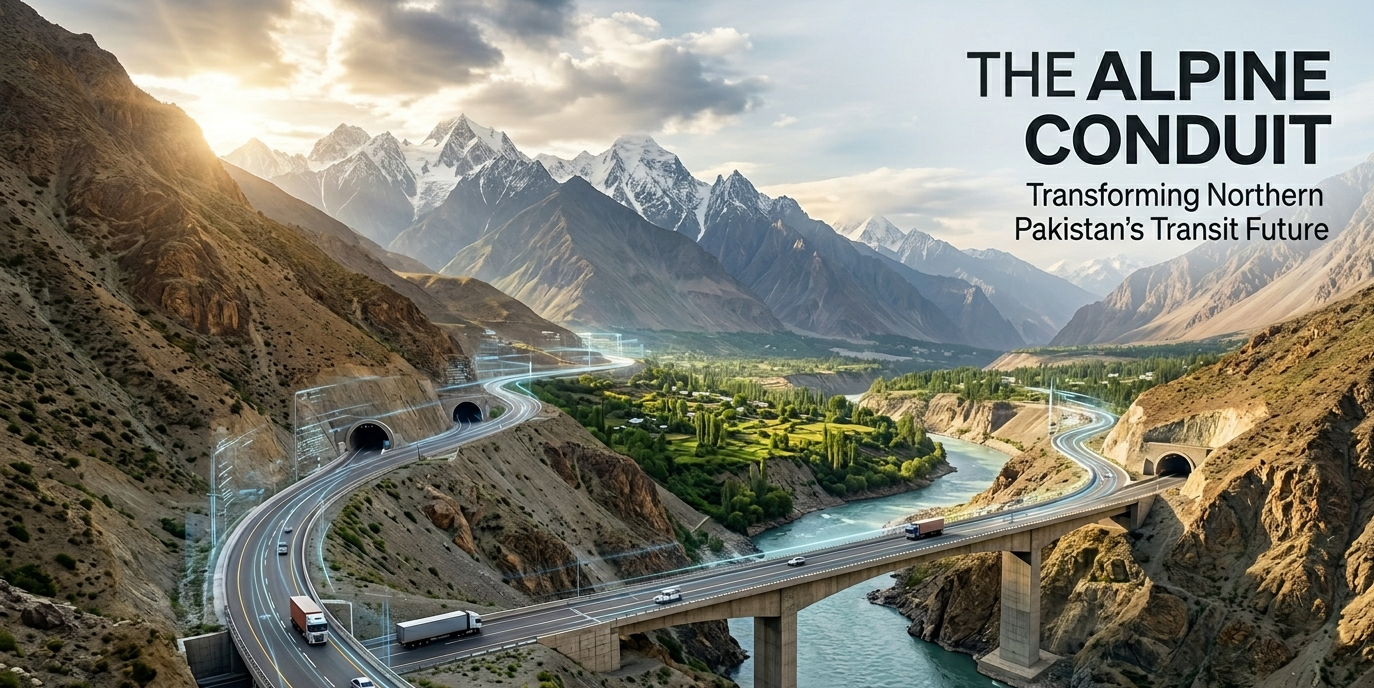
On June 5, 2026, heavy machinery from the National Highway Authority finally cleared the remaining winter snow pack from the highest crest of the N-15 highway. This annual clearance reopens the critical high-altitude corridor connecting the Kaghan Valley to the northern territories. For travelers and logistics networks waiting in Islamabad, this signal marks the start of the brief summer transit window. The challenge for modern travelers is no longer just about reaching these remote alpine ecosystems; it is about efficiently linking two distinct geographical zones—the Kaghan Valley of Khyber Pakhtunkhwa and the Neelum Valley of Azad Jammu and Kashmir—into a singular, cohesive itinerary.
                  [ISLAMABAD]
                       |
               (M-15 Motorway)
                       |
                 [MANSEHRA]
                /          \
  (N-15 Highway)            (S-2 Link Road)
              /                \
      [BALAKOT]             [MUZAFFARABAD]
          |                        |
       [NARAN]              (Neelum Highway)
                                   |
                            [ATHMUQAM / SHARDA]
The domestic travel market has shifted toward high-efficiency, multi-destination journeys. According to regional transit summaries from the Pakistan Bureau of Statistics, domestic travel to northern alpine corridors has grown by 14% annually over the last three years. This surge has placed unprecedented structural demands on the existing mountain highway grid. For anyone designing an itinerary, understanding the intersection of these highway networks is essential to prevent costly backtracking and systemic travel delays.
1 — The Core Infrastructure Overhaul
To map out the best routes to visit Naran Kaghan and Neelum Valley from Islamabad, you must first understand the fundamental divide between the western and eastern highway corridors. The journey into the Kaghan Valley relies almost entirely on the M-15 (Hazara Motorway), a critical piece of infrastructure managed by the National Highway Authority Pakistan. This multi-lane expressway has transformed travel times, allowing vehicles to bypass the historic urban choke points of Abbottabad and Haripur.
Departing from Islamabad, vehicles move north along the M-1 motorway before transitioning seamlessly onto the M-15 at the Hasan Abdal interchange. The motorway provides a high-speed, grade-separated corridor until it terminates near Mansehra. From this terminal point, vehicles transition onto the N-15 highway, a two-lane mountain road that traces the path of the Kunhar River through Balakot and upward into Naran. The Hazara Motorway travel time from Islamabad to Mansehra sits at a predictable two hours, but the subsequent 118-kilometer crawl up the N-15 to Naran can take anywhere from three to five hours depending on seasonal bottlenecks.
Islamabad Interchange (M-1/M-15)
   │
   ├──► Abbottabad Tunnel Complex (Smooth transit)
   │
   └──► Mansehra Toll Plaza (Motorway ends) ──► Transition to N-15 (Two-lane alpine road)
Conversely, accessing the Neelum Valley requires tracking the eastern spine via the N-75 (Murree Expressway) or the alternative road through Kohala. This route guides vehicles along the Jhelum River highways into Muzaffarabad, the administrative capital of Azad Jammu and Kashmir. The structural reality here is more demanding than the western motorway system; the road from Kohala to Muzaffarabad is frequently prone to rockfalls and requires careful speed management. Once inside Muzaffarabad, the Neelum Valley travel guide begins in earnest along the single-lane Neelum Highway, which stretches 200 kilometers north toward Taobat.
2 — The Garhi Habibullah S-2 Link
The central mistake made by independent travelers is treating these two valleys as parallel, isolated vertical corridors. This error forces them to drive all the way back down to Islamabad just to move from one valley to the other. What follows, however, is a highly efficient shortcut that connects both valleys into a single continuous loop.
The logistical link is the S-2 State Highway, locally known as the Muzaffarabad-Balakot road via Garhi Habibullah. This 45-kilometer mountain pass bridges the gap between the Kunhar River basin and the Jhelum River watershed. By leveraging this route, travelers can explore the full length of Naran Kaghan, descend back down to Balakot, and cut directly east into Muzaffarabad within two and a half hours. This completely eliminates the need to return south to Mansehra or Islamabad, shaving at least 210 kilometers and seven hours off the total trip.
Valley Transit Matrix
The following routing data tracks the most efficient multi-day transit model starting and ending in Islamabad:
Route Segment Primary Highway Designation Distance (km) Average Transit Time Critical Choke Points Islamabad to Naran M-15 Motorway to N-15 Highway 240 6.5 Hours Balakot Bazaar, Kaghan Landslide Zone Naran to Muzaffarabad N-15 Highway to S-2 Link Road 125 4.5 Hours Garhi Habibullah Narrow Passages Muzaffarabad to Sharda Neelum Highway (Main Spine) 136 5.5 Hours Dhanni Waterfall, Kundal Shahi Sharda to Islamabad Neelum Highway to N-75 Expressway 270 8.0 Hours Kohala Bridge, Murree Expressway Exit
Can you visit Naran Kaghan and Neelum Valley in one trip?
Yes, you can visit Naran Kaghan and Neelum Valley in a single trip by using the strategic S-2 link road via Garhi Habibullah. This mountain pass connects Muzaffarabad directly to Balakot, allowing travelers to transition between the two valleys without backtracking to Islamabad, saving over seven hours of transit time.
3 — Second-Order Economic and Logistical Realities
The structural state of these mountain highways has direct consequences for the local micro-economies of northern Pakistan. Towns like Athmuqam, Sharda, and Naran function as critical logistics hubs where fuel, food supplies, and emergency services are concentrated. When landslide mitigation protocols fail, these isolated towns experience immediate supply chain shocks. On June 12, 2025, a major rockfall near Keran cut off northern Neelum for 48 hours, causing fuel prices in Sharda to spike by 35% in a single afternoon.
[Landslide Blockage at Choke Point]
   │
   ├──► Immediate Halting of Supply Trucks (Perishable goods spoil)
   ├──► Localized Fuel Shortages (Prices increase 30-40% within 24 hours)
   └──► Tourism Stagnation (Stranded travelers strain local utility grids)
Furthermore, the physical limitations of the roads dictate the types of vehicles that can travel them. While the M-15 Motorway accommodates standard sedans easily, the upper stretches of Neelum Valley past Sharda require high-clearance, four-wheel-drive vehicles.
This infrastructure gap has created a profitable local economy centered around jeep rentals and specialized mountain drivers. According to regional development reports from the Planning Commission of Pakistan, public investment under the Public Sector Development Programme has targeted the dualization of the Neelum Highway. Yet, progress remains slow due to the challenging terrain and the need for extensive retaining walls along the riverbanks.
4 — The Carrying Capacity Debate
The rapid expansion of northern road networks has sparked intense debate among urban planners, environmental economists, and local business leaders. On one side, trade unions in Mansehra and Muzaffarabad argue that unrestricted highway access is vital for lifting local communities out of poverty. They point to the thousands of service-sector jobs created along the N-15 and Neelum highways as proof that infrastructure-led growth works.
Conversely, environmental scientists from the Pakistan Environmental Protection Agency warn that the natural carrying capacity of these alpine valleys has been dangerously exceeded.
[Unrestricted Road Expansion] ──► [Mass Vehicle Inflow] ──► [Ecosystem Strain]
                                                                  │
   ┌──────────────────────────────────────────────────────────────┴──────────────────────────────────────────────────────────────┐
   ▼                                                              ▼                                                              ▼
Solid Waste Crisis (Naran produces                             Deforestation (Timber clearing                              Water Contamination (Kunhar
35+ tons of daily plastic waste)                               for commercial hotel plots)                                 & Jhelum river runoff risks)
The rapid inflow of vehicles has outpaced local waste management systems. During peak summer weeks, Naran alone generates more than 35 tons of solid waste per day, much of which ends up in local waterways. Conservationists are pushing for strict vehicle entry caps, seasonal eco-taxes, and a complete ban on heavy commercial construction within 500 meters of the riverbanks. Local business owners push back, arguing that such regulations would harm small enterprises that rely entirely on the short summer tourist season.
Synthesis
The best routes to visit Naran Kaghan and Neelum Valley from Islamabad rely on a careful balance of high-speed motorways, narrow mountain passes, and strategic connecting links. The M-15 and the S-2 link road have solved the historic logistical problem of connecting Khyber Pakhtunkhwa to Azad Jammu and Kashmir. Still, the long-term viability of these travel corridors depends on balancing infrastructure development with environmental preservation. For the modern traveler, success requires careful planning around seasonal checkpoints, local weather patterns, and the physical realities of the road.
The ultimate value of these routes lies not just in the destinations they unlock, but in their potential to foster sustainable economic development across Pakistan’s northern frontier.
Discover more from Vagabond Diaries
Subscribe to get the latest posts sent to your email.


