
Booking
The Top 10 Countries to Visit This Summer (A Curated Guide to Coolcations and Conscious Luxury)

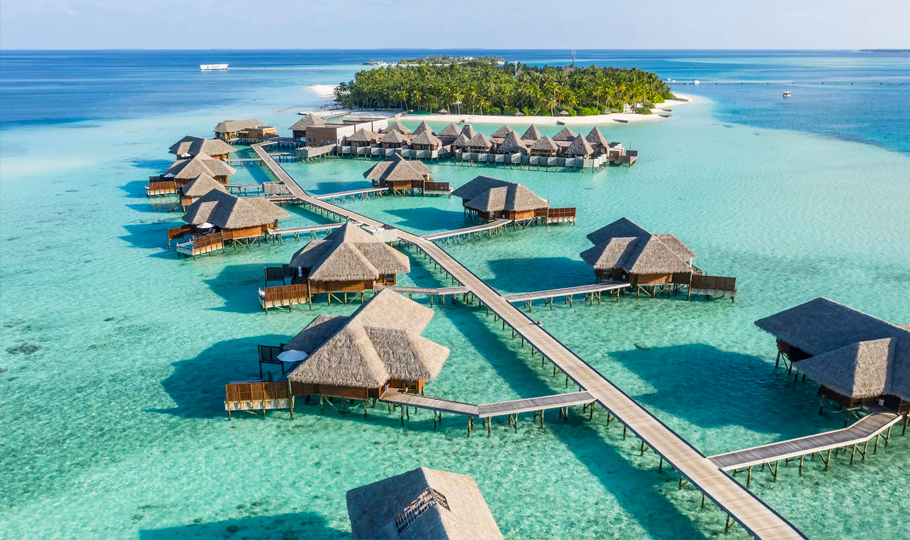
Searing Mediterranean heat domes and the systemic infrastructural strain across traditional European capitals have irrevocably altered the calculus of July and August itineraries. For the discerning global traveler, the metrics of exclusivity have fundamentally shifted. The contemporary ultra-high-net-worth demographic no longer seeks the crowded promenades of the Côte d’Azur or the saturated plazas of traditional resort towns. Instead, climatic arbitrage—specifically the rise of coolcations—and the strategic pursuit of slow travel destinations have emerged as the defining standard of high-end summer leisure.
As over-tourism depreciates the cultural capital of legacy hotspots, the vanguard of luxury is relocating to higher altitudes and higher latitudes. We are witnessing a pivot toward regenerative luxury travel, where rigorous capacity management, low crowd-density metrics, and ecological stewardship dictate the itinerary. When curating the top places to travel this summer, the focus must remain on destinations capable of offering spatial abundance and uncompromised privacy. The modern affluent traveler understands that the most coveted commodity in global tourism is no longer proximity to the center, but curated isolation from the masses.
“In an era of hyper-connectivity and environmental volatility, the ultimate luxury is not aesthetic excess, but rather the frictionless acquisition of space, profound silence, and a temperate breeze.”
The following editorial analysis deconstructs the best summer vacations for the upcoming season, moving beyond macroscopic country overviews to pinpoint the precise regional micro-destinations where luxury travel experiences are currently yielding the highest experiential returns.
1. Switzerland
The Analytical Thesis
As continental Europe increasingly grapples with extreme summer heat, Switzerland’s alpine verticality offers an immediate climatic shield. The economic appeal here lies in the nation’s flawless transport infrastructure paired with its capacity to disperse travelers across vast altitudinal gradients. By leveraging the cooling effect of elevation, Switzerland provides a frictionless environment for high-intensity outdoor recreation and high-end recuperation without the thermal fatigue associated with lower-latitude European destinations.
The Micro-Destination Focus: Grindelwald’s Alpine Networks
Rather than defaulting to the well-trodden streets of Geneva or Zurich, strategic travelers are pivoting to Grindelwald. Positioned in the Bernese Alps, this micro-region has recently seen substantial upgrades to its terminal and cableway infrastructure, allowing rapid, private ascent to the Eiger glacier. Grindelwald serves as the ultimate basecamp for utilizing the expansive, high-altitude trail network away from valley-floor congestion.
The Luxury & Eco-Anchor
The region has become a hub for the best luxury wellness retreats, integrating advanced Swiss medical longevity clinics with traditional alpine recovery. High-net-worth travelers are securing private, architectural chalets equipped with geothermal heating and hyper-local, farm-to-table gastronomy. These discrete properties prioritize sustainable alpine timber construction while offering unparalleled, uninterrupted sightlines of the North Face.
Metric Quick-Fact Data Average Summer Temperature 18°C – 22°C (Valley), 10°C (Alpine Trails) Best Time to Evade Crowds Late June or Early September Primary Commercial Intent Best for Best Luxury Wellness Retreats
2. Iceland
The Analytical Thesis
Iceland remains a premier case study in high-latitude climatic arbitrage. For those seeking summer travel itineraries defined by dramatic geological theater, the country’s Arctic positioning guarantees sub-20°C temperatures and the circadian anomaly of the Midnight Sun. The strategic value of an Icelandic summer lies in maximizing daylight, allowing for bespoke excursions to occur at hours when the landscape is entirely devoid of day-trippers.
The Micro-Destination Focus: The Troll Peninsula
Bypassing the heavily trafficked Golden Circle, the discerning traveler looks north to the Troll Peninsula (Tröllaskagi). This rugged, glaciated protrusion into the Greenland Sea offers staggering topographic isolation. It is an arena built for heli-hiking, midnight salmon fishing in privatized river systems, and traversing volcanic calderas without the footprint of mass tourism.
The Luxury & Eco-Anchor
The peninsula is anchored by a vanguard of luxury eco-lodges that function entirely on geothermal and hydroelectric power. These converted sheep farms and modernist turf-roofed estates offer all-inclusive luxury vacation packages, wrapping private helicopter transfers, extreme wilderness guides, and hyper-local Nordic tasting menus into singular, frictionless transactions that leave zero carbon footprint.
Metric Quick-Fact Data Average Summer Temperature 10°C – 14°C Best Time to Evade Crowds July (Via Midnight Excursions) Primary Commercial Intent Best for All-Inclusive Luxury Vacation Packages
3. Greece
The Analytical Thesis
Greece in mid-summer is historically characterized by logistical friction and infrastructural saturation. However, a highly localized approach to the Aegean can still yield extraordinary returns. The strategic play is to exploit the Meltemi winds—dry, cooling northerly winds that naturally air-condition the central Aegean—while aggressively filtering islands by their hotel inventory and airport capacity to ensure low visitor density.
The Micro-Destination Focus: Naxos and Paros
While Mykonos and Santorini suffer from severe capacity exhaustion, Naxos and Paros serve as the sophisticated, slow-living alternatives. Naxos, specifically, offers a robust agricultural interior that dilutes coastal crowding, supporting a resilient, year-round local economy rather than a purely seasonal facade. Here, the architectural vernacular remains authentic, and the rhythm of life is intentionally unhurried.
The Luxury & Eco-Anchor
Accommodation strategies here lean heavily into exclusive villa rentals. Discerning travelers are securing sprawling, off-grid olive estates in the Naxian interior or cliffside Paros compounds that utilize ancient Cycladic passive-cooling architecture. These properties provide the necessary spatial premium, complete with private chefs sourcing ingredients directly from the villa’s own agricultural yield.
Metric Quick-Fact Data Average Summer Temperature 25°C – 28°C (Tempered by Meltemi Winds) Best Time to Evade Crowds Early June or Late September Primary Commercial Intent Best for Exclusive Villa Rentals
4. Italy
The Analytical Thesis
To extract value from an Italian summer requires either significant elevation or exclusive, private rail access to bypass the clogged autostradas. The traditional Amalfi Coast drive has become an exercise in logistical endurance, prompting a shift toward alpine sanctuaries or specialized transit solutions that reintroduce elegance to the journey itself.
The Micro-Destination Focus: The Dolomites (South Tyrol)
South Tyrol offers a masterclass in cross-cultural luxury, blending rigorous Austrian hospitality standards with Italian culinary fluidity. The Dolomites provide a jagged, limestone playground that naturally filters out casual tourists through its sheer geographical demands. Alternatively, for those committed to the coast, the newly launched Venice Simplon-Orient-Express route connecting Paris to Portofino offers a closed-loop, ultra-luxury transit solution that completely circumvents local traffic networks.
The Luxury & Eco-Anchor
In the Dolomites, a new breed of highly design-forward boutique hotels and wellness sanctuaries are carved directly into the mountainside. These properties emphasize regenerative spa therapies using local high-altitude botanicals, establishing the region as a titan in European luxury travel experiences that prioritize physiological restoration over frantic sightseeing.
“To travel slowly is to reject the commodification of culture, choosing instead to measure a journey by its resonant depth rather than its geographical breadth.”
| Metric | Quick-Fact Data |
| Average Summer Temperature | 20°C – 24°C |
| Best Time to Evade Crowds | Mid-July (Focusing on higher altitudes) |
| Primary Commercial Intent | Best for Luxury Travel Experiences |
5. Portugal
The Analytical Thesis
Portugal’s coastal appeal is increasingly defined by stringent environmental zoning laws that protect its Atlantic shores from the hyper-development seen in neighboring Spain. The Atlantic Ocean itself provides a natural cooling mechanism, ensuring that even in late August, certain coastal stretches remain temperate and breezy, avoiding the stagnant heat of the Mediterranean basin.
The Micro-Destination Focus: The Comporta Coast
An hour south of Lisbon, the Comporta region—often likened to the Hamptons of the 1970s—operates under strict ecological protections. The landscape of umbrella pines, sand dunes, and rice paddies naturally limits infrastructural sprawl. Comporta’s aesthetic is one of radical understatement; it is the ultimate destination for high-net-worth individuals seeking barefoot, agrarian elegance.
The Luxury & Eco-Anchor
The hospitality sector in Comporta is dominated by low-density, cabana-style luxury eco-lodges and private estates seamlessly integrated into the dunes. These properties represent the pinnacle of underrated summer getaways, offering sprawling acreage, private beach access, and architecture that utilizes reclaimed wood and thatched roofing to maintain a harmonious dialogue with the protected reserve.
Metric Quick-Fact Data Average Summer Temperature 24°C – 27°C Best Time to Evade Crowds June Primary Commercial Intent Best for Exclusive Villa Rentals
6. Japan
The Analytical Thesis
As Japan continues to dominate the list of trending travel destinations, the seasonal strategy must shift away from the humid, congested corridors of Kyoto and Tokyo in the summer. The optimal play is longitudinal arbitrage—moving to the far northern latitudes where the climate mirrors a crisp, early European autumn, or to specific subtropical archipelagos where high-end resorts enforce strict capacity limits.
The Micro-Destination Focus: Hokkaido
Hokkaido in July and August is a masterclass in temperate perfection. Stripped of its winter snow, the island reveals vast, rolling lavender fields (Furano), pristine caldera lakes, and expansive national parks (Daisetsuzan). It offers a sprawling, pastoral version of Japan that feels a world away from the hyper-dense urban centers of Honshu.
The Luxury & Eco-Anchor
Accommodations focus on ultra-exclusive, modern ryokans featuring private, forest-facing onsens. Securing access to these limited-inventory properties requires sophisticated bespoke travel planning. These retreats pair austere, minimalist architecture with hyper-seasonal kaiseki dining focused on Hokkaido’s unparalleled summer seafood and dairy yields.
Metric Quick-Fact Data Average Summer Temperature 20°C – 23°C Best Time to Evade Crowds Late July Primary Commercial Intent Best for Bespoke Travel Planning
7. Costa Rica
The Analytical Thesis
While conventional wisdom dictates avoiding the tropics during the “green season” (rainy season), analytical travelers recognize it as an era of peak ecological vibrancy and dramatically reduced rates of mass tourism. Costa Rica’s advanced approach to biodiversity and carbon-neutral infrastructure transforms a wet-season visit into an immersive, deeply private jungle experience.
The Micro-Destination Focus: The Monteverde Cloud Forest
By ascending into the Cordillera de Tilarán, travelers swap coastal humidity for the cool, mist-shrouded canopy of the Monteverde Cloud Forest. This micro-climate maintains a steady, temperate chill year-round. The frequent afternoon rains rejuvenate the flora, creating an intensely lush environment ideal for specialized ornithological tours and private canopy exploration.
The Luxury & Eco-Anchor
Costa Rica is the undisputed pioneer of the modern eco-resort. The premier luxury eco-lodges in the cloud forests operate on strict regenerative mandates. They are designed as self-sustaining architectural marvels suspended in the canopy, ensuring that the financial footprint of high-end tourism actively subsidizes the preservation of the surrounding biological corridors.
Metric Quick-Fact Data Average Summer Temperature 16°C – 20°C Best Time to Evade Crowds August (Embracing the Green Season) Primary Commercial Intent Best for Luxury Eco-Lodges
8. Patagonia (Chile/Argentina)
The Analytical Thesis
The ultimate counter-cyclical play for northern hemisphere summer travelers is the strategic adoption of inverse seasonality. Traveling to the deep south of the Americas in July and August means embracing the Austral winter. While logistically complex, this approach effectively eliminates 95% of the standard tourist base, returning the dramatic landscapes of Patagonia to a state of pristine, silent isolation.
The Micro-Destination Focus: Torres del Paine & Los Glaciares
In the peak of winter, the wind speeds in Torres del Paine drop significantly, and the jagged granite spires are blanketed in snow, offering a visually arresting, monochromatic landscape. Accessing these national parks during the off-season requires specialized outfitting but rewards the traveler with entirely solitary encounters with pumas and undisturbed glacial vistas.
The Luxury & Eco-Anchor
A select few ultra-premium lodges remain operational through the winter, offering highly specialized all-inclusive luxury vacation packages. These packages include private tracking guides, heavy-duty winter transport, and the warmth of architecturally stunning, carbon-neutral lodges where evenings are spent by massive hearths with curated selections of high-altitude Argentine Malbecs.
Metric Quick-Fact Data Average Summer Temperature -2°C – 5°C (Austral Winter) Best Time to Evade Crowds July or August Primary Commercial Intent Best for All-Inclusive Luxury Vacation Packages
9. Uzbekistan
The Analytical Thesis
For those seeking to push the boundaries of luxury beyond traditional Western geographies, Central Asia represents the new frontier of high-end cultural exploration. Uzbekistan has radically overhauled its tourism infrastructure, opening up its ancient Silk Road cities to a caliber of comfort previously unavailable. The strategic appeal lies in extreme cultural authenticity and the sheer scale of its historical architecture, entirely devoid of Western over-tourism.
The Micro-Destination Focus: Samarkand and the Fergana Valley
While the summer heat in the Kyzylkum Desert is intense, the late summer shoulder season introduces cooler, manageable temperatures. Focusing on the high-speed Afrosiyob rail network allows for rapid, air-conditioned transit between the turquoise-domed majesty of Samarkand and the cooler, agricultural heights of the Fergana Valley, the historical epicenter of silk production.
The Luxury & Eco-Anchor
The emergence of high-end boutique hotels housed within meticulously restored 19th-century merchant houses and historical madrassas marks a new era for the region. Navigating this emerging market seamlessly requires expert bespoke travel planning to coordinate private academic guides, exclusive access to UNESCO sites before public hours, and curated engagements with master artisans.
| Metric | Quick-Fact Data |
| Average Summer Temperature | 30°C – 34°C (Cooling rapidly in late August) |
| Best Time to Evade Crowds | Late August / Early September |
| Primary Commercial Intent | Best for Bespoke Travel Planning |
10. Norway
The Analytical Thesis
Norway exemplifies the successful marriage of monumental natural beauty and ruthless environmental regulation. The Norwegian government’s push toward zero-emission fjords sets a global benchmark for sustainable maritime operations. For the luxury traveler, this guarantees a pristine, unpolluted environment where the air and water quality are as rigorously protected as the exclusivity of the experience.
The Micro-Destination Focus: The Sunnmøre Alps and Deep Fjords
While the southern fjords see heavy cruise ship traffic, the Sunnmøre Alps in the northwest offer a dramatic, jagged coastline that demands a more sophisticated approach. This region combines sheer vertical drops into deep, dark waters with sophisticated Nordic infrastructure, creating an environment perfect for high-end maritime exploration and alpine hiking without the crowds of Geiranger.
The Luxury & Eco-Anchor
The pinnacle of Norwegian summer travel is securing a private, hybrid-electric catamaran charter. These vessels glide silently through the fjords, ensuring zero acoustic or chemical pollution. Ashore, travelers retreat to Arctic circle design lodges—marvels of contemporary minimalist architecture that serve as the premier bases for the finest luxury travel experiences Scandinavia has to offer.
“Regenerative travel demands a paradigm shift from consumption to contribution, ensuring the financial footprint of our presence subsidizes the ecological preservation of our absence.”
| Metric | Quick-Fact Data |
| Average Summer Temperature | 13°C – 18°C |
| Best Time to Evade Crowds | July |
| Primary Commercial Intent | Best for Luxury Travel Experiences |
Editorial Conclusion: The Imperative of Expertise
The shift from mass-market summer itineraries to highly specialized, climate-resilient coolcations is not merely a trend; it is a structural evolution in global leisure. Executing these complex, low-density itineraries—whether securing a hybrid catamaran in the Sunnmøre Alps or unlocking private ryokans in Hokkaido—requires an operational capability that transcends standard booking engines.
This is the domain of bespoke travel planning. Utilizing expert advisors ensures that logistical friction is entirely eliminated, allowing the traveler to focus on the experiential yield of their journey. As the global climate shifts and legacy destinations face unprecedented saturation, the ultimate luxury remains the intelligent, strategic curation of space, time, and absolute privacy.
Discover more from Vagabond Diaries
Subscribe to get the latest posts sent to your email.


