
Street Food
From the Steppes of Crimea to the Great Plains: The Epic Journey of South Dakota’s Official State Nosh

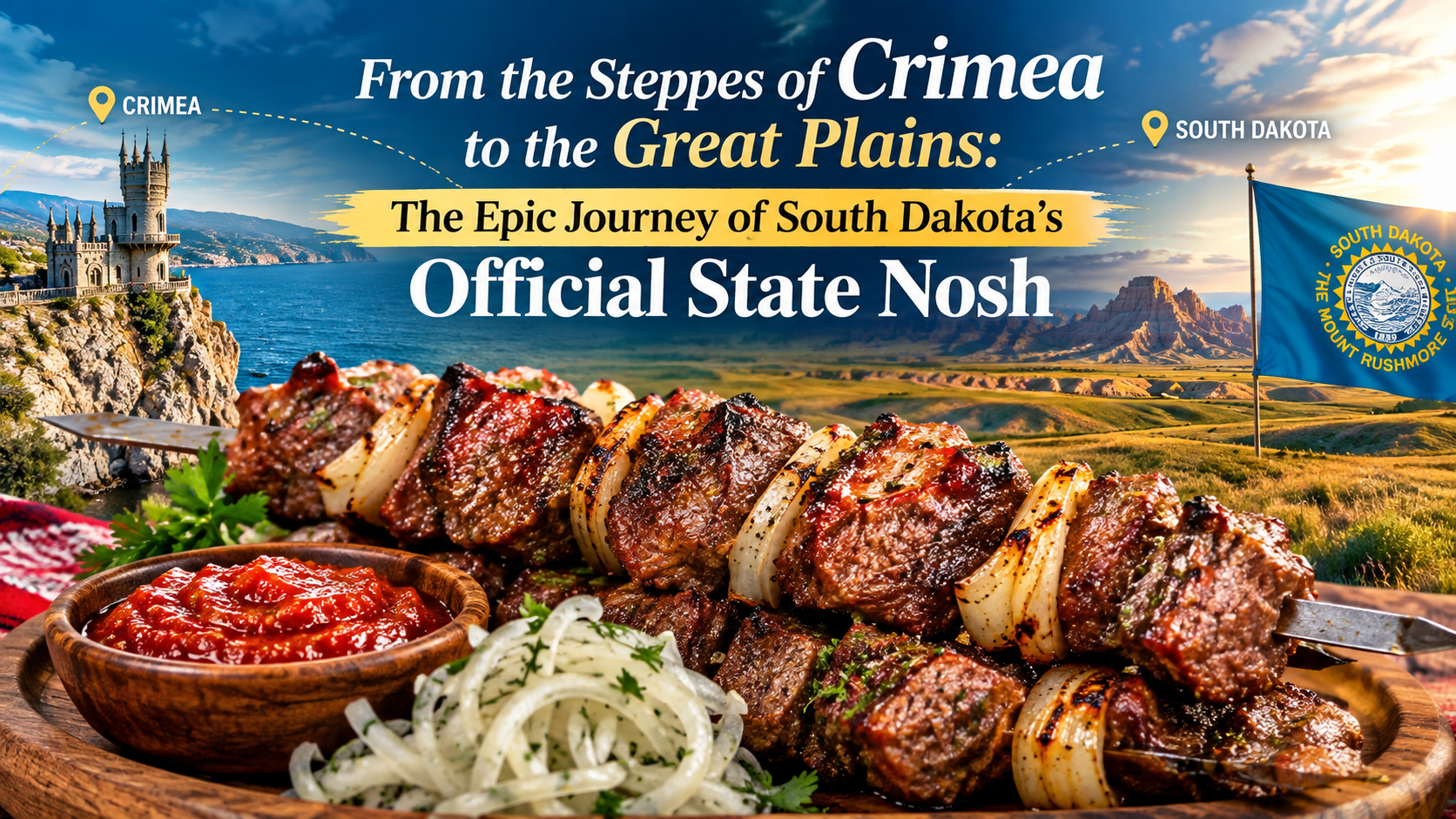
Few American regional foods possess a lineage as surprising as chislic. To the uninitiated, chislic appears to be a straightforward bar snack: tender, cubed red meat deep-fried to a medium-rare finish, seasoned with garlic salt, speared with wooden toothpicks, and served alongside soda crackers and a cold beer.
Yet behind this prairie favorite lies an international saga spanning 150 years, connecting Turkic nomadic warriors, Russian tsars, German immigrants, and the expansion of the American frontier.
Modern South Dakota chislic, deep-fried and served hot.. Source: Michaelckw / Getty Images
1. The Eurasian Roots: Crimean Tatar Shashlik
The origin of chislic begins in the 18th century along the northern shores of the Black Sea. Crimean Tatars and nomadic herdsmen across the Caucasus prepared shashlyk (derived from the Turkic shish, meaning skewer). They cut mutton or lamb into compact cubes, marinated the meat in wild onions, vinegar, and aromatic spices, and roasted the skewers over open charcoal fires on iron metal rods or cavalry swords.
When the Russian Empire expanded southward into Crimea, Imperial troops encountered this quick-cooking dish. Russian culture eagerly adopted shashlyk, and it quickly became a staple in markets and taverns.
Traditional Crimean lamb shashlik cooked over open coals.. Source: VvoeVale / Getty Images
During the late 18th century, Empress Catherine the Great recruited thousands of German farmers to settle and cultivate the newly acquired Black Sea steppe lands, promising them tax exemptions, religious freedom, and exemption from military conscription. These Germans from Russia lived alongside Crimean Tatars for generations, adopting shashlyk into their daily cooking traditions, as documented in the NDSU Germans from Russia Heritage Collection.
2. The Great Exodus and the Homestead Act
By the 1870s, political dynamics shifted. Tsar Alexander II revoked the special privileges previously granted to German colonizers, instituting mandatory military conscription and Russification policies. Simultaneously, the United States was promoting settlement in the West following the passage of the Homestead Act of 1862, signed into law by President Abraham Lincoln.
       [ Crimean Steppe ]
 (Crimean Tatar Shashlik: Lamb + Onion Marinade + Charcoal Grill)
               │
               ▼
   [ Germans from Russia ]
 (Adopted Shashlik during 18th-19th Century Black Sea Settlement)
               │
               ▼
 [ 1870s Migration to Dakota Territory ]
 (Incentivized by the Homestead Act of 1862)
               │
               ▼
   [ Prairie Necessity & Innovation ]
 (Lack of Timber + Abundance of Lard ──> Deep Frying in Cauldrons)
               │
               ▼
   [ South Dakota Chislic ]
 (Official State Nosh: Deep-Fried Meat + Garlic Salt + Saltines)
In search of land and freedom, more than 100,000 Germans from Russia departed the Black Sea for North America. A significant wave settled in Hutchinson County in Dakota Territory. Among them was Johann (John) Hoellwarth, a carpenter-turned-farmer who arrived in the town of Freeman in the late 1870s. Local history credits Hoellwarth with introducing shashlyk to his neighbors during Fourth of July celebrations.
Over decades of local usage, his heavy German dialect transformed the word shashlyk into chislic.
3. Prairie Adaptation: How Frying Replaced Grilling
When the Black Sea settlers arrived on the windswept Great Plains, environmental conditions forced immediate culinary changes:
- Fuel Shortages: The treeless Dakota prairie lacked the hardwood charcoal traditionally used to grill shashlyk. Settlers burned fast-burning prairie grass, which was unsuited for sustained coals.
- Lack of Iron: Metal skewers were scarce on the frontier.
- Plentiful Sheep Lard: Homesteaders raised sheep and rendered abundant tallow and lard.
Instead of skewering and grilling marinated meat over coals, settlers dropped small cubes of fresh mutton into cast-iron cauldrons filled with boiling rendered lard. The meat cooked in two to three minutes. They seasoned the piping-hot cubes generously with garlic salt, served them on carved wooden sticks, and paired them with soda crackers to absorb the rendered fat.
4. South Dakota’s Regional Chislic Map
In March 2018, the South Dakota Legislature officially recognized the dish’s cultural significance by enacting legislation that designated chislic as the official state nosh under South Dakota Codified Law 1-6-16.10.
While the town of Freeman remains the historical heartland—hosting the annual Freeman Chislic Festival—the dish has evolved into distinct regional variations across the state:
Region / City Primary Meat Cooking Style Traditional Garnish & Sides Freeman / Hutchinson County (The Origin) Aged Mutton or Lamb Pure deep-fried cubes (unbattered) Garlic salt, toothpicks, saltine crackers, cold beer Sioux Falls Beef Sirloin or Lamb Lightly dusted in flour before deep-frying Dipping sauces (hot sauce or BBQ) Pierre (Central SD) Beef or Venison Batter-dipped and deep-fried Served with french fries Watertown & Redfield Beef or Game Meats Flash-fried medium-rare Ranch dressing or Lawry’s Seasoned Salt
5. Authentic South Dakota Chislic Recipe
To experience chislic as it was made on the 19th-century Dakota prairie, follow this classic method:
Ingredients
- 1.5 lbs (700g) lamb leg or mutton (beef sirloin may be substituted), trimmed of silver skin and cut into precise 3/4-inch (2cm) cubes
- 1 quart lard or high-smoke-point oil for deep frying
- 1.5 tsp garlic salt (applied hot)
- 1 sleeve salted soda crackers (saltines)
- Wooden toothpicks for serving
Steps
- Heat the Oil: Bring the lard or oil to 375°F (190°C) in a heavy cast-iron pot or deep fryer.
- Fry in Batches: Drop the meat cubes into the oil in small batches to prevent the oil temperature from dropping. Fry for 2 to 3 minutes maximum, targetting medium-rare to medium.
- Season Immediately: Remove with a slotted spoon, drain briefly on paper towels, and toss immediately with garlic salt while the surface is hot so the seasoning sticks.
- Serve Classic Style: Spear with wooden toothpicks and serve on a platter surrounded by saltine crackers.
Discover more from Vagabond Diaries
Subscribe to get the latest posts sent to your email.


